

It has been 20 years since developed countries stopped production of Halons as a clean agent fire suppressant. Where do we stand regarding its use, future availability and alternatives for critical use applications in the future?
The ban on production of Halon for fire suppression in developed countries was enacted over 20 years ago on January 1, 1994. Since then, progress has been made to address alternatives for Halon for critical use but there are still numerous challenges in finding suitable alternatives. Among them are minimum agent performance standards, volume, weight requirements, systems requirements as well as meeting environmental impact requirements.
The status of the three major areas of critical use are:
Aerospace Industry
The United Nations Environment Programme’s Halon Technical Options Committee (HTOC) reports: “All new installations of fire extinguishing systems for engines and cargo compartments use Halon 1301, and all new installations of handheld extinguishers use Halon 1211. With the exception of lavatory trash receptacles, there has been no retrofit of Halon systems or portable extinguishers with available alternatives in the existing worldwide fleet of aircraft.” With the life cycle of new equipment in aerospace industry extending over 50 years in some cases, this presents a significant challenge to all stakeholders.
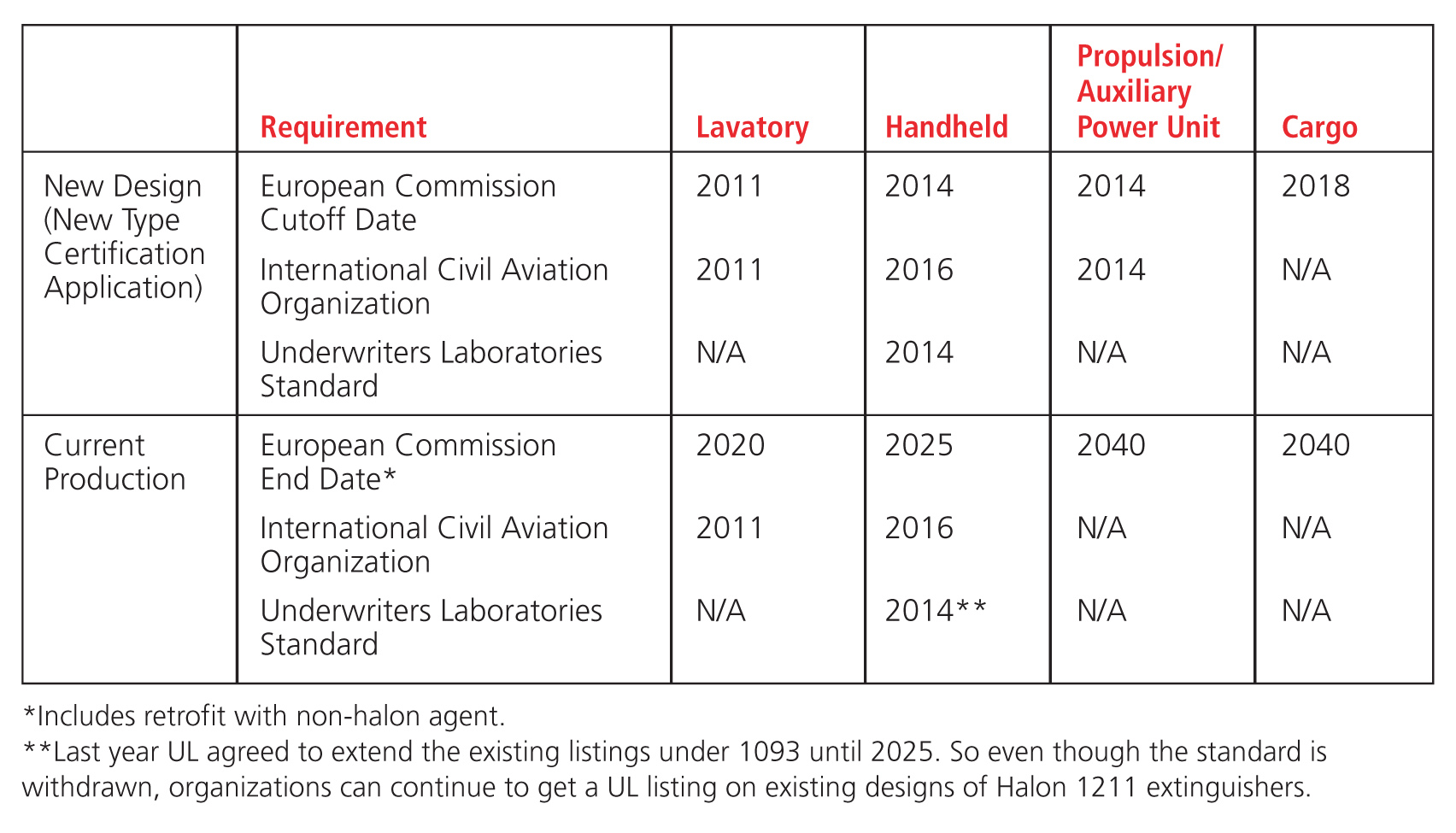
With that said, the European Commission adopted cut-off and end dates for essential-use exemptions for Halon on airplanes operating in the European Union. The International Civil Aviation Organization adopted Halon replacement deadlines in 2011, and Underwriters Laboratories will withdraw its standard for Halon in handheld fire extinguishers in 2014.
The Aviation Rulemaking Committee Charter states: “Currently, Halon is utilised in four major aircraft application areas; lavatory bottles, hand-held extinguishers, engine/APU nacelles, and cargo compartments. The aviation industry now relies on reserve stockpiles of Halon, supplemented by decontamination and purification processes to “recycle” Halon. While these approaches fulfil current demand for Halon, at some point in the future Halon will no longer be economically viable, and as that timeframe approaches the risk of contamination for Halon reserves is a growing safety concern.”
As a counterpoint to the above comments and as part of the reclamation industry, we would suggest that contamination is not more of a risk but less of one going forward. The industry has undertaken extraordinary efforts and investment to continue to improve quality control and protect against contamination. We have worked diligently with the Halon Technical Options Committee (HTOC), Halon Alternative Resources Corporation (HARC), Halon Recycling Corporation (HRC) and have contributed information used by the Federal Aviation Administration (FAA) and the European Aviation Safety Administration (EASA) to insure compliance with ISO 7201 and ASTM D5632-08 standards. The results of which is a stringent quality control protocol designed to prevent such contamination. The industry has also made substantial investments in a continuous improvement process of both cryogenic and distillation technologies to remove any contamination. Independent laboratory testing is completed at one of three AHRI certified laboratories in the U.S. to verify results. We also work with countries worldwide to address these issues to meet ISO-7201 and ASTM D 5632-08 Type I & II standards for all Halons reclaimed.
Although efforts to find effective replacements for Halon used in the aerospace industry are, in some cases, promising much work still remains as stakeholders work against diminishing supplies and a stringent timeline for a solution.
Defence Applications
The military continue to confront the challenges faced by other critical users of Halon. “Military organisations have faced, and continue to face, significant difficulties in the replacement of Halons in a large variety of applications. They have been instrumental in the development of alternative materials and the assessment of their performance, particularly for new designs of equipment. Where possible, existing military applications have already been converted to suitable alternatives. In other cases, improved procedures, changing requirements and alternative fire protection strategies have allowed the removal of Halon without replacement by an in-kind alternative. Despite this progress, there are, still, military applications that can, and should, be converted.
There remains, however, a significant number of applications for which Halon is currently, and for the foreseeable future, the only feasible option. These are mainly in applications where personnel safety, operational capability, weight, space and fire extinguishing performance are all dominant factors. Significant resources are being devoted to finding a long-term solution to these problem areas. Until alternatives can be found, these applications are being supported by the responsible management of Halon stocks, often held at central locations, and often obtained by the recycling of materials recovered from non-critical applications. Because of this careful management, there is not considered to be any need for future Essential Use Production Exemptions for Halons 1211 or 1301 for the military sector.”
Petrochemical Industry
In most cases, existing facilities were designed and constructed with Halon fixed systems as an integral part of the safety system design as well as the physical layout of the facility. As with civil aviation, after extensive research, it has been determined that in some cases the replacement of such systems with currently available alternatives is economically impossible, and that current research is unlikely to lead to an economic solution. Thus these facilities will likely rely on existing Halon banks for their operating lifetimes. However, in order to reduce the impact on the Halon banks, measures have been taken to reduce emissions.
Recovery Efforts & Future Challenges
This is, in part, a simple story of supply and demand. Since production of Halon for fire protection was halted in 1994, recoverable Halon has continued to diminish as the demand for Halon for critical use has expanded.
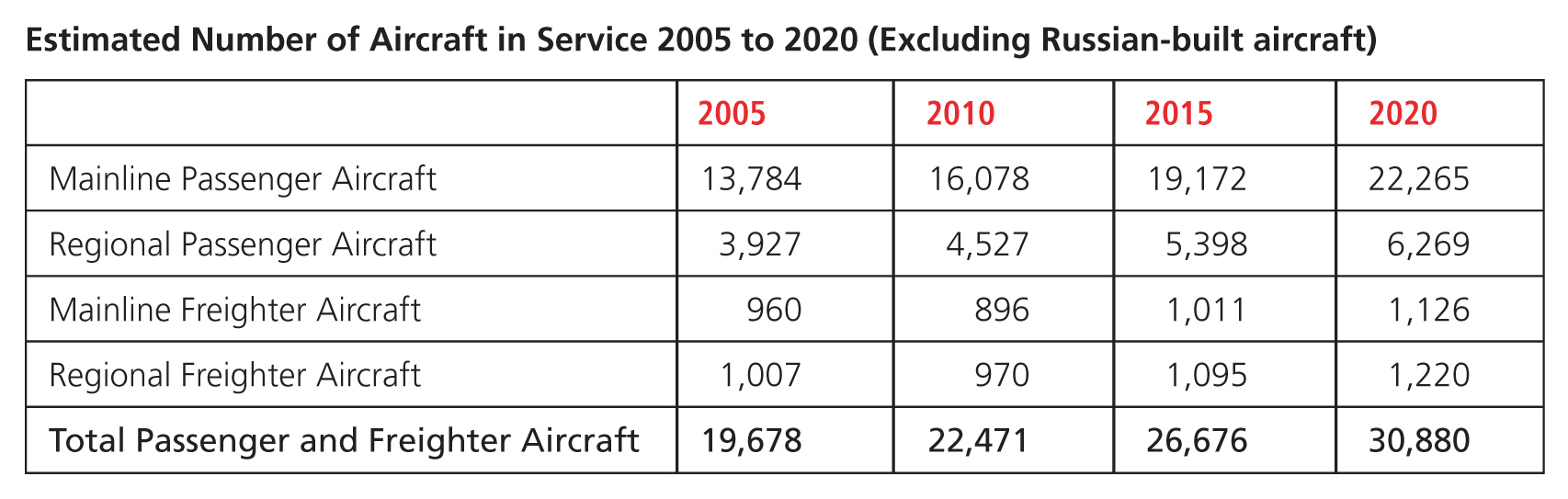
The global fleet is projected to grow over 60 percent in the period 2005 to 2020. The total quantity of Halon 1301 installed in civil aircraft is estimated to increase from about 1,800 metric tonnes in 2005 to over 2,500 metric tonnes in 2020, or a greater than 40 percent increase.
The recoverable Halons from countries allowing exports of Halon have diminished and will continue to do so. The total global inventory of Halon 1301 (excluding Japan due to prohibition of exportation of Halon) is expected to drop by 28 percent between 2014 and 2020 from 19,767 metric tonnes to 14,194 metric tonnes.
In addition, as supplies shrink in developed countries, the focus of recovery is increasing in developing countries, which are many times plagued with civil or political unrest as well as technical or bureaucratic obstacles. This impedes the recovery process, increasing the cost of recovery.
Finally, imports from developing countries exhibit a higher rate of contamination. Additional processing and more sophisticated equipment is required in order to return the Halon to ASTM D 5632 Type 1 or 2 or ISO- 7201-1 standards.

Production of New Halon, if Needed
If no alternative is found, could “new” Halon be produced for critical use needs? Although the production capabilities exist, the likelihood is remote that the Montreal Protocol would issue an Essential Use Exemption for production of new Halon due to the regulatory and stakeholder approvals required.
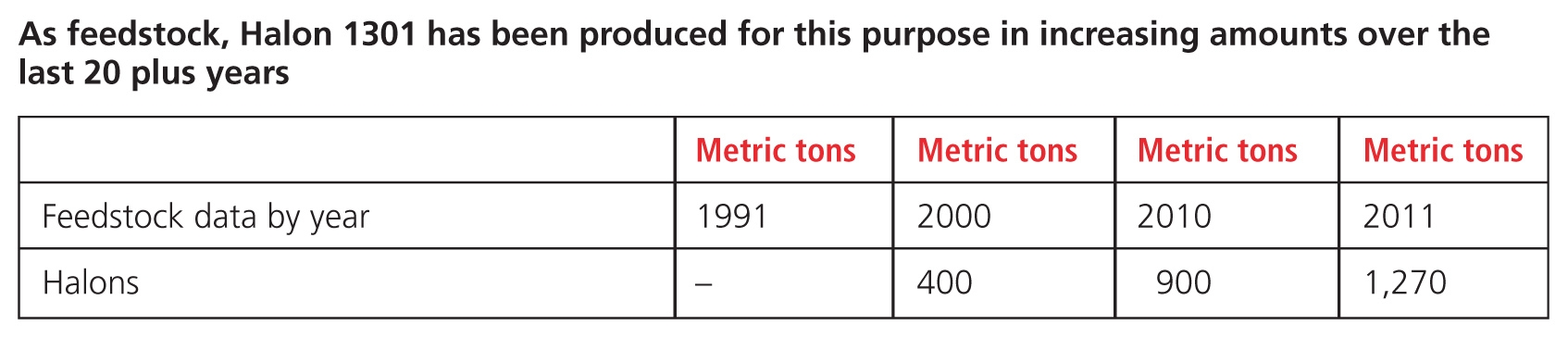
It should be noted that “Halon 1301 (CF3Br) continues to be produced in China and France for use as a feedstock in the manufacture of the pesticide Fipronil. Production in France remains steady at approximately 400 metric tonnes a year. Production in China has varied over the past six years but is believed to be steady now. However, a current production figure was not available to the HTOC.
Under the Montreal Protocol, feedstock are considered to be controlled substances (under Articles 1 and 7, and Decisions 1/12B and VII/30), which means that feedstock are subject to many of the provisions that apply to controlled substances in general. Parties have also been urged to minimise emissions under Decisions IV/12 and IV/24.
Halon 1301 is a useful feedstock for preparation of bioactive compounds such as Fipronil, a broad-spectrum insecticide. A new development of non-ozone depleting trifluoromethylating agent will provide an option for resolution.”
The above data was compiled from the Ozone Secretariat and reported by Parties under Article 7. The report indicates that from 2010 to 2011 alone, production increased from 900 metric tonnes to over 1,270 MT, a 41 percent increase. The point being that production of Halon 1301 as a feedstock is on-going and increasing although it is strictly prohibited for use other than as a feedstock under the Montreal Protocol. Significant consequences are attached to any misallocation of these feedstocks.
Summary
The Fire Protection industry has made great strides in managing the transition from Halons to alternatives agents. We continue to be vigilant in our management of recovery of these ozone depleting substances. We appreciate the contribution of all stakeholders in the National Fire Protection Association in this process. As our industry continues to seek solutions for the replacement of these critical use agents, we appreciate all efforts to recover and re-allocate these agents for as long as it is required.
We would suggest that although much has been accomplished, challenges confront us going forward to insure the continued uninterrupted supply of Halon for critical use. Among those are the difficulties of recovery due to country restraints and regulatory delays. It would be of tremendous assistance if bodies such as the Montreal Protocol would increase efforts to work with its members to improve continuity and streamline the export/import process of Halon for critical use. This would enhance the supply of these agents where they are needed and improve compliance with ISO 7201 and ASTM D 5632-08 Type I & II standards. We encourage and support the streamlining of this process as the recovery of Halons for critical use increases in a variety of countries in the years to come.

For further information, go to www.remtec.net
