

Brian Donovan and Maria Marks of Siemens answer questions on the future of cloud-connected fire alarm systems.
What are cloud-connected fire alarms?
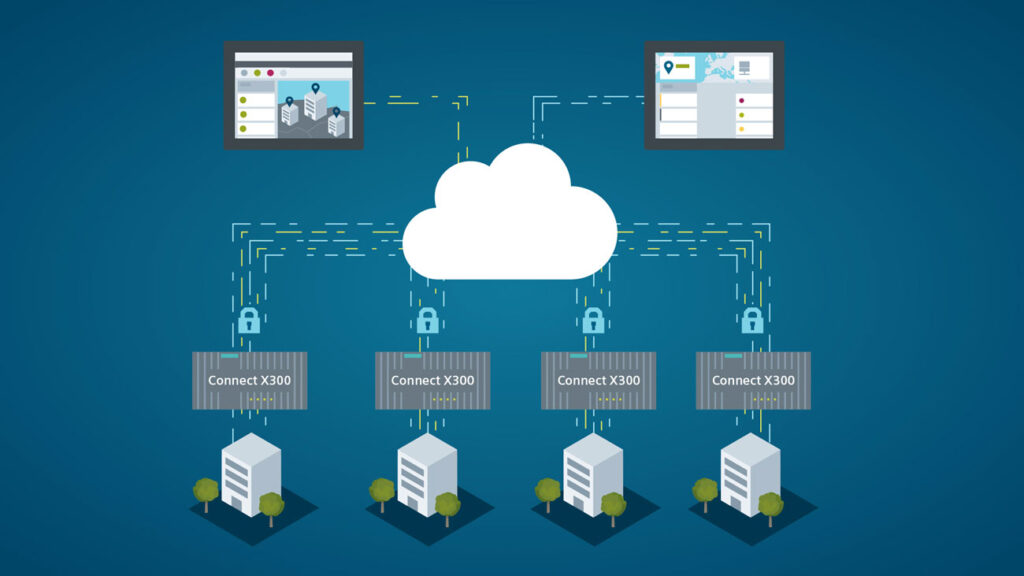
A cloud-connected fire alarm system is one that utilises a method of communication from a fire alarm control unit to a cloud server. Typically, this is connected via an IP/ethernet or cellular gateway device. A cloud API (application program interface) will process data transmitted via the gateway from the fire alarm panel. You can then view the data through a browser-based web application or a mobile application.
How has the integration of cloud technology impacted facility managers?
A facility manager can now easily monitor the life-safety system on a 24/7 basis. Cloud services offer features that can provide an entire list of networked panels and peripheral devices on a system, and the diagnostic data from these devices and systems. You may be surprised to discover the amount of data that can be collected, analysed by the cloud APIs and provided to the end user.
What are some notable benefits of connecting building systems remotely?
Service efficiency for one. An example is the ability of a technician to remotely diagnose the system status. They can secure replacement parts and software updates before travelling to the site. Additionally, the building owner can store their site’s documentation on a cloud database. This provides the owner and service provider easy access to review the status of the system.
Can you talk about the impact on first responders?
Cloud-connected fire alarm systems can significantly aid in response time. A secured open cloud connection to the fire alarm panel provides timely reporting of events. Although we have monitoring stations and dispatch centres, access to the cloud-connected fire alarm system or cloud app notifications add another layer of information for an incident commander or officer, who can quickly assess the severity of the situation with this updated data.
Additionally, many systems available today have the capability for an owner to subscribe to a notification service. This service allows its users to receive SMS and email alerts for events such as alarms, troubles and supervisory conditions.
How is data from fire alarm systems utilised in the cloud?
Data from the fire alarm control unit will typically be transmitted through an on-site cloud gateway (over IP or cellular-based connection in most cases). Then that data will be processed by some API/software to view that data through a web portal or mobile application interface. The web portal or mobile app can be set up in such a way to analyse this information, such as viewing a smoke detector’s sensitivity value, reading a CO sensor’s PPM value, etc. The advantage of this is that it provides a tool for predictive maintenance, ensuring that all equipment and peripheral devices are functioning properly on site.
How does cloud connectivity contribute to minimising downtime?
A benefit of remote access/cloud connectivity is the ability of authorised and qualified personnel to remotely update panel configuration files, access history logs and even perform ‘disturbance-free’ remote testing of devices with minimal impact to the building occupants. Cloud connectivity allows the owner to have a holistic view of the life-safety system. It provides a layer of safety and security to the building occupants.
How do you envision the evolution of life-safety systems?
Like all technology, the ‘fire cloud’ will continue to evolve along with advancements in hardware and peripheral system devices. The more data points that sensors can capture, the more that cloud applications can analyse and report. Predictive maintenance will become more streamlined, and response time to emergencies much faster.
It would not be surprising to see artificial intelligence and data from the fire cloud used to enhance predictive maintenance and potentially predict alarm events before they occur. It will be crucial to leverage cloud connectivity in fire alarm systems and ‘smart buildings’ as key factors in promoting safety, security and preservation of life and property.
What challenges are there when implementing cloud-connected systems?
There are several challenges that the life-safety industry may face. In addition to code adoption, these challenges include cybersecurity and data protection/veracity. Cybersecurity is a fundamental concern when it comes to cloud connectivity. It’s crucial to prevent malicious attacks that could compromise the integrity of the fire alarm system and its peripheral devices.
A facility manager will need to understand and ask the following questions: Who has access to their system and the data? Where is the data hosted? And how is data being kept secure? These are legitimate questions that need to be asked by a service provider, facility manager, business owner and other relevant party.
Designing products with security in mind from day one is of utmost importance. Built-in cybersecurity measures give peace of mind to use apps to connect fire protection systems to the cloud. The built-in cybersecurity features increase safety and business continuity by enabling issues with fire protection systems to be fixed as quickly and seamlessly as possible via the cloud. This holistic concept is designed to help digitalize the fire industry.
Data veracity or the accuracy of data retrieved from a cloud-connected system is an overlooked challenge. There is no denying that it is beneficial to have vast amounts of data available.
But how do you determine what data is correct and up to date? How can you sort and filter for a specific event? The answer to these questions will lie in the back-end development of cloud applications and APIs bridging the connection between the life-safety system and the cloud-based application.
For more information, go to www.siemens.com/global/en/products/buildings/building-x/fire-manager.html
About the Author

Brian Donovan
Brian Donovan is Product Manager of Digitalisation at Siemens. He has worked in the Siemens Fire Safety division since Oct 2022 and as a Product Manager for the past eight years. His primary role is the strategic growth and development of cloud applications for fire safety systems. He has also been a volunteer firefighter since 2008.

Maria Marks
Maria Marks is Manager of Industry Relations at Siemens Industry. She has been active in the Fire Life Safety and Security industry for over 30 years and sits on several NFPA technical committees. Maria is active with NEMA’s Life Safety, Security and Emergency Communications Section, and also with SFPE, serving as a member of the SFPE Editorial Board and the SFPE Foundation Board of Governors.

You must be logged in to post a comment.