
From planes to trains, shopping centres, homes and offices, cables are everywhere around us, forming an invisible network that is vital to the modern world. Yet running through a building, a badly selected cable can in fact become a source of a fire or help it spread. A nonconforming cable can also potentially release hazardous gases that are often more dangerous to the people trying to escape the building than the flames themselves. However, the good news is that a correctly selected cable can significantly improve fire safety of a building or any other asset, ensuring the safety of people.
Cables at the service of people safety
In the event of a fire, the utmost priority is making escape as easy as possible for everyone.
However, it is not always possible to guarantee an optimal escape in every situation – one of the examples being historical buildings, for instance. There can be situations where the fire escape is far away, such as in a metro tunnel, or the area is crowded with many people trying to leave, such as a hospital, which leads to a low speed of escape.
This is when cables play a critical role by powering the exit signs which lead the way to escape and enabling fire safety equipment such as sirens and sprinklers (circuit integrity performance) as well as limiting the spread of fire and flaming droplets, the smoke density and the release of hazardous emissions (reaction to fire performance). Therefore, it is extremely important that the cables have a certified standard that ensures their quality and reliability of performance in the case of a fire. This gives people as much chance as possible to escape, and the damage to the building’s infrastructure is minimised as much as it can be.
When speaking about reaction to fire, there are five important factors to consider when designing cables for fire situations: smoke opacity and emissions of hazardous substances, the speed of propagation of flames along the cable, the level of heat released and the creation of flaming droplets. In the case of an unforeseen event, these factors become synonyms of security and control.
Halogen-free flame retardant cables are ideal
Halogen-free flame-retardant (HFFR, also known as low-smoke zero-halogen or LSOH) cables are ideal for safety-critical situations. They are designed and extensively tested to be flame-retardant so as to not increase the spread of a fire. Furthermore, HFFR cables are also designed to have a low smoke density in a fire and very limited emission of hazardous substances.
When burnt, many standard cables emit hazardous gases that, when mixed with water, turn into halogenated acids. These chemicals are extremely dangerous to humans, animals and goods. Alternatively, halogen-free cables release no halogens if the cable is burnt, so neither of these dangerous chemicals will be produced.
These characteristics make halogen-free flame-retardant cables ideal for fire safety engineering systems in large, multi-storey, and complex buildings.
Overcoming disparities between cable performance
However, in order to efficiently optimize fire safety across the world, the global cable market has still one major challenge to overcome. This challenge is the absence of a common language and standards in different construction markets. As a result, while choosing cabling for a building, construction companies don’t always have a clear view on the performance of the cable they are choosing, including on the fire safety specifications. For example, HFFR cables of one manufacturer do not necessarily perform as those of another producer. However, until recently, it was difficult to know for sure how these are different.
This is why the European Union has introduced cables in the Construction Product Regulation (CPR), a protocol that European construction products manufacturers must submit their goods to in order to warrant the end user that the quality of the product and level of performance is what they are aiming for.
In particular, CPR ensures that all cables for construction are aligned in internal fire performance, and this affects every type of cable, whether that be power, telecoms, fibre optics, data, or any other types. It helps to ensure that reliable information is provided by the manufacturer on construction products in relation to their performance, which includes so far cable reaction to fire and release of dangerous substances in normal operation, dismantling and recycling. If a cable is not CPR certified (i.e. marked with the CE mark), then it cannot be installed in constructions inside the EU.
As a result, the introduction of one common language enforced by CPR has transformed the cable market for the better. It has helped create a much more transparent market in which the customer can have confidence and make more informed buying decisions. This common technical language ensures the harmonisation of fire performance in technical specifications, which means that all end-users are working towards the same level of safety and there is a safer solution for critical applications defined by National Regulators.

Testing is rigorous and thorough for quality guarantee
Thanks to CPR, the current protocol for testing and assessment of performance and the continuous surveillance it requires is the most advanced system in the world as of today. The testing processes for these cables must be thorough in order to ensure a reliable cable performance in the event of a fire, and the processes for these tests are defined by specific protocol in CPR.
To obtain a CE mark, a manufacturer has to issue a Declaration of Performances (DoP) – based on third party laboratory tests – taking full legal responsibility of their product performances.

The CPR defines listed performances required and test methods used to define the classification of cables (see Table 1 below). HFFR cables are normally classified in the upper Classes rising from Cca to B2ca with minimal additional performances s1, d1, a1.
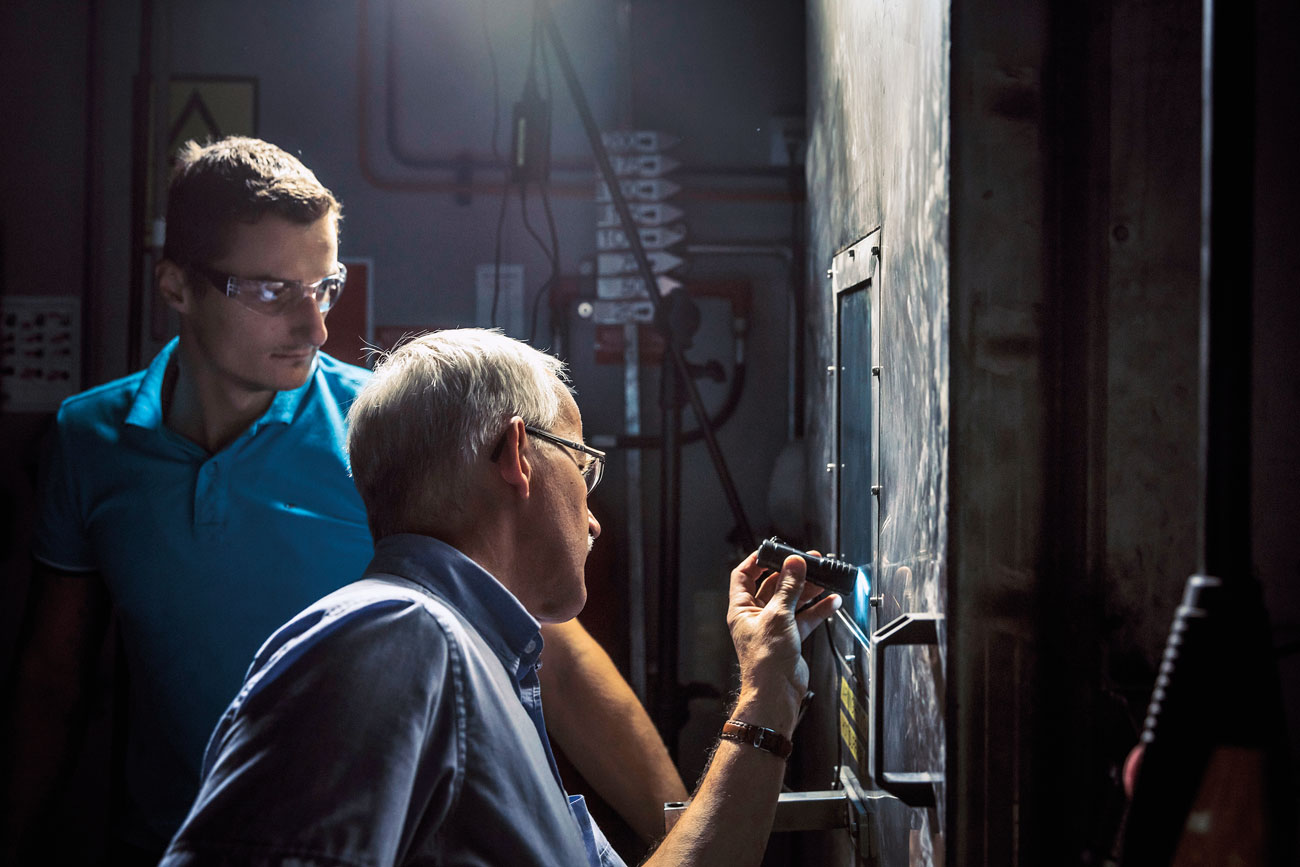
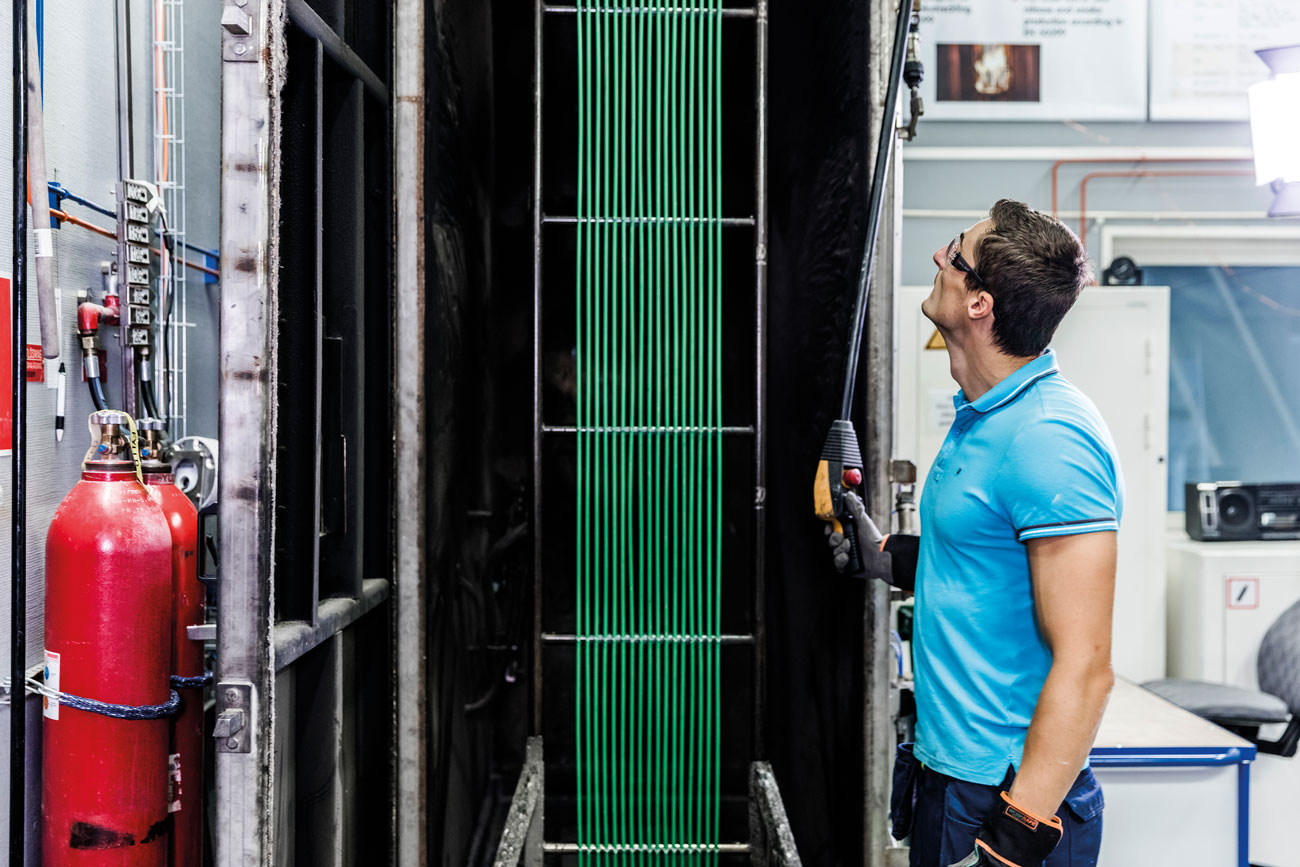
After the initial test, every four months, a third-party laboratory will take samples of the cable and repeat tests of that range to ensure its quality. Internal tests also take place so that you can be confident that the performance is extended to all elements of production – and Nexans always makes an internal validation of its cables in its accredited laboratories before their certification.
Overall, with the introduction of a common technical language and extensive testing programmes, CPR has led to a more standardised level of safety across the European cable market and established confidence in customers. The CPR example is one of the best practices that should be leveraged and applied in other regions and countries in the interest of a better fire protection and, ultimately, human safety. In the emerging countries in South America and Asia, whose potential is huge, market regulations will be indispensable as they will help fight with counterfeits and instore the necessary standards.
For more information, go to www.nexans.com/cpr
Resource
1 The level of reaction to fire performance decreases in going from Class Aca to Class Fca
2 The full description of the classification criteria, the symbols used and the numerical values of reaction to fire performance are given in the Commission delegated regulation (EU) 2016/364 of 1 July 2015 (L 68/4 – 15 March 2016). These will eventually be taken into an updated version of EN 13501-6 Fire classification of construction products and building elements – Part 6: Classification using data from reaction to fire tests on electric cables
3 The additional classifications apply only to Classes B1, B2, C and D. They are optional, but should be regarded as essential for use with cables described as “low smoke” and/or “halogen-free”. Their full description can be found in the same documents as for footnote (5)
About the Author
Dario Giordani is European Product Manager, Fire Safety for Nexans, France.

You must be logged in to post a comment.