
Around the world, fire sprinkler systems stop fires before they spread to protect people and property. Yet all too often fires in buildings without sprinkler systems cause loss of life or serious injuries to building occupants or firefighters as well as staggering property damage costs.
A fire in a Los Angeles high rise apartment building lacking a fire protection system earlier this year resulted in one death and multiple injuries to both residents and firefighters. Fifteen residents were rescued from the building’s roof via helicopter. The same building experienced a fire in 2013. According to the Los Angeles Times1, 71 residential high rises built between 1943 and 1974 are not required to have fire sprinkler systems due to a loophole in the city’s fire code. High rises built after 1974 are required by code to have sprinklers.
So why aren’t fire protection systems more widely used? Too often, builders, homeowners and building managers are influenced by misconceptions that fire sprinklers are not really needed, are too expensive, or are not reliable.
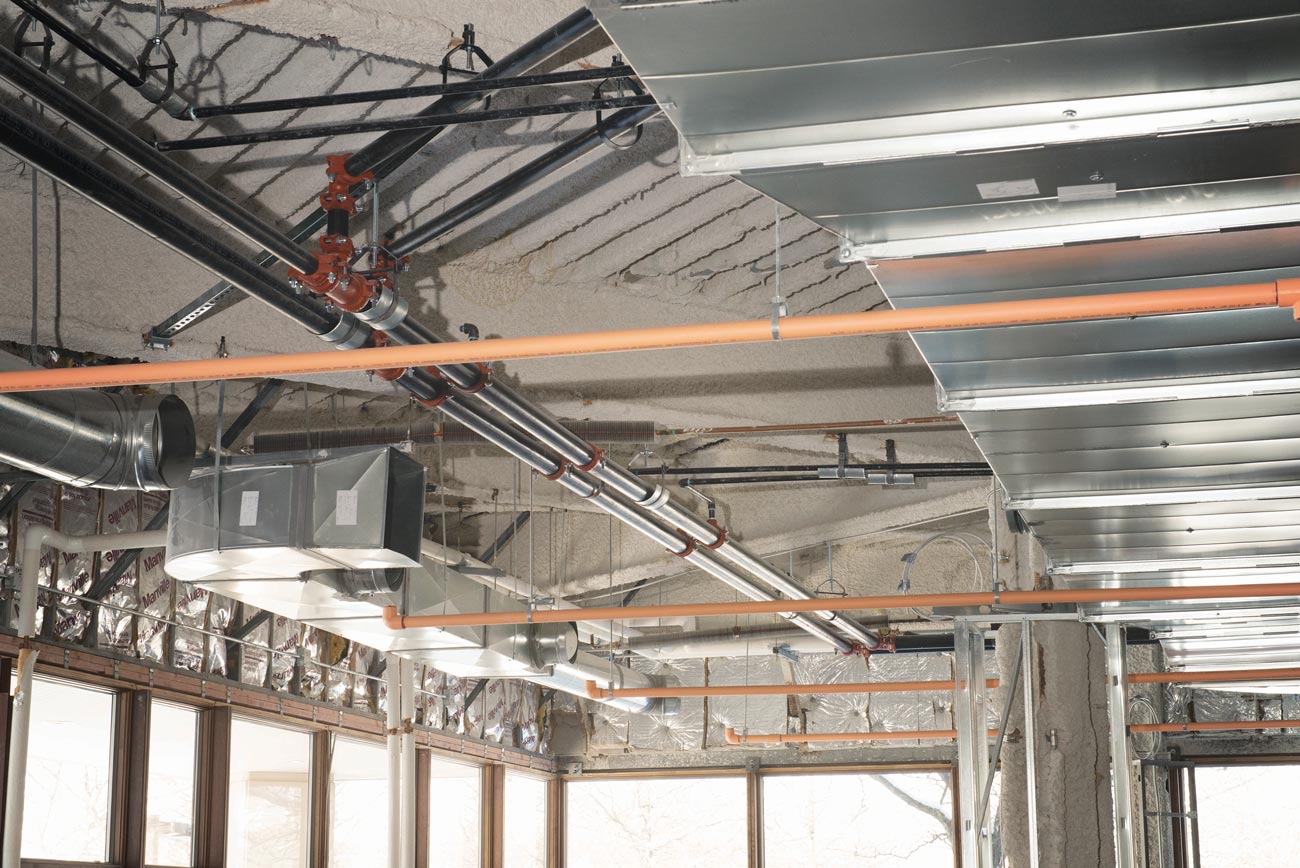
Equally important, there are a number of misconceptions about the materials that go into fire sprinkler systems that can lead to projects that cost too much, are delayed by overly complex installations or plagued by maintenance problems.
Here are tips on how to address eight common misconceptions.
Misconception 1:
I don’t need a fire sprinkler system because there is no law that requires my building to have one
This is a great argument… until there’s a fire. While you may win a legal battle in a court of law should a fire break out with no sprinkler system to control it, you may find that it is much more difficult to win that battle in the court of public opinion.
After an incident in which a building is identified as being without a fire protection system, the desire for such protection naturally spikes among prospective tenants, customers or community stakeholders. Fire sprinkler retrofit installation spiked in the United Kingdom as a result of the tragic Grenfell Tower fire in 2017 that claimed 72 lives. Landlords may find it more difficult to rent flats that aren’t sprinklered. Hotels may become less desirable. School Boards may come under public scrutiny until things change.
Legal requirements aside, a desire to protect the people who occupy a building is a valid reason to make the investment in a fire protection system.
Misconception 2:
I don’t need a fire sprinkler system – I have a smoke detector
With a residential fire sprinkler system, it’s like the homeowner has a firefighter on duty 24 hours a day. In fact, the risk of dying in a home fire is 85 percent lower2 if sprinklers are present, according to the National Fire Protection Association. It takes just two minutes for a fire to turn deadly. The contents of today’s homes – carpets, electronics, furniture – heat up rapidly and emit poisonous, fast-spreading smoke. Within just 3 – 5 minutes, flashover3 can occur – everything combustible in the room bursts into flames. No one survives.
Fires are more common than many people think. A May 2019 FEMA report4 indicates that fire departments in the United States responded to more than 370,000 residential fires in 2017. These incidents cause more than 2,600 deaths and nearly 11,000 injuries. Financial losses equal $7.8 billion.
FEMA also reported in 20115 that, internationally, deaths caused by fire consistently fell throughout the industrialized world from 1979 to 2007. It’s likely that wider use of fire sprinkler systems play an important role given that cities, regions and nations began implementing and enforcing fire sprinkler laws and regulations over this time period.
Misconception 3:
Fire sprinklers are a bad investment
Installation is less expensive and less intrusive than ever. For instance, a home fire sprinkler system costs an average of $1.35 per square foot for new construction6. That’s roughly the cost of upgrading the carpet. The upfront costs for enhanced safety can be paid over the life of the mortgage, like the home’s electrical, plumbing and other infrastructure.
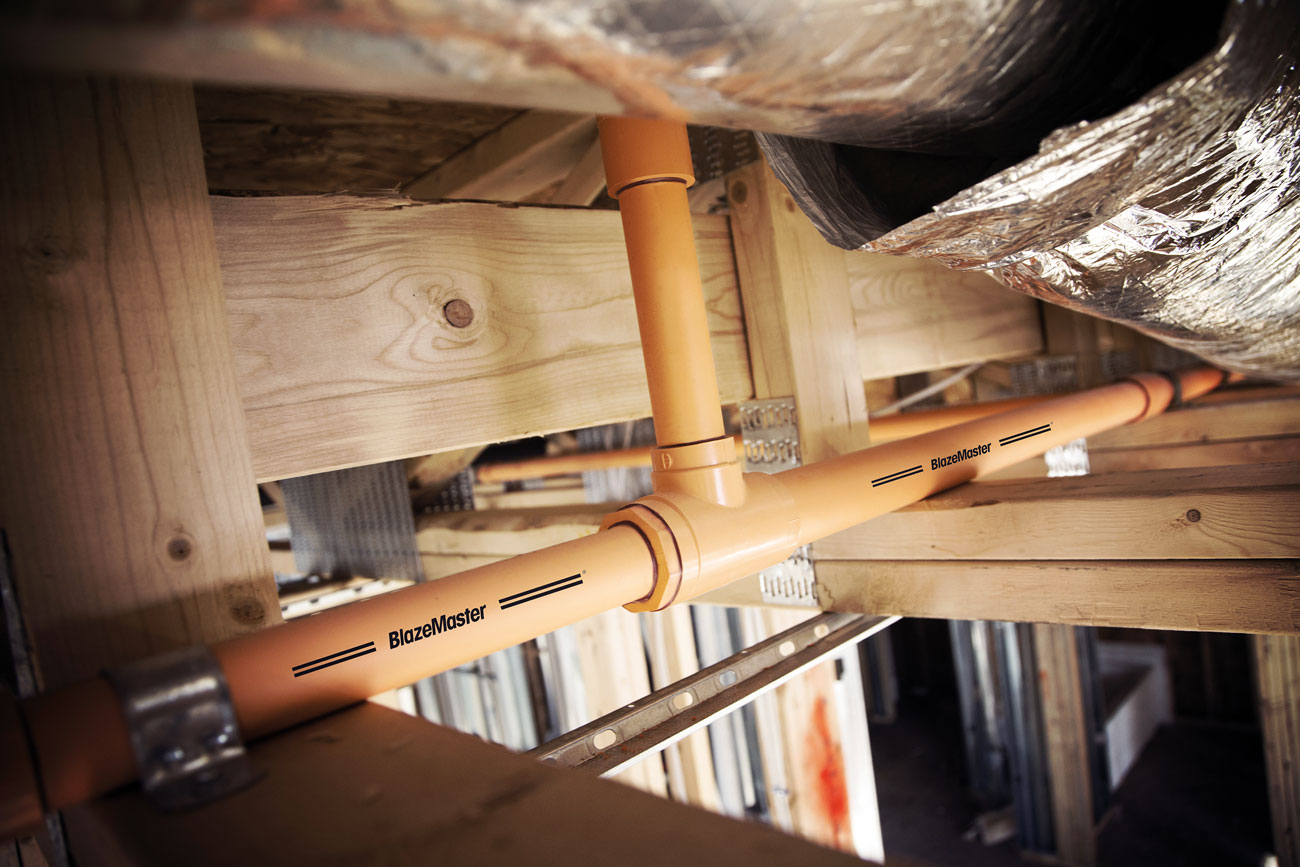
Material selection is a key consideration for managing costs. While steel is commonly used for piping, CPVC reduces costs for both materials and labor, as installation is also streamlined. Lightweight CPVC piping is easy to handle and install in tight spaces. Installation is often a one-person job using basic hand tools, unlike steel, which requires two or more installers, special equipment and off-site fabrication.
Misconception 4:
Everyday household activities, such as cooking, can cause the sprinkler system to activate
No, a fire sprinkler system won’t activate due to burning toast or smoke from a candle. The temperature must reach at least 135 degrees Fahrenheit (57 degrees Celsius) for a sprinkler head to activate.
Only the sprinkler head nearest the heat source activates first and is typically the only head required to extinguish the fire. The head delivers between 10 and 25 gallons of water per minute. That’s significantly less water than that delivered by a fire hose.
Misconception 5:
There’s not much you can do to prevent fire sprinkler systems will from freezing in the wintertime in cold-weather climates
There are several cost-effective options to protect fire sprinkler systems from freezing when temperatures plunge. NFPA requires the protection of pipe against freezing if systems cannot be maintained at or about 40 degrees Fahrenheit (4 degrees Celsius.) Systems can be protected by the use of dry or pre-action sprinkler systems, insulation, or listed heat-trace, but many prefer antifreeze because it’s relatively inexpensive and is easy to install.
Misconception 6:
All fire sprinkler systems are prone to corrosion
CPVC pipe will never corrode or scale, so sprinkler systems piped with CPVC have low maintenance costs, and there is no need for a costly nitrogen system. In addition, CPVC provides superior hydraulics compared to steel to ensure optimal flow rates that will not diminish over time due to corrosion or scaling.
By comparison, steel pipe is prone to corrosion when exposed to the combination of water, treatment chemicals and oxygen found in a fire sprinkler system. Under these conditions, steel pipe can develop pinhole leaks in less than two years, resulting in costly maintenance. Steel is also prone to scale build-ups as minerals attach to the pipe walls, typically near fittings and corners. This can limit or even prevent the flow of water in a fire. Corrosion in steel piping fire protection systems has led to the evolution of the nitrogen-generating industry and associated hardware, significantly adding to the expense of a steel-based system.
Misconception 7:
CPVC in a sprinkler system will melt in a fire
In fact, CPVC is made from a base polymer fortified with additional chlorine so it can withstand intense heat and pressure. For instance, when exposed to flame BlazeMaster CPVC® forms a charring layer that acts as a thermal barrier that reduces heat conduction. Water flowing within the pipe cools the pipe’s inner diameter surface and prevents it from burning through. This means that even when exposed to a flame, CPVC will maintain its structural integrity and internal water pressure so sprinklers will activate properly. In addition, CPVC also limits smoke generation and will not produce flaming droplets that may cause a fire to spread.
Misconception 8:
CPVC pipe will fail when it comes into contact with other construction materials
CPVC pipe and fittings have been used for over thirty years in residential, commercial and multifamily fire protection systems. Compatibility will not be an issue if the CPVC manufacturer has a comprehensive process to ensure the chemical compatibility of CPVC and other system components. For instance, BlazeMaster CPVC ensures compatibility through its FBC System Compatible Program. To be listed, a manufacturer’s products must undergo rigorous testing by a third-party laboratory, as well as an annual facility audit. A list of approved products as well a guide to incompatible products is available free online, helping to eliminate any potential speculation and providing a safeguard against system failures due to incompatibility.
By dispelling the misconceptions about fire sprinklers and the materials used to make them, we can help open the way for wider use of these life-saving systems. Well-designed and professionally installed fire sprinkler systems are a smart investment for building owners to suppress fires and protect people and property.
For more information, go to www.BlazeMaster.com
References
- Fire at West L.A. high-rise sends residents scrambling for safety; two critically injured. Los Angeles Times, January 29, 2020.
- U.S. Experience With Fire Sprinklers, National Fire Protection Association, July 2017
- “Home Fire Timeline Video,” Home Fire Sprinkler Association
- “Residential Building Fire Trends 2009 – 2018,” FEMA National Fire Data Center, March 2020
- “Fire Death Rate Trends: An International Perspective, FEMA, July 2011
- Home Fire Sprinkler Coalition, https://homefiresprinkler.org/fire-sprinkler-answers/
About the Author
Lainey Liotta is Fire Protection Market Segment Manager at Lubrizol Advanced Materials.

You must be logged in to post a comment.