

The transition to fluorine-free foams is arguably the greatest issue currently facing industrial firefighters, particularly those with large-diameter storage tank hazards. It is generally recognised that this transition has to happen. It is not a case of ‘if’; it is a case of ‘when’.
This has been made clear by regulators and policy developers globally, such as the European Commission, due to the increasing evidence of long-term environmental damage and occupational health issues associated with PFAS-containing foams. Based on this, major oil companies, including TotalEnergies, are closely monitoring developments and working together with other industry groups to ensure that this transition can be accomplished within a reasonable, practicable timescale without unacceptable impact on risk reduction.
Whilst there are many stakeholders involved in the transition – regulators, environmental specialists, fire engineers, test facilities, suppliers and insurers to name a few – it is ultimately experienced end users who know what risks and hazards they face and what is required from a foam. We recognise that the new-generation foams are different and may require some changes in tactics and application equipment to optimise their effectiveness. The objective is to achieve this optimisation in a cost-effective and practicable way.
While there are some foam applications in industrial settings that are provided for life-safety protection, many are for business and asset risk reduction. This is an important factor to take into account. The transition gives the opportunity to review overall Fire Hazard Management policies and possibly consider alternative risk-reduction measures in some cases.
With that background, the most critical issues to consider in the transition process are the extinguishing performance and the vapour suppression characteristics of new-generation foams.
Many oil and petrochemical companies are working together, as a group of end users with common interests, under the LASTFIRE (www.lastfire.org.uk) umbrella to develop a database of testing and other related knowledge to enable rational decisions to be made based on independently achieved, end-user driven results and knowledge. The range of testing carried out has been very extensive, but it is always useful to have more data and TotalEnergies Energies have supplemented the LASTFIRE work with some of their own, as is reported here.
Fire testing of new-generation foams
It becomes more and more difficult and expensive to carry out large-scale fire testing using ‘real’ fuels because of environmental constraints at test facilities and, of course, there are cost considerations – as an example, LASTFIRE is currently carrying out large-scale testing (50m x 6m fire pit) at the GESIP, Vernon facility and the costs are in the order of Ä50,000 for every day of testing with only three or four tests per day being feasible.
It is therefore critical that the results of any test, whether small or large scale, can be interpreted and extrapolated to real-world situations.
Typically, small-scale standard tests are used to establish patterns of behaviour and a more limited number of large-scale tests is used to validate this behaviour for real-world situations.
One issue that has been questioned about the validity of both small and large-scale testing is that of fuel depth because omen the fuel is put onto a water base. This is done, for example, in most standard hydrocarbon fuel testing protocols such as EN1568, CAP168 and LASTFIRE.
In order to develop a better understanding on how this affects foam performance and hence assist in analysis of the results in terms or real-world effectiveness, TotalEnergies carried out a series of tests to establish how foam can plunge through varying depths of fuel layer when applied in different ways and then carried out fire tests under the same conditions. Although this was the specific aim of the work, other interesting observations were made, as reported here, thus adding to better knowledge of how fluorine-free foam characteristics affect performance. This knowledge can now be taken through to developing better application techniques.
A purpose-built Perspex tank was used to view foam plunging into the fuel using different application nozzles simulating real-world application techniques on the small scale.
Different depths of Aviation kerosene Jet A fuel (dyed to aid visibility) were floated on a water base. Two recognised standard test nozzles were used to simulate monitor (the Uni 86 nozzle as used in EN1568 and CAP168 fire tests) and fixed pourer (the LASTFIRE system nozzle) application of foams to the fuel surface to observe the depth of plunging of the foam into the fuel.
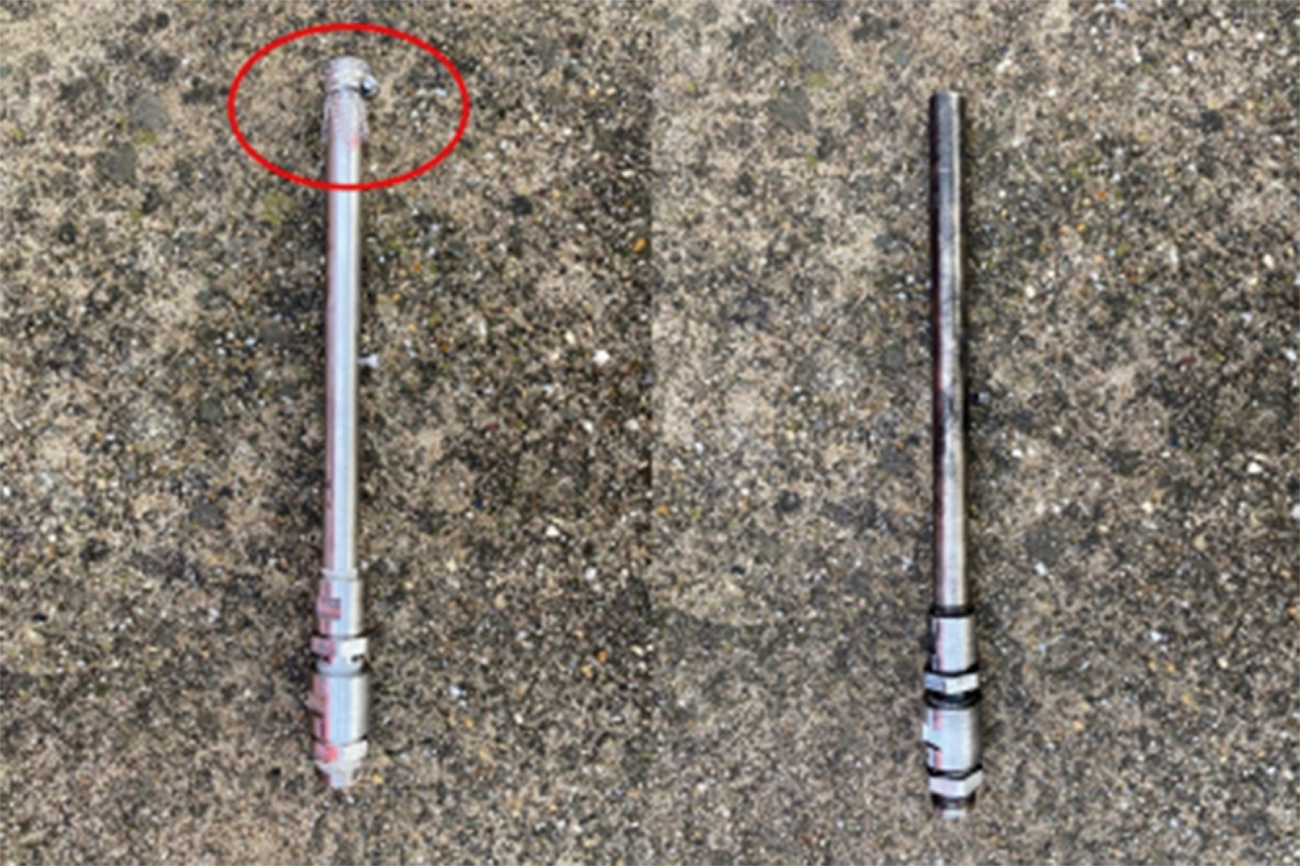
The nozzles were calibrated to have the same flow rate (11 lpm) allowing comparison of different application types rather than application rates, although the effect of this parameter might be studied in a later series of tests. Tests were also carried out with modifications to the nozzles – in the case of the Uni 86 nozzle a gauze was added to the outlet to change the foam properties and in the case of the LASTFIRE system nozzle a device to push more foam against the tank wall was added thus giving much gentler foam application.
It is recognised that a relatively small number of tests were carried out, but they gave the opportunity to make an initial evaluation of the effect of fuel depth and also foam properties. The application rate of foam solution used was approximately 2.2 lpm/m2 in all cases. This compares with NFPA 11 application rates of 4 lpm/m2 for the pourer application and 6.5 lpm/m2 for the monitor application and so represents a significantly lower rate than real-world rates – as should always be the case with small-scale tests carried out under controlled conditions. A fluorine-free foam was used at its nominal rate of 3% proportioning. (The foam solution was made as a calibrated premix).
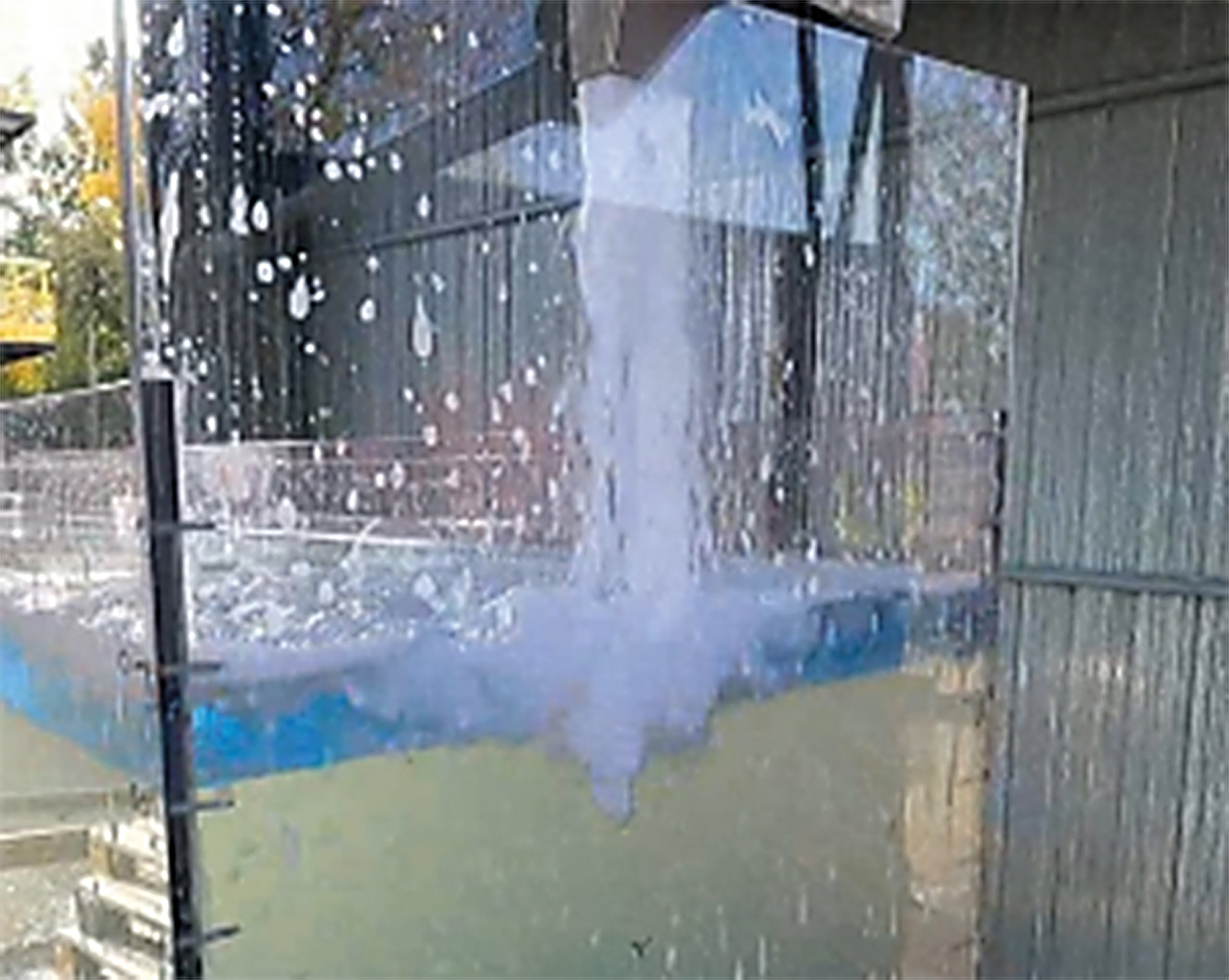
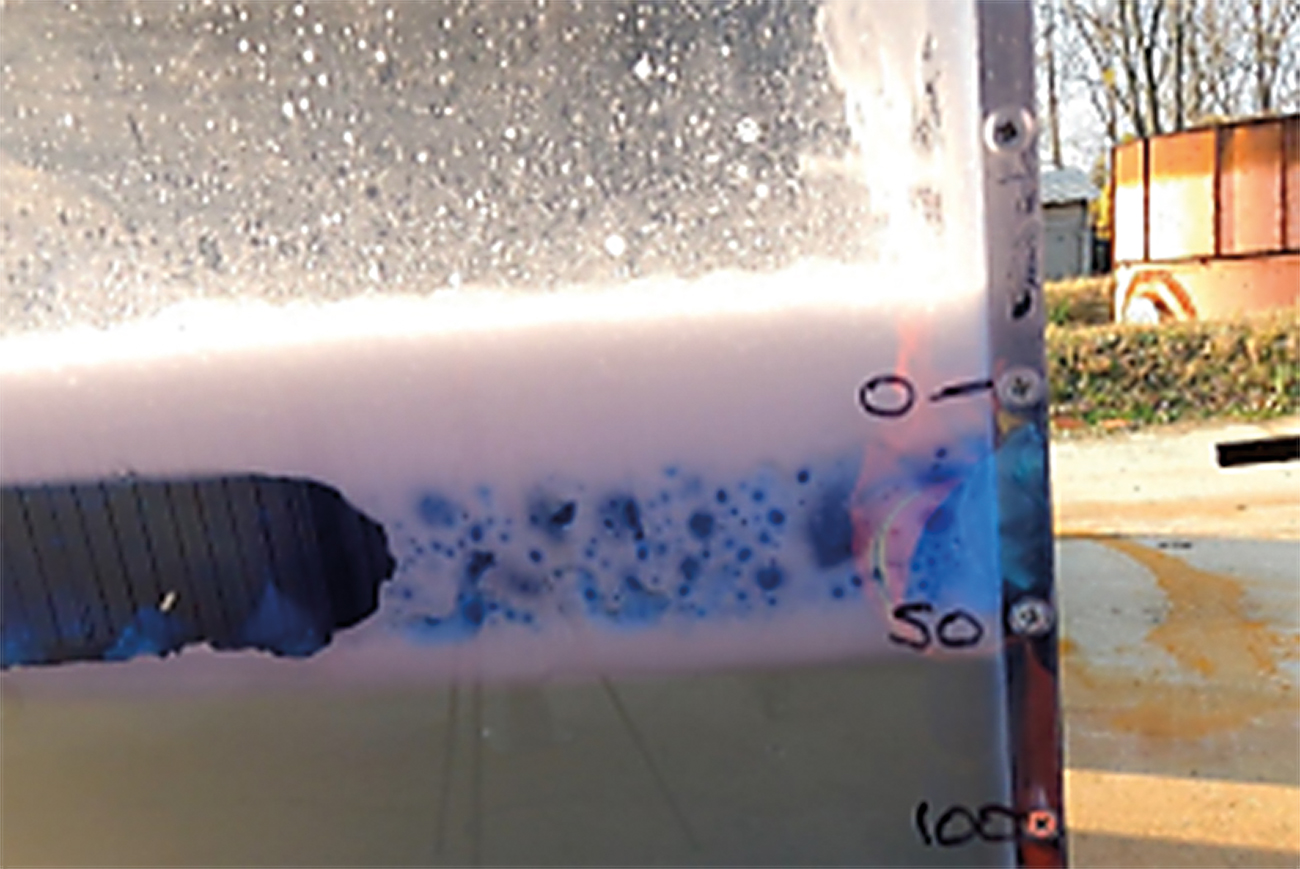
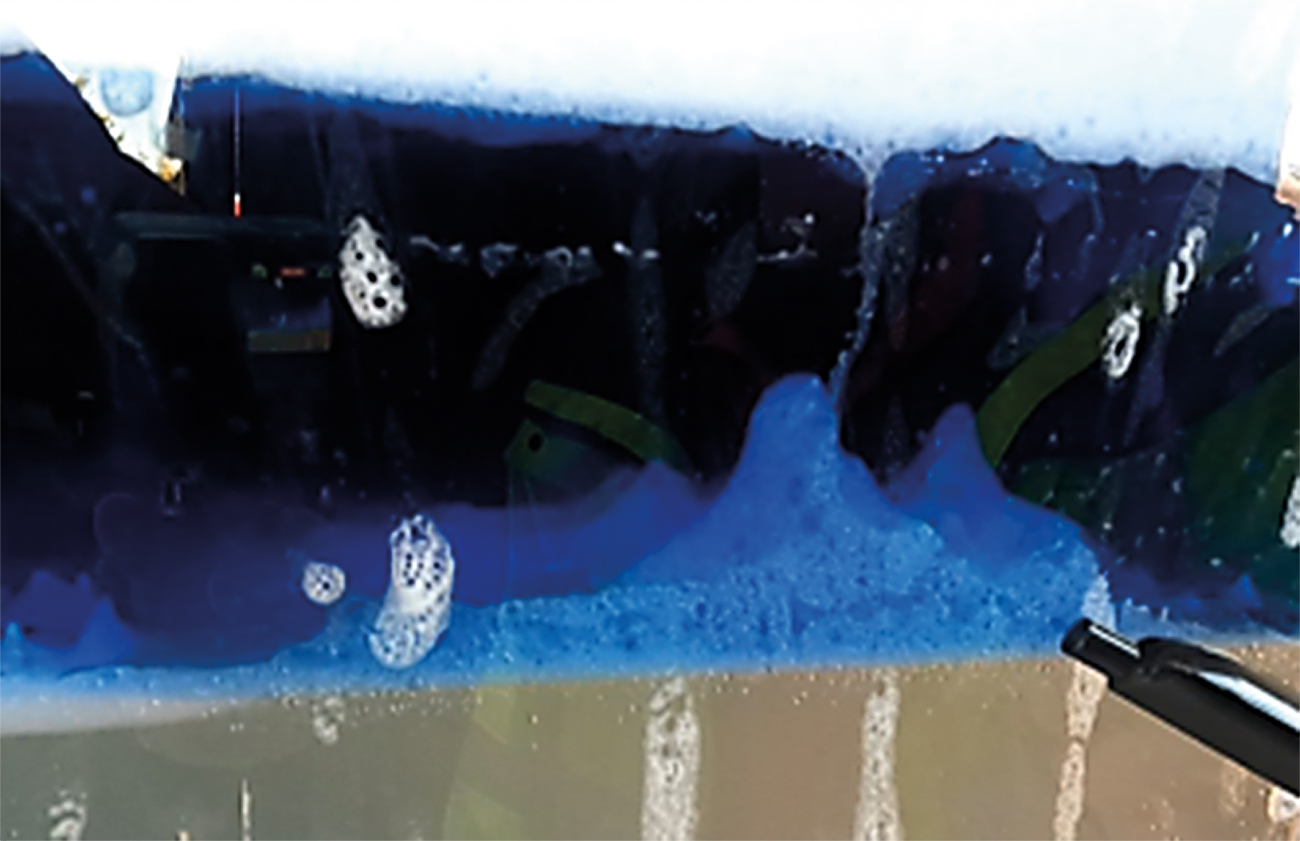
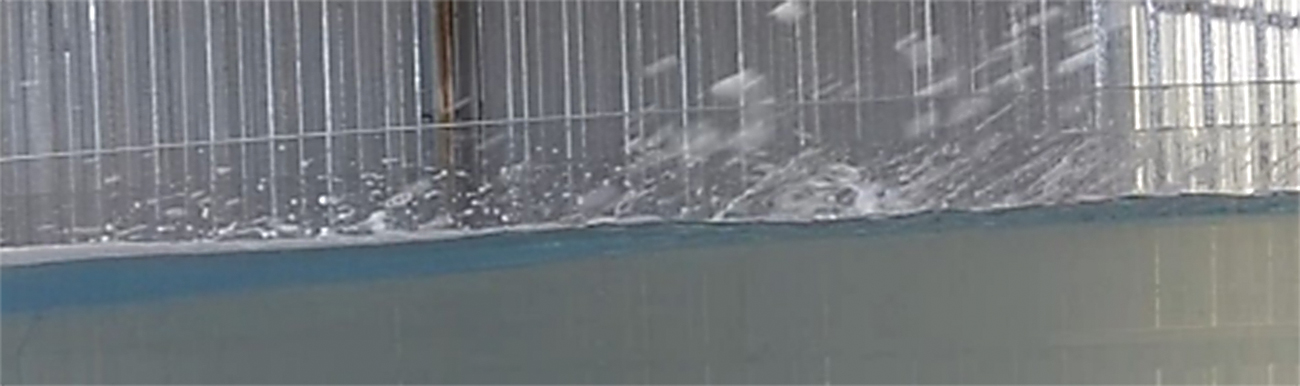
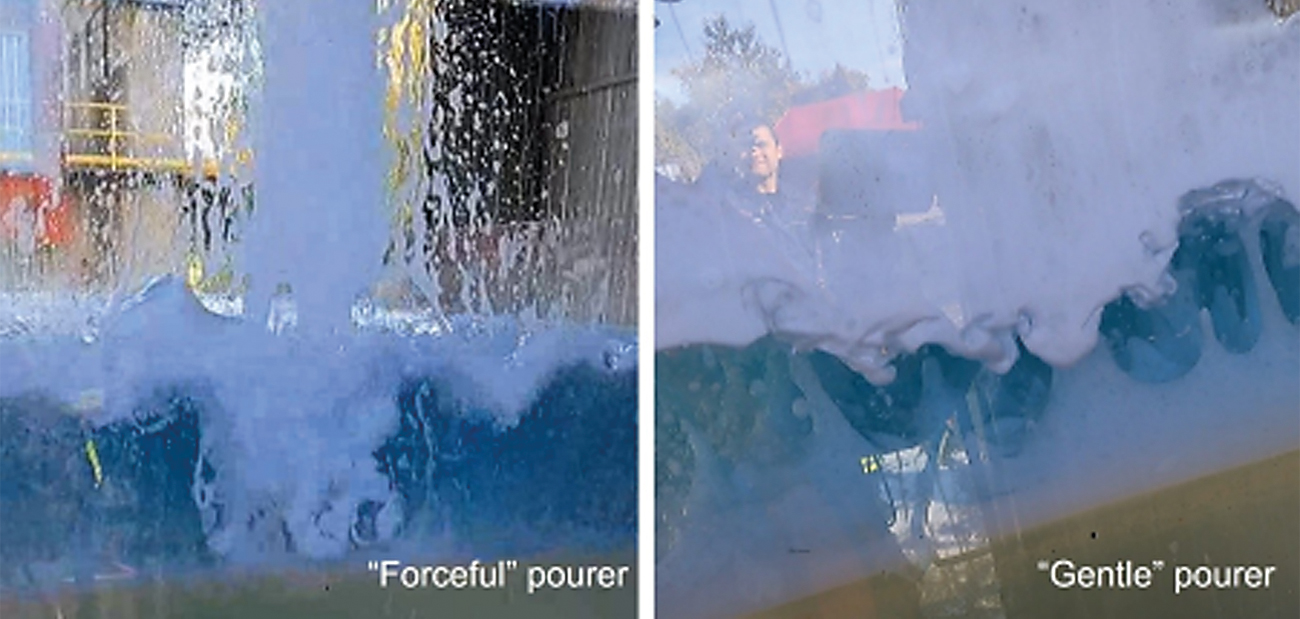
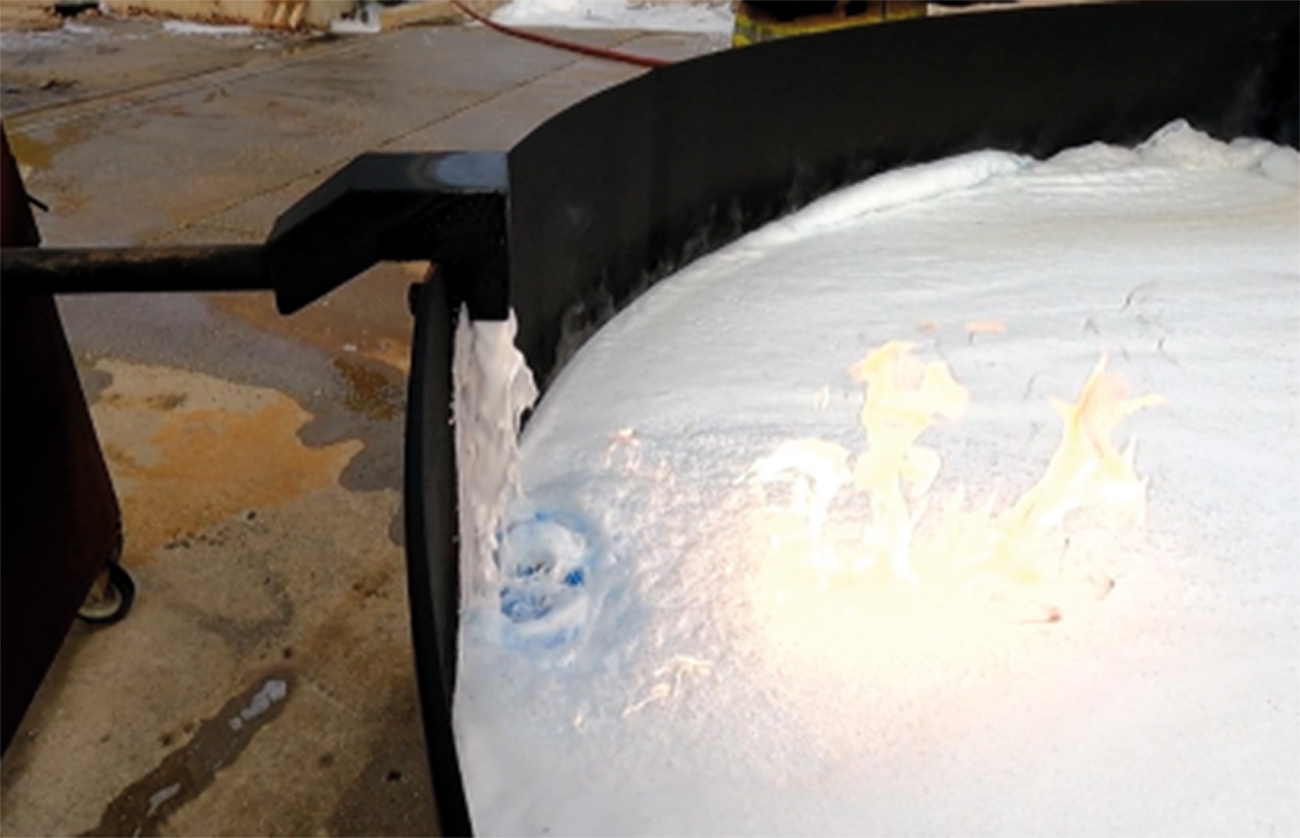
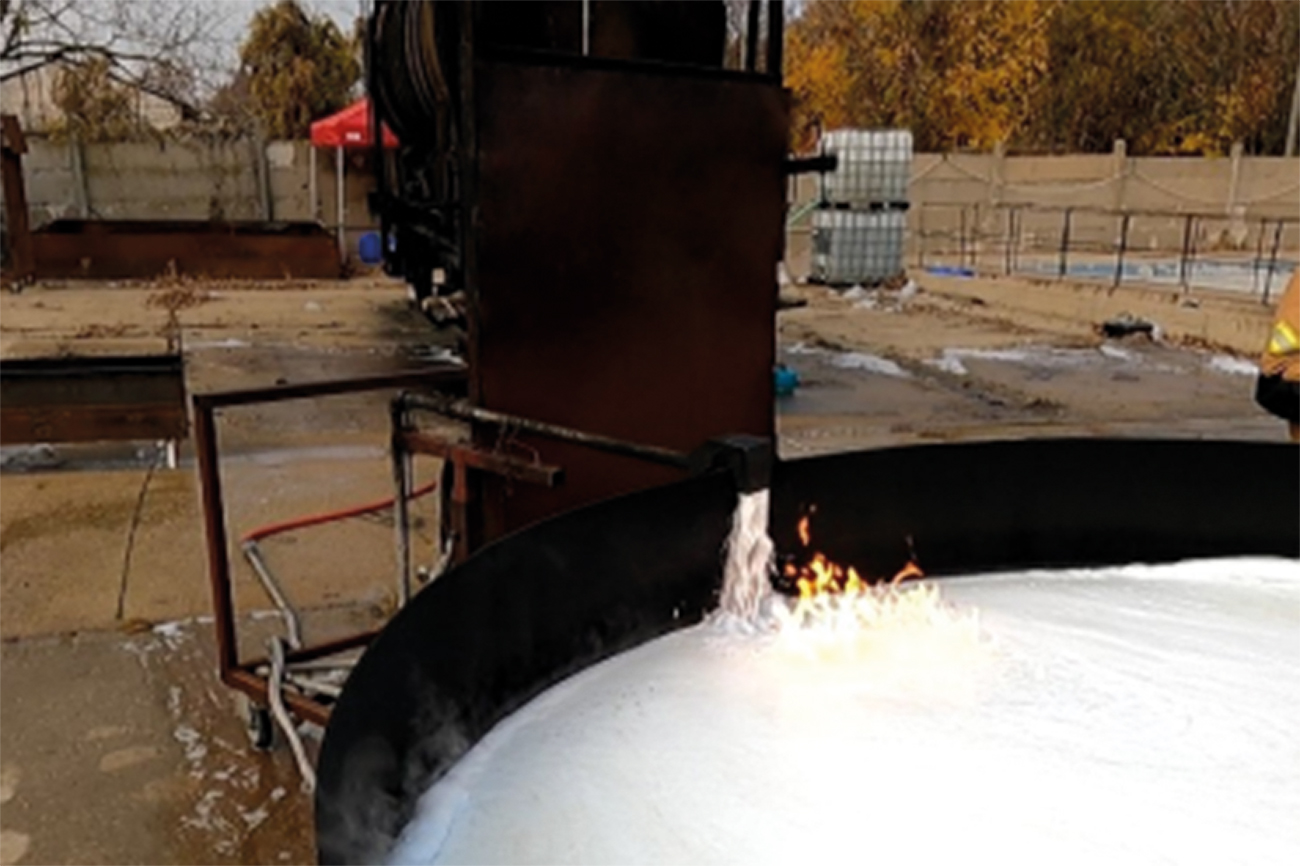
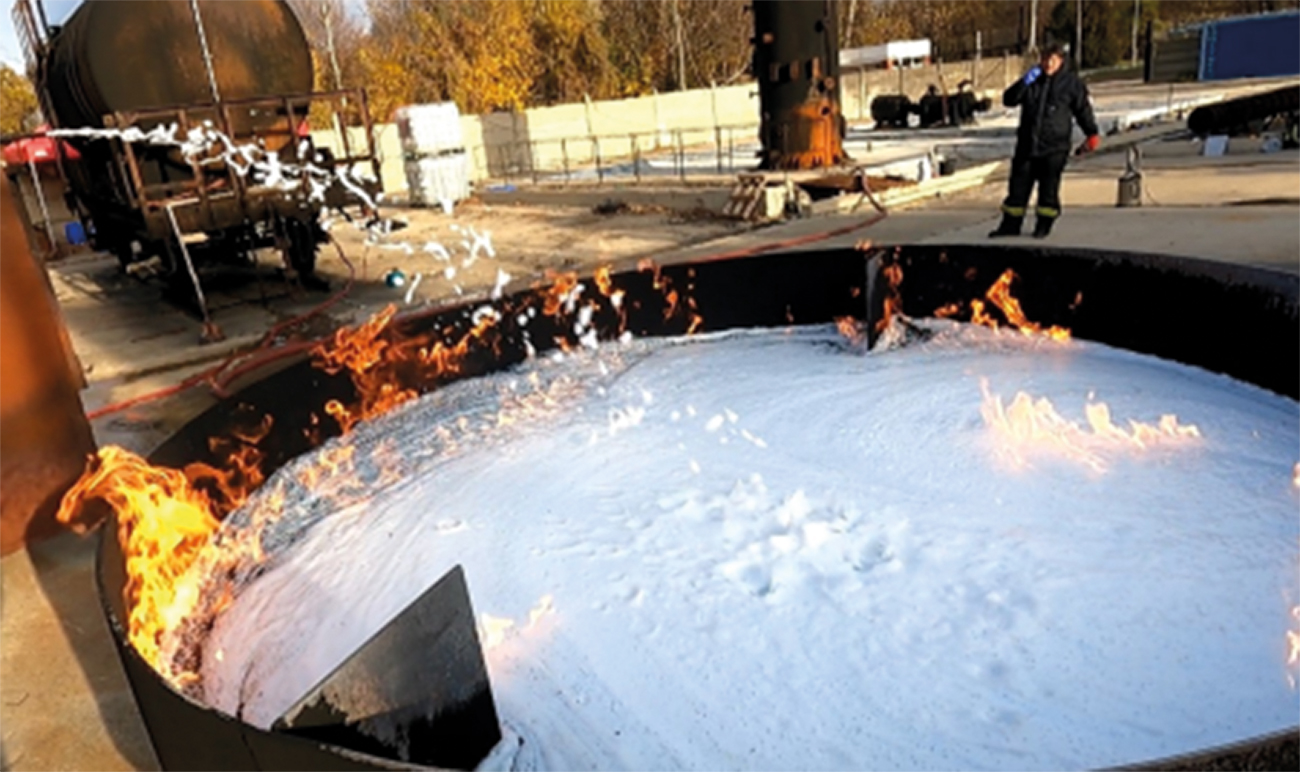
The different nozzles clearly showed different application aspects as shown in the figures below.
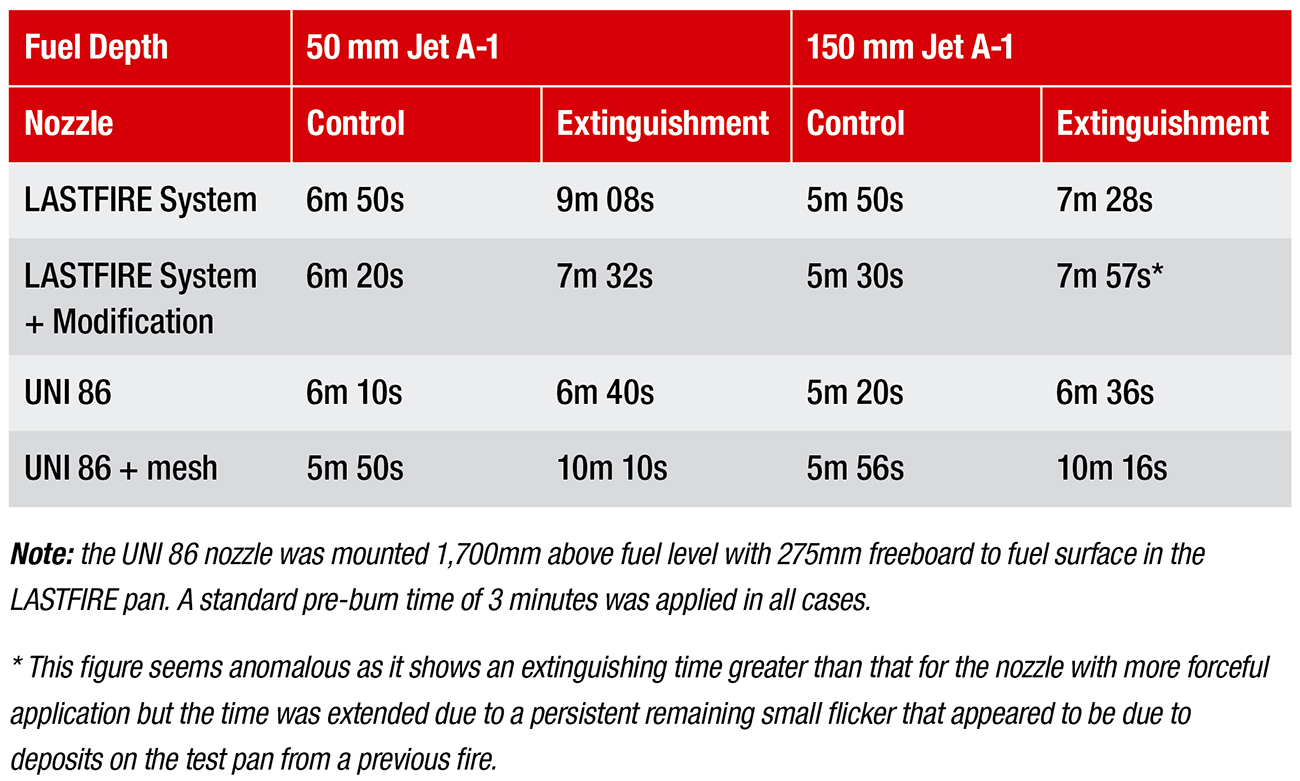
Fire control and extinguishing times of one set of tests using Jet A fuel are shown in the table below.
Key points
- The ‘monitor’ application of foam showed that penetration of fuel layer was very limited provided there was forward momentum. The foam appeared to almost skid over the fuel surface.
- The non-fire tests with the monitor nozzles showed no significant fuel penetration of either the 50mm or 150mm depths. The fire tests with these nozzles showed no significant differences between the tests with different depths of fuel – as would be expected given that no penetration through to the water layer would occur in either case.
- The non-fire tests showed that the system nozzle, where discharge was at right angles to the fuel surface, under these flow conditions penetrated the fuel when the depth was 50mm but not when it was 150mm. The fire test results clearly show that the extinguishing time was significantly greater (9m 08s compared to 7m 28s) when the foam had penetrated through the fuel into the water base. Observation of the foam penetrating through the fuel in the non-fire tests clearly showed that some settled on the water surface (Figures 2 and 3) and undoubtedly some was dissolved in the water, so, in reality, the result could be expected as a lower nett application rate would occur on the fuel surface.
- Although the mesh on the UNI 86 nozzle seemed to improve the foam discharge in that it made a coherent ‘rope’ type trajectory and reduced fire control time, it resulted in increased extinguishing time – possibly because although it probably caused less fuel pick-up in the bubble structure itself, the impact was more forceful and splashed fuel onto the foam blanket at the initial stages of application and made the foam less able to seal against the tank edges.
- The difference in the amount of impact area splashing caused by different foam application types was very obvious as can be seen in Figures 6,8,10 and 11.
Conclusions
Whilst recognising that the number of tests carried out was relatively small, this test series has highlighted some important features of testing to make sure that it is relevant to real-world situations and also assisted in identifying parameters to help optimise application of fluorine-free foam.
In particular, it has been shown that having a fuel depth that is penetrated by foam application into an underlying water base can reduce extinguishing efficiency and so represent a worse case than having deeper fuel.
This validates the work that has been carried out by LASTFIRE and others where fuel has been floated on water in that it does not give an advantage to the foam over real-life situations.
In addition, the work has shown the importance of application methods in optimising foam effectiveness.
TotalEnergies will continue to support the initiatives of LASTFIRE and other organisations in ensuring that the transition to fluorine-free foams will be based on a firm foundation and that optimised combinations of application rate, foam concentrate and application method are identified and implemented.
Further test work involving different fuels and different application methods is planned.
For more information, go to www.lastfire.org
Eric Paillier
Niall Ramsden


You must be logged in to post a comment.