
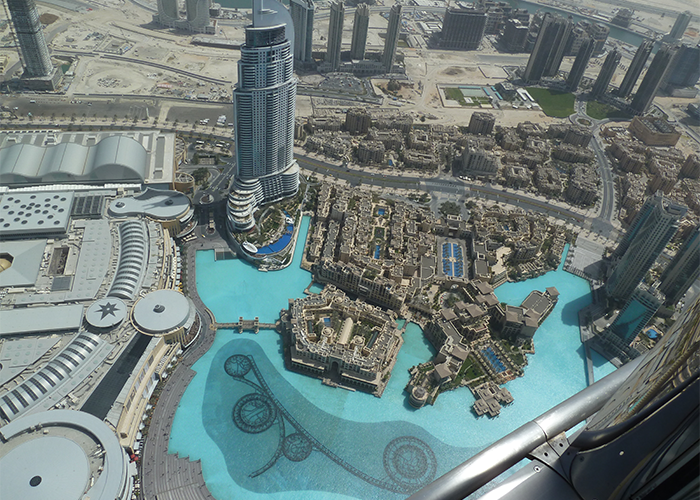
Of all the regions in the world that appear to have a ever-growing stream of both public sector and private megaproject developments, the Gulf states must rank at the top of the list.
The Gulf region’s building boom gained an impetus in 2014, when Dubai became the first Middle East country to be awarded the five-yearly global EXPO show to be held in the Emirate in 2020. This event will literally bring the world to Dubai’s door during the three month long show. More evidence of the sheer scale of the Gulf’s economic growth is one of the UAE’s largest schemes, the Mohammed bin Rashid City, which will feature the world’s largest shopping mall, a Universal Studios theme park and over 100 new hotels.
By this time Qatar had won the staging of the 2022 World Cup and was already busy with the construction of a plethora of new hotels and 10 huge football stadiums.
In addition, the US$ 45 billion Lusair City project to create a coastal suburb for 200,000 inhabitants to the north of Doha gives an idea of the huge scale of such developments. Abu Dhabi and other UAE Emirates are all progressing new build projects including more very tall towers and shopping malls. Saudi Arabia’s schemes include the US$27 billion redevelopment of the Grand Mosque at Mecca and the creation of new economic cities throughout the kingdom. Similar schemes abound in Kuwait, Bahrain and Oman. Many of these projects involve groundbreaking and iconic design concepts.
Adding to all these structural developments is the US$200 billion 2,177 km long Gulf Cooperation Council rail network project. When completed this will link all six GCC states by rail, and provide a direct alternative to air or sea travel for both the fast-expanding number of passengers and freight tonnages travelling across the region. Planned Gulf airport development and various new city Metro and tram links will all contribute to the demand for fire protection and safety strategies and products, not only to protect the public, but also the expected high volume of freight traffic, some of which will, no doubt, consist of flammable and hazardous products.
However, the region is not without its current fire protection challenges. A particularly serious one is the widespread use of aluminium composite cladding panels (ACPs) on the external faces of tall towers. The majority of Dubai’s 250 high-rise towers utilise ACP’s and four serious high-rise fires involving ACP’s occurred in the UAE in 2012. These were at the Tamweel Tower and the Saif Belhasa in Dubai, and two separate outbreaks in Sharjah’s Al Baker and Al Tayer buildings.
The 2012 high-rise fires prompted the UAE Ministry of the Interior to introduce an extension to the Emirates Fire and Life Safety Code requiring new cladding for new buildings to adhere to the stringent new fire safety regulations and outlawing the foamed plastic insulation. Subsequently, in 2013 UAE Civil Defence announced an extension to the existing fire safety codes requiring owners of high-rise towers with flammable cladding panels to install a ring of fire retardant panels on every third floor to stop fire spread, together with external sprinklers.
Then on 21 February 2015 came another serious fire in a Dubai high-rise tower involving ACPs. The affected tower is somewhat ironically named the Torch, which at 352 metres consists of 86 floors with over 600 apartments, and is listed as the 10th tallest structure in the UAE.
The fire broke out at 0200 hrs on the 50th floor and like the other previous tall tower incidents, the ACP’s spread the fire both up and down the structure, damaging 20 apartments. Thankfully, due to a rapid evacuation and prompt and professional operational action by Dubai Civil Defence firefighters, there were no fatalities amongst the Torch tower’s 1,000 plus residents, although some suffered from smoke inhalation. There were also some minor casualties at street level as burning debris showered down into the street below.
ACP panels are generally either 4mm or 6mm thick, and have an aluminium skin of around 0.4mm on each side, and a core. Essentially there are two different types of core: HDPE (high density polythene) and a mineral core. HDPE is not easily ignited, but burns extremely aggressively; so much so that it burns downwards on a vertical wall almost as easily as it burns upwards. The mineral core material is either non-combustible, or has limited combustibility. For reasons unknown the non-combustible type did not make it to the local market until somewhat later than the HDPE type.
Fire is both man’s oldest friend and enemy. It is unforgiving in its immediate threat to life and property, especially when the unrelenting clock ticks during the very early stages of a tall tower fire. As all the latest megaprojects get under way, the value of fire engineering that delivers effective and reliable fire protection is of absolute paramount importance to the safety of all those who will resort to the Gulf’s ever-bigger showcase schemes.
About the Author
Neil Wallington is a former British Chief Fire Officer, a Past International President of the Institution of Fire Engineers, and a holder of the Queen’s Commendation for Brave Conduct. He is the author of 17 books on the work of the fire service, and acts as a consultant with extensive experience in the Gulf on a range of projects.
