
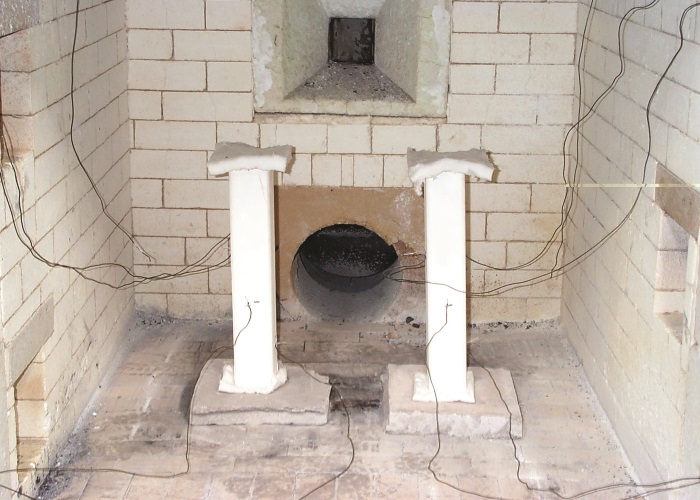
As the use of intumescent coatings to protect structural steelwork from the effects of fire in buildings grows the understanding of the technology and its correct use needs to intensify.
There are many aspects to a well-developed fire protection industry; both ‘passive’ and ‘active’ measures are often used to provide a holistically, fire safe building. One product which seems to cross over the artificial divide between passive and active products is intumescent coatings, normally considered part of the passive fire protection industry. One simple definition of ‘passive’ products is that they remain inactive in a fire situation, however intumescent coatings actually become active and ‘intumesce’ to provide an insulating char to the steelwork they are intended to protect.
Intumescent protection is being increasingly used to fire protect structural steelwork in new and refurbished buildings due to the low thicknesses and decorative nature of the product. In common with other types of fire proofing, specification and application requires care to ensure the intended fire safety will be provided.
With the growth in the use and availability of intumescent products it is important that the understanding of the products increases along a similar scale. These are specialist products and should be specified and applied by those who have a thorough understanding of the product’s needs. Furthermore, and in common with all fire protection products, it is important that the suitability of the tests that the products were evaluated against is appropriate to the building codes to which the building has been constructed or refurbished. There are many possible test methods under which the products may have been tested and a number of post-test evaluation methods also available. A comparison must be made between what the respective building code requires and what test standard has been used to evaluate the products.

There have been many anecdotal examples where the incorrect test method has apparently been used to justify use against an alternative test standard. This is often the case with American and European test Standards that require different testing methods and these two test methods cannot be interchanged.
A final consideration, once the appropriateness of the test standard is addressed, is to ensure that the information submitted by the manufacturer is independently verified and ideally covered under a third-party certification scheme that is verifiable online. This ensures that the submitted data cannot be modified.
At a recent industry meeting in Chicago, USA, there were lengthy discussions between the full range of industry stakeholders, including representatives of the Authorities Having Jurisdiction (AHJ) community, manufacturers of mastic and intumescent coatings, and personnel from UL (formerly known as Underwriters Laboratories) regarding the interpretation of fire resistive construction listings and the relevant design information that generally covers those constructions.
This article discusses a few of the topics addressed at the meeting and highlights the importance of following specifications and guidance that has been established for specific fire resistive materials based on years of testing and evaluations. In addition this article intends to bring clarity and guidance to some inconsistencies in how listings, particularly those under UL’s certification, are interpreted within certain markets.
For many years UL has been at the forefront of testing and certifying fire resistive products and constructions to ensure fire safety of buildings, occupants and first responders. These evaluations include initial tests of fire resistance performance in accordance with ANSI/UL 263, Fire Tests of Building Construction and Materials (also commonly referenced ASTM E119) and long term durability.In addition, UL certifications in common with the requirements of third-party certification schemes, involve a follow up program to assist manufacturers in assuring that the manufactured product remains unchanged from the products tested and originally certified. As a result, the UL certification scheme and the associated UL Mark are recognised internationally as an independent product certification that covers reliably manufactured products.
The most relevant of the UL design guide information for fire resistive construction is found within the printed UL Directory and UL’s Online Certification Directory under Fire Resistance Ratings (BXUV) Guide Information section. This is a comprehensive summary of information relevant to the application of UL 263 fire testing results. There are a wide variety of different fire resistive products evaluated to UL 263 (including boards, sprayed fire resistant materials, wraps and mastic and intumescent coatings). It also covers a wide range of construction groups, such as flooring-ceiling assemblies, roof-ceiling assemblies and vertical partitions as well as structural elements.
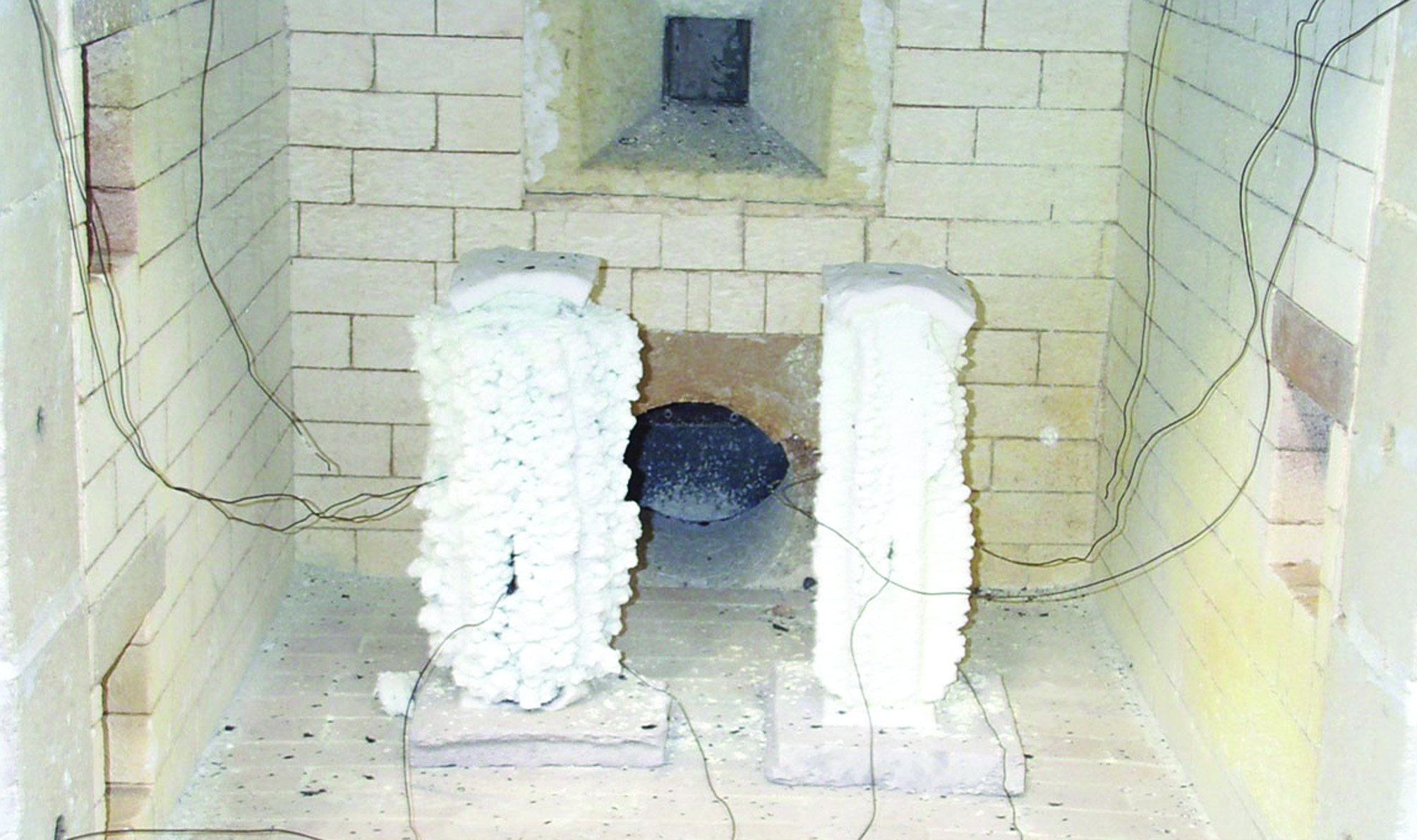
This article specifically focusses on fire resistive intumescent coatings for use with structural steel members. Intumescent coatings are a family of coatings that provide fire resistance to a steel substrate such that the steel may maintain its structural integrity for the duration of the fire rating. They contain certain ingredients which, in a fire situation, cause the coating to bubble and swell. This swelling process provides an insulating layer that protects the substrate from the effects of fire exposure for a specified period of time. There are hundreds of separate designs within UL’s product category for mastic and intumescent coatings (CDWZ) from approximately 20 manufacturers, all of which are listed on the UL website.
The BXUV guide information does make some statements about these coatings that are worth emphasising and further explaining. Firstly, it states that: “The mastic and intumescent coating average thickness should not exceed the maximum thickness published in the individual designs”.
Intumescent protection is being increasingly used to fire protect structural steelwork in new and refurbished buildings due to the low thicknesses and decorative nature of the product. In common with other types of fire proofing, specification and application requires care to ensure the intended fire safety will be provided.
This is a very important statement, as it covers a number of possible scenarios. A product may be tested at a higher maximum thickness for a listing for columns (X series designs) than would be used on a listing for beam (N series designs) or a listing for a floor assembly (D series designs). Mastic and intumescent coatings should not be used on beams at film thicknesses beyond the maximum assessed for a horizontal design (for example, beam or floor-ceiling), as the material has not been tested under load at such high thicknesses.
The intumescence process results in foam that has material properties different from the unreacted, virgin material. It is imperative that a specified thickness is within the range of thicknesses on the listing for any given configuration (that is, size, shape and orientation) of steel member. Evidence has shown that it is not always safe to extrapolate a loading beyond the maximum tested and assessed value. Although in some cases this may work, in many cases this extrapolation will not be conservative. In extreme cases, adding extra thickness to the bottom flange of a beam may actually result in a situation where the intumescent foam is unable to support its own weight, delamination or excess cracking may occur and a poorer level of fire performance may be achieved.
A second statement, reproduced below, within the BXUV guide information addresses column designs relative to W/D ratio, where W is the weight of the beam per lineal foot and D is the perimeter of protection material at the interface between the steel section and the protection material: “The minimum column size and configuration of the steel member is specified in the (X and Y series) designs. The same hourly rating applies when a steel section with an equal or greater W/D is substituted for the specified column size of the same configuration”.
A similar statement is also present to cover beam designs. The above statement indicates that it is possible to cover a larger steel section that has a greater heat sink than the lowest W/D listed steel section, by using the minimum listed loading, without any reduction. This approach is conservative and has been generally accepted. However, the application using a thickness specified for a larger steel section to cover a smaller steel section that has a lower W/D than is listed is not acceptable, as the section will likely be under-protected. Increasing the dry film thickness of the fire protection is an unknown, and as explained above, this does not always provide the extra protection required. Consequently, this could negatively impact the system’s ability to perform as needed in a fire event.
Listings prepared by UL indicate that material thickness tables are applicable to the minimum size of steel member specified. Substitution of a steel member for a heavier weight (greater W/D) using the same specified coating thickness is acceptable, however substitution for a lighter weight (lower W/D) steel member should not take place.
Lastly, within the BXUV design guide, there is a method to calculate for alternate coating thicknesses for slender steel sections based on steel size and hourly ratings. However, this is only applicable for the use of spray-applied fire-resistive materials (UL Category CHPX); the design guide clearly states that this method cannot be used for mastics and intumescent coatings (UL Category CDWZ).
In summary, it is important to understand the allowances and limitations for products specified within certificated designs, because deviation without using proven and established methods is likely to have negative impacts on the fire resistance performance. It is also important to ensure that the correct test method has been used as the basis for the testing of the steelwork protection as stated in the respective building code.
The result is that overall building and life safety may suffer. Guidelines referenced within the UL Fire Resistance Directory have been proven by many years of testing, research, observation and study. Adjusting these guidelines without the proper technical competence and analysis is discouraged. Users of products covered by any third-party certification, including UL listings, should confirm that the ultimate end use of the product and construction is in line with that covered by the scope of the listing, as well as the relevant design guides, all of which can be accessed from the UL website.

For further information, go to www.ul.com
