
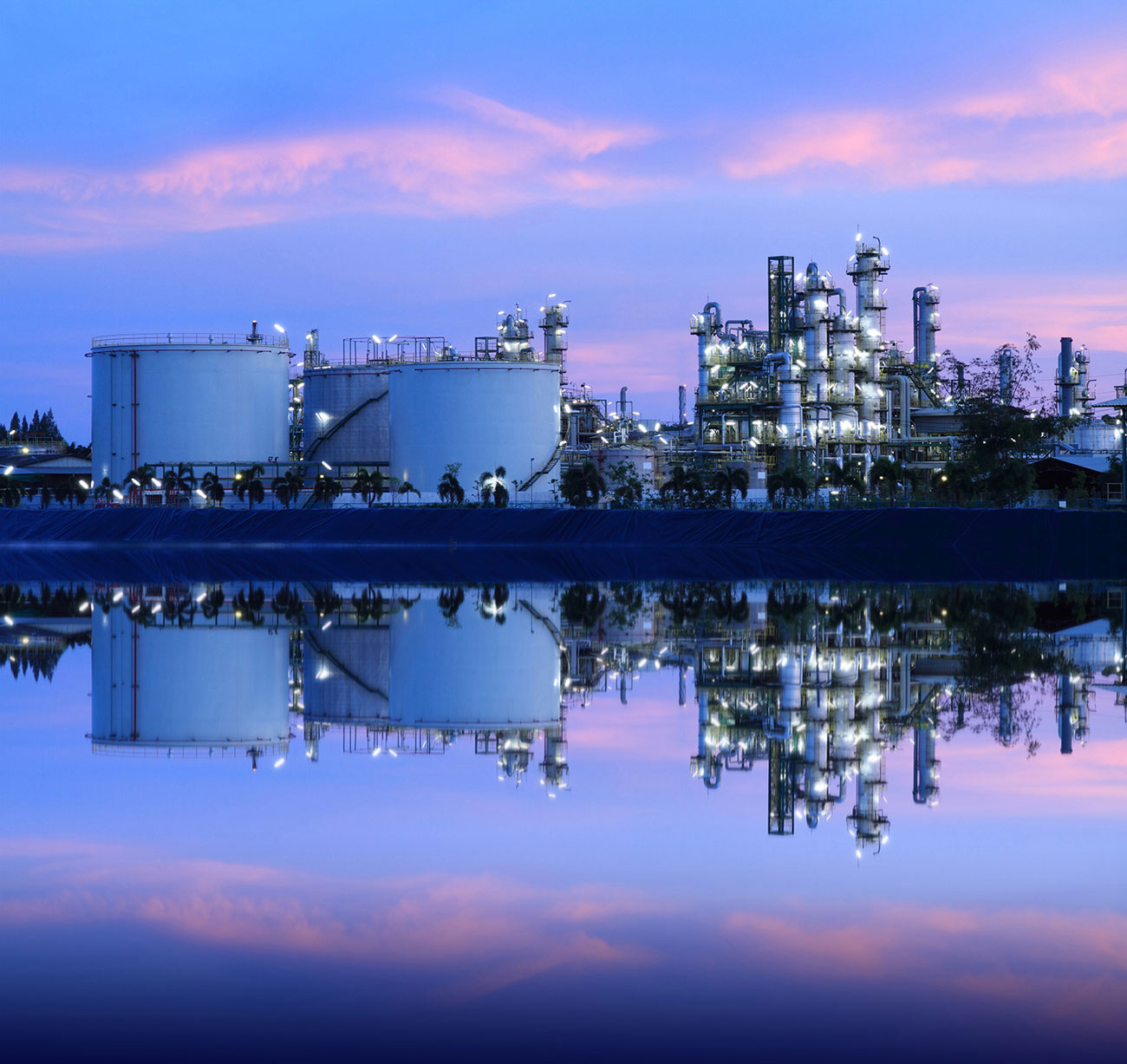
Fuel tank fires are, thankfully, relatively infrequent occurrences. However, when they do happen, they can be devastating. In the UK many remember the explosion and subsequent fires at the Buncefield storage terminal in December 2005. This major hub on the UK’s oil pipeline network is the primary aviation fuel source for Heathrow, Gatwick and Luton airports and, at the time, the explosions were widely reported as the biggest of their kind in peacetime Europe. The investigation found that the initial cause of the incident was the failure of a gauge, which resulted in petrol overflowing from the tank roof into the bund, resulting in the formation of a large vapour cloud which exploded. This led to fires in over 20 tanks in seven separate bunds.
Only last year, Cuba saw a major fire at the Matanzas supertanker base following a lightning strike to one of its tanks, sparking several more explosions and fires throughout the facility.
Atmospheric tanks
Unlike pressurised tanks, atmospheric storage tanks hold liquids under little or no pressure. Often the liquids – or the gases the liquids give off – are volatile, highly flammable or even explosive. Amongst the hazardous fluids stored in this kind of tank are liquid fuels such as automotive oils, petrol, alcohol, methanol, ethanol, propanol, butanol, biodiesel, diesel, gasoline, aviation fuel, paraffin and other chemicals.
Most liquids can leak, bleed or even evaporate, releasing flammable fumes through even the smallest fault or aperture, so special care must be taken to ensure the safe operation of those tanks containing such hazardous liquids. Not surprisingly, there are many environmental regulations applied to the design and operation of atmospheric storage tanks, depending on the nature of the fluids contained. Many of these regulations naturally apply to the prevention of ignition of the liquids and gases.
These storage tanks can be open or closed at the top. However, as well as – or instead of – a fixed top, some have a ‘floating’ roof. This is a structure that rises and falls depending on the level of the fluid inside the tank. In many industries, including petroleum refinery, floating roofs are a prerequisite for safety, as well as a preventative measure against atmospheric pollution, as they keep the combustible vapour above the liquid level to a manageable minimum.
Post-incident consequences
The potential for fire or explosion in the storage of highly flammable liquids in confined spaces is fairly obvious, even to those who are not tasked with ensuring their safety. The threat to life is the prime consideration in identifying ways to reduce the number of incidents, but there are also the financial consequences and significant interruption the loss of such facilities represents given that storage tanks are important capital assets and often central elements in critical operations.
The Matanzas site, for example, is an eight-tank facility which plays a crucial role in Cuba’s electric system. An extensive oil pipeline receiving Cuban crude oil feeds into the site, with the oil then transported to electricity-producing thermoelectric plants.
Business continuity is therefore a vital consideration, as are the significant environmental consequences that a fire can have, both in terms of the fire itself and in the efforts required to extinguish it. At Buncefield, for example, some of the tank bunds failed during the fire, releasing fuel and firefighting foam which polluted both soil and groundwater. The fire burned for four days and involved the fire service using some 68 million litres of water and almost 800,000 litres of foam concentrate containing PFOS (perfluorooctane sulphonate), a toxic substance. The economic costs of the incident were estimated at around £1 billion, with an aquifer used for drinking water supply contaminated and a public water supply borehole some 3km from the site closed as a consequence of the pollution.
Full or empty
While the fire hazard presented by full tanks is fairly obvious to all, perhaps more surprisingly for the uninitiated, these same tanks can also present a problem even when empty. If they have been used to hold volatile products such as the previously mentioned fuels and are left untreated, the atmosphere in the tanks will probably be filled with an explosive residue of hydrocarbon fumes. These will be highly flammable and, if ignited, could explode with disastrous consequences, causing catastrophic damage.
‘Intrinsic Safety’ provides protection against fire
One of the prime causes of fires and incidents involving atmospheric storage tanks is worn or damaged rim seals on the floating roofs. The designs of the tanks can vary from manufacturer to manufacturer and from site to site, depending on local needs. Irrespective of the size and design of the tank, one obvious overriding concern for any detection or activation of a fire-suppression system would be the use of electrical equipment in hazardous areas with combustible liquids and atmospheres. These kinds of hazards require the implementation of ‘Intrinsic Safety’ (IS) techniques, that is, the use of systems using certified IS barriers or isolators.
The technique behind intrinsic safety is to ensure that the available electrical and thermal energy in the instrumentation of the system implemented is always sufficiently low that ignition cannot occur. IS barriers are able to provide protection for the safe operation of electrical equipment such as detection and activation systems in hazardous areas, even those classified as Zone 0 (i.e. those areas in which an explosive mixture is continuously present or present for long periods).
Intrinsically safe LHDC
‘Simple apparatus’ has been in use as a valuable part of intrinsically safe systems for at least 50 years. The term, defined by Clause 5.4 of BSEN50020: 2002,1 is used to describe and is limited to only pieces of apparatus that are fundamentally simple – and the safety of which can be readily verified by the visual inspection of a competent engineer with reference to available data. Certification to the ATEX Directive or any other notified body is not required as they have no own source of ignition because of the low levels of energy. However, even though a device is considered to be ‘simple apparatus’, it must be connected to an Intrinsic Safety barrier. Examples of this ‘simple apparatus’ are discrete switch inputs, such as pressure switches, key switches and digital linear heat detection cable.
Linear heat detection cable (LHDC) can be used as a stand-alone detection system or in tandem with a suppression system to activate the release of extinguishing products to protect atmospheric storage tanks against the outbreak of fire. The digital LHDC is a two-core cable that reacts when exposed to a small flame. The reactive polymer insulators that cover each cable melt at a pre-determined alarm temperature causing the two inner conductors or cables to fuse together, thus creating a switched circuit.


Protection of the rim seal by LHDC
LHDC should be mounted above the rim seal of the floating roof in such a way that it will readily detect any ignition of leaked vapour that may occur. As mentioned, there are considerable variations in the way that rim seals are mechanically arranged and fixed. Each should be separately and thoroughly inspected in order to determine the most suitable and practical mounting method for the cable. Brackets carrying the cable are usually fixed to cover the motion point of the pontoon’s secondary seals at the wall of the tank. Brackets for the LHDC can also be mounted to the primary scissors (or ‘pantograph’) seal.
As the pontoon for the floating roof rises and falls with the varying levels of the liquid contained within the tank, electrical connection between the detection cable and the control panel can sometimes prove problematic, so an ATEX-approved automatic cable reeler, with a 23m four-core cable, is used to maintain contact. Two cores are used to supply the LHDC and the other two cores are used to connect an End of Line monitoring resistor, which can be located outside the tank. The cable reeler is installed on the rim at the top of the tank and connected to the junction box on top of the roof of the floating pontoon, continually adjusting to its movement. The reeler automatically dispenses more cable as the level of the stored liquid falls and winds it back in whenever the level rises.
These cable reelers are enclosed within a cabinet of either 316 or 304 grade stainless steel. Alternatively, a self-supporting, four-core coiled cable can be used with a stainless-steel cable collector on the top of the floating roof pontoon. The coiled cable is connected between two junction boxes – one positioned on the floating roof and the other on the rim at the top of the tank.
Patol – UK manufacturer of LHDC
Patol is a British company located in Reading, Berkshire, designing and manufacturing specialist fire-detection products. Part of the Sdiptech group of businesses, Patol offers fire and safety control equipment and specialist services to industrial customers. Included in its solutions is the Firesense range of linear heat detection cable (LHDC) for early warning of overheating where other forms of detection would not be viable. Patol’s linear heat detection cable is continuously monitored and provides Open Circuit (Fault) and Short Circuit (Fire) notification via the inclusion of an end-of-line device. It can be supplied with a stainless-steel over-braid connected to earth, which is recommended to eliminate the risk of electro-static discharge. It has a response time of less than 10 seconds after exposure to a small flame.
LHDC supplied by Patol was fitted to each of eight storage tanks on the Corrib gas project, one of the largest and most challenging engineering projects in Ireland.
Protecting Ireland’s Bellanaboy Bridge Gas Terminal
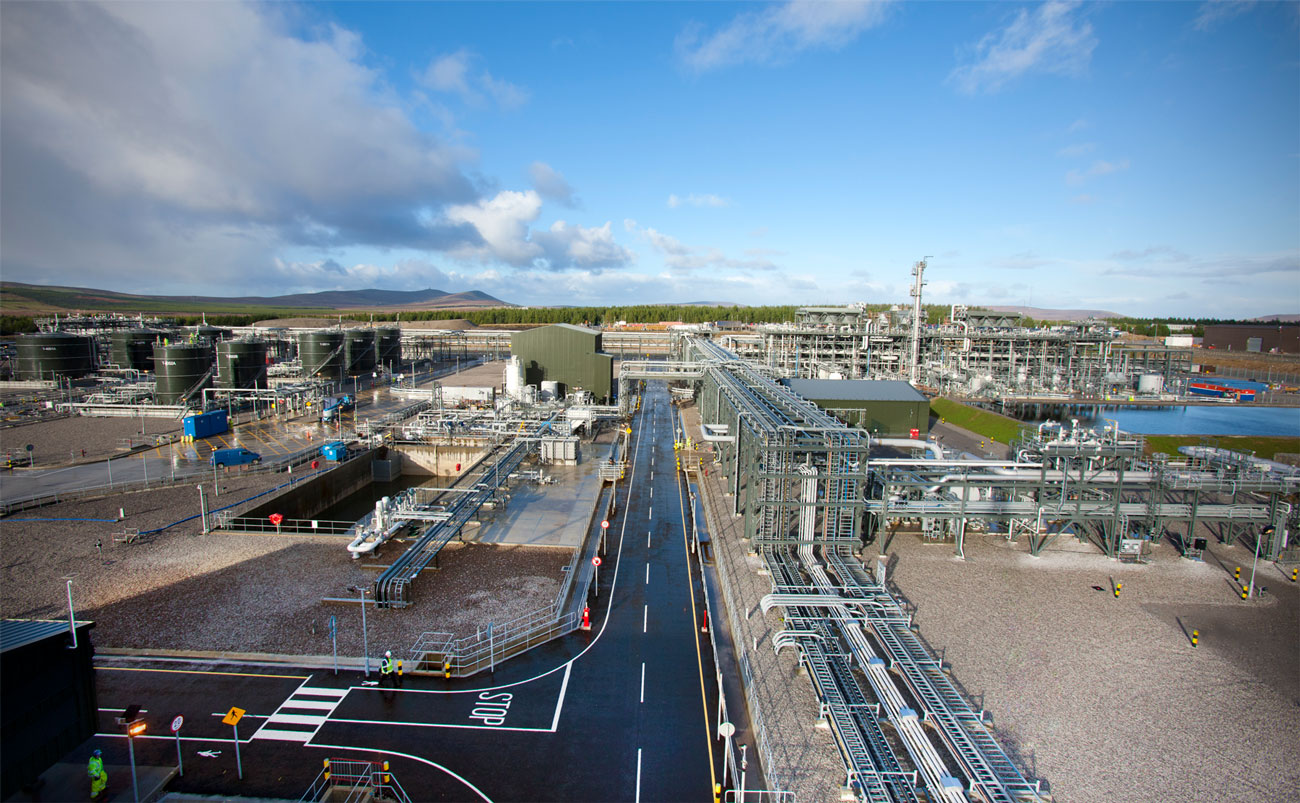
The Corrib reservoir is a gas field situated some 83km off Ireland’s northwest coast with the potential to supply up to 60% of the country’s gas needs. The Bellanaboy Bridge Gas Terminal is one of four distinct parts of the project, operated by Shell E&P Ireland Limited (SEPIL). The gas is processed, dried and stored at the terminal before it joins the country’s pipeline network (Bord Gáis Eireann). The choice of Patol’s LHDC to protect the sealed floating roof tanks constituting the facility’s tank farm was due to the considerable aesthetic considerations on the site. The intrinsically safe system ensures the safe operation of electrical equipment by limiting the energy available for ignition within the eight sealed floating roof tanks. Many aspects of Patol’s digital LHDC system protecting the Bellanaboy Bridge Gas Terminal – from the automatic cable reel down to the clips specified for fixing the cable – were adapted and modified specifically for the tank farm. The modifications carried out to the custom-fitted systems, meant that they delivered the highest standard of fire detection.
For more information, go to www.patol.co.uk
References
1. ‘Electrical apparatus for potentially explosive atmospheres – Intrinsic safety ‘IS’

You must be logged in to post a comment.