

Fire-rated doors are an essential component of passive fire-protection systems within buildings. They are designed and engineered to contain and prevent the spread of fire and smoke, allowing people to evacuate safely and minimise property damage. The primary function of fire-rated doors is to compartmentalise a building. In the event of a fire, the doors in their closed position create a barrier between the fire and the rest of the building.
When purchasing fire-rated doors, it is essential to ensure they have been tested in an accredited ISO 17025 fire-testing laboratory and have obtained certification from an accredited ISO 17065 independent third-party certifier providing conformity assessment body (CAB) services. The certificate confirms that the doorsets have been tested in compliance with the relevant testing standard to meet the local jurisdiction’s requirements and to gain market access.
The key stakeholders responsible for ensuring fire-door compliance have varying degrees of understanding. These stakeholders include designers and architects, project consultants, joinery and fabricators, contractors and installers, inspectors and supervision consultants, authorities having jurisdiction (AHJs), facility managers, building managers and Owners’ Associations. All of these stakeholders have a duty of care to ensure that a fire-rated door is installed correctly per the CAB’s certificate of conformity listing and will function as intended to provide safety for occupants and mitigate property loss.
This article addresses some frequently asked fire-rated door questions and what is and is not allowed when considering a fire-rated door system. We will not discuss questions about specific testing standards, which will be the subject of a future article.
How long is the product certification valid, and what happens if the certificate expires?
The validity of a fire-rated door certification depends on the third-party certifier’s certification scheme and published technical document. Usually, certificates are valid for three to five years, after which the product must be recertified.
An expired fire-rated door certificate means the door no longer complies with the relevant CAB technical document and prescribed standards, and the project consultants and building authorities will not accept it. The impact of an expired certificate would cause delays or even stoppages in ongoing projects, as the now non-compliant doors may need replacing to meet project specifications and prescriptive requirements.
The manufacturer of the fire-rated door system is responsible for ensuring their products remain certified (valid) and compliant per the AHJ product registration approval. A manufacturer is not bound to remain certified with the present CAB and may choose to work with different third-party certifying bodies to confirm that their products are up to date and compliant with the latest regulations and requirements.
Why can you not change single components of a fire-rated door system?
Any changes to a certified fire-rated door system, which includes replacing a single component, can compromise the door’s integrity and reduce its ability to resist fire. When a fire-rated door is certified, it is tested as a complete assembly, including all its components, such as the door leaf, frame, hardware, seals, etc. Each component is selected and tested to work together to ensure the door meets the required fire-resistance rating for the specific test standard.
If any of the components are replaced with different parts that have not been specifically tested and certified for use in that assembly, the door’s performance may be negatively affected. Even a seemingly minor change, such as a different type of hinge or latch, can impact the door significantly. It is recommended to consult with your third-party certifier before making any changes. They will recommend the necessary action, such as a complete re-test of the door set.
Can a fire-rated single-door certificate be obtained by testing a double door for a specific fire rating?
If a double door is tested and certified for a particular fire rating, a single door with the same construction and components will likely meet the same. However, the third-party certifier must evaluate the door and confirm that it meets the same standards and design construction as the double door. But re-testing is required to issue a certificate of conformity to complete the product’s compliance.
Can fire-rated doors be modified or altered after they have been installed?
Changes and modifications to fire-rated door systems should only be made with the approval of the third-party certification body providing conformity assessment body (CAB) services and assurance. Unsolicited changes to a fire-rated door system without the consent of the CAB means the door is no longer certified and approved, resulting in non-compliance with relevant building codes and regulations and authority having jurisdiction (AHJ) product registration certificates. Such modifications include cutting or drilling holes in the door, altering or substituting the specified hinges, or changing the door’s locking mechanism. Depending on the scope of the changes and the published rules for technical assessments and applications, a third-party certifier may further be tested and recertified before the modified doors can be considered safe and compliant. It is always recommended to consult with the third-party certifier before making any changes to the certified product.
Can a small glazing element (vision panel) be added to the certified flush fire-rated door?
An assessment from a third-party certifier is possible. The third-party certifier will typically require fire-test evidence with the same door design and the addition of the glazing element to evaluate the performance of the modified door. This evidence can be a fire test report or recognised testing laboratory data. Still, it would generally involve reviewing the modified door’s manufacturing process (including product sampling) before the fire testing and evaluating the fire test evidence (test report). If the modified door meets the required fire rating for that specific standard, the third-party certifier will issue a new certificate of compliance or approval for the modified door.
Can the certified fire-rated door thickness be increased to meet the project specification?
If your project specifications require a thicker fire-rated door system than what is currently certified, then increasing the thickness of the door will typically invalidate the certification. Fire resistance is provided by the combination of various components and their assemblies, such as the door core, hardware, glazing, seals and other elements that work together to limit the spread of fire, smoke and heat, and cope with the deflection and deformation throughout the duration of being exposed to the fire condition. Therefore, increasing the thickness of the door without ensuring that all of these elements and components continue to work together as certified may compromise the door’s ability to perform as intended during a fire.
It is always recommended to consult with the third-party certifier before making any changes to the certified product. They will be on call to advise if a technical assessment is required.
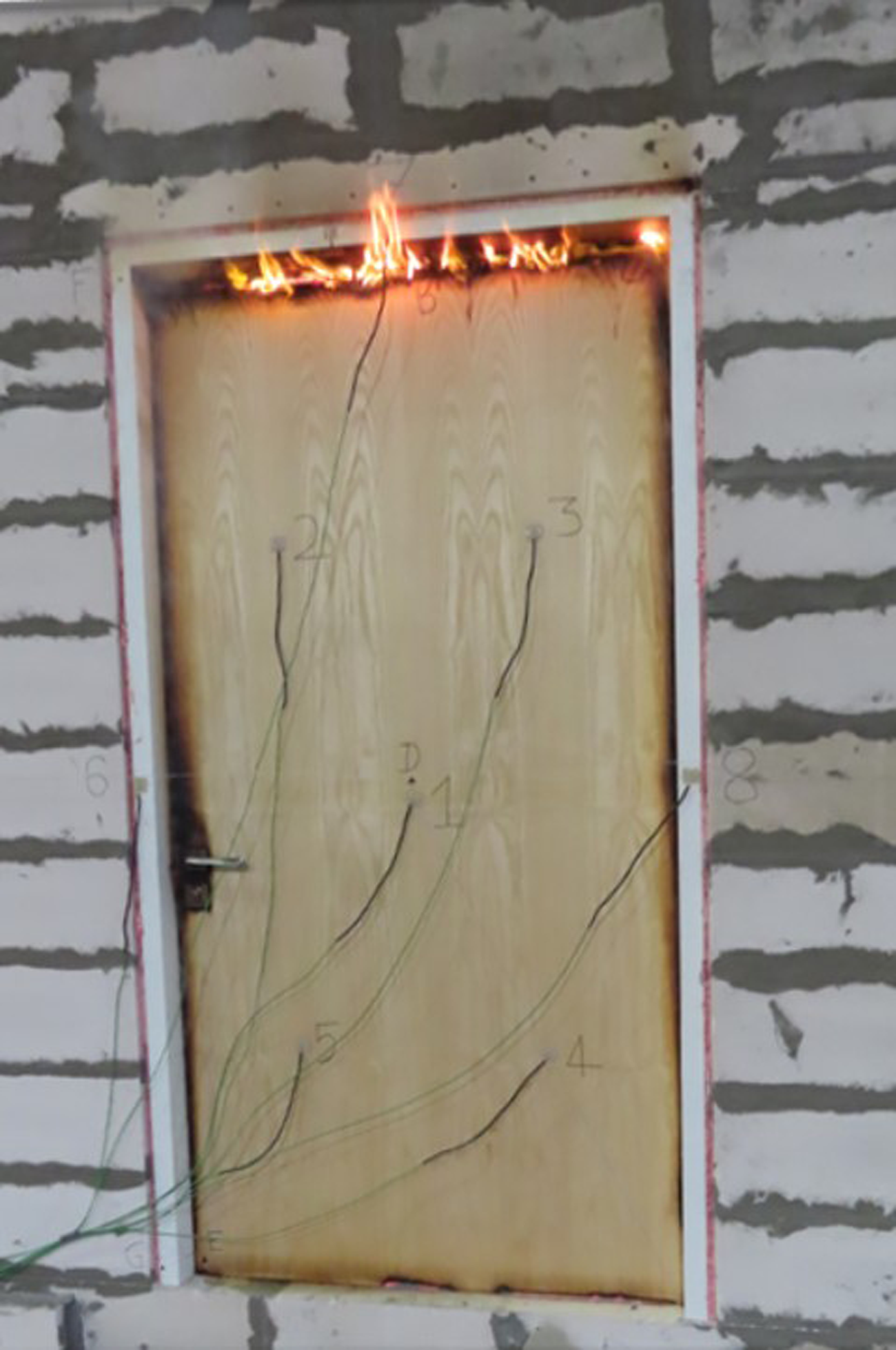
Can different hardware be used besides what was tested and certified with the fire-rated door assembly?
It depends on which test standard the fire-rated door is tested and certified to, as some standards accept the use of listed and labelled hardware.
In general, using the same brand and model of hardware as tested initially and certified with the door set is recommended, as the new set of hardware may have a different dimension, material, design and construction. It’s better to consult with the third-party certifier before changing the certified product.
Is it acceptable to keep the existing doorframe (unrated), and replace the door with a fire-rated door, and label it as a fire-rated door assembly for a specific rating?
Installing a fire-rated door on an existing doorframe that has yet to be specifically tested and rated for fire resistance may compromise the overall fire resistance of the door assembly. Even if the door is rated for one hour of fire resistance, the surrounding frame and hardware may not withstand the heat and pressure of fire simultaneously. Therefore, installing a fire-rated door on an unrated frame is generally not recommended. Consultants or building officials may require the removal of existing frames and ask for the fresh installation of the complete door explicitly set, tested and rated for fire-resistance properties.
Can fire-rated steel doors be installed in drywall partitions?
Yes, only if the steel fire-rated door system has been tested and certified for installation in a drywall system. You can only install a steel fire-rated door that has been tested and certified for installation in a masonry wall in a drywall system when a technical assessment supports it by the CAB. The technical evaluation must be based on test data and published science and engineering practices. This is because a drywall partition will perform differently when subjected to fire than the performance of masonry block walls. When there is insufficient historical test evidence, published science and engineering to support such a technical assessment, additional indicative or type testing will be required.
Should intumescent strips be installed in the door or the frame of a fire-rated wooden door?
Intumescent strips are typically placed within the door frame of fire-rated wooden doors, but some designs may require them to be countersink in the door lipping. The thickness and location of the intumescent strips should follow the manufacturer’s instructions, applicable fire test evidence, and the manufacturer’s listing from a third-party certifier. Using the same brand as specified in the manufacturer’s listing, where using different brands may have other reaction and performance properties. They may not perform like the original fire-rated door system strips tested and certified.
What is the acceptable gap between the perimeter of the door and the frame of a fire-rated door?
The maximum gap between a door and its frame depends on various factors, such as the door type, the kind of frame and the purpose of the door set. In most cases, fire doors typically have a maximum gap allowance of 2 to 3mm all around the door and frame, and for a steel door, it will be between 3 to 4mm. It would be best to refer to the manufacturer’s listing for the particular door and frame to know more.
Although our fire-rated doors have passed the fire test and the certificates have yet to be issued by a third-party certifier, is it possible to get the labels to meet the client’s project deadline?
Labels for fire-rated doors can only be provided once a third-party certifier issues the product certificate. This certificate confirms that the doors meet all required standards and regulations for their intended use. The labels are a tangible representation of this certification and are attached to the doors to show compliance. Without the product certificate, there is no official confirmation that the doors meet requirements, which means the labels cannot be provided in such a scenario.
If doors are installed on a project before the factory comes under the supervision of the CAB, you cannot retrospectively label those doors on the project site. These are not certified doors. If the doors are produced after the FPC began and sent to the project without the labels, then there may be a case for retrofitting this on the project site; however, the CAB may or may not need to be involved, depending on their own schemes and technical procedures.
In case you have any concerns about the fire-rated doors in your building, such as labels removed, missing, or painted over. It’s essential to address them promptly with the appropriate professionals.
Why is fire door traceability essential to maintain in a manufacturing location?
For fire-door manufacturers, a traceability system that maintains records of the entire manufacturing process, encompassing the production of fire-rated doors, door design, materials, components and installation, simplifies the identification of potential issues and also expedites corrective measures. At the same time, a robust tracking mechanism that monitors the movement of raw materials from suppliers to final products can effectively resolve future problems for manufacturers of fire doors.
Conclusion
Manufacturing complied and certified fire doors can be complex and challenging. Considerable attention to detail is required, including a strong understanding of regulatory requirements, proper material selection, consistent quality control, obtaining product certification and proper installation. By addressing these challenges, fire-door manufacturers can produce high-quality products that meet the necessary safety standards and provide adequate fire protection for the assembly.
About the Author

Mohammed Nouman
A TIC Industry professional, Mohammed Nouman is a Senior Certification Specialist with Emirates Safety Laboratory (ESL), specialising in fire-rated door product certification, factory production control auditing, product sampling of wood, steel and glazed fire-rated doors, and conducting in-the-field surveys and inspections for projects, as per NFPA 80, to ensure doors are installed correctly in compliance with the regulations. He supports projects and clients across the Middle East, North Africa and Indian Sub-continent regions for fire-safety products.

You must be logged in to post a comment.