
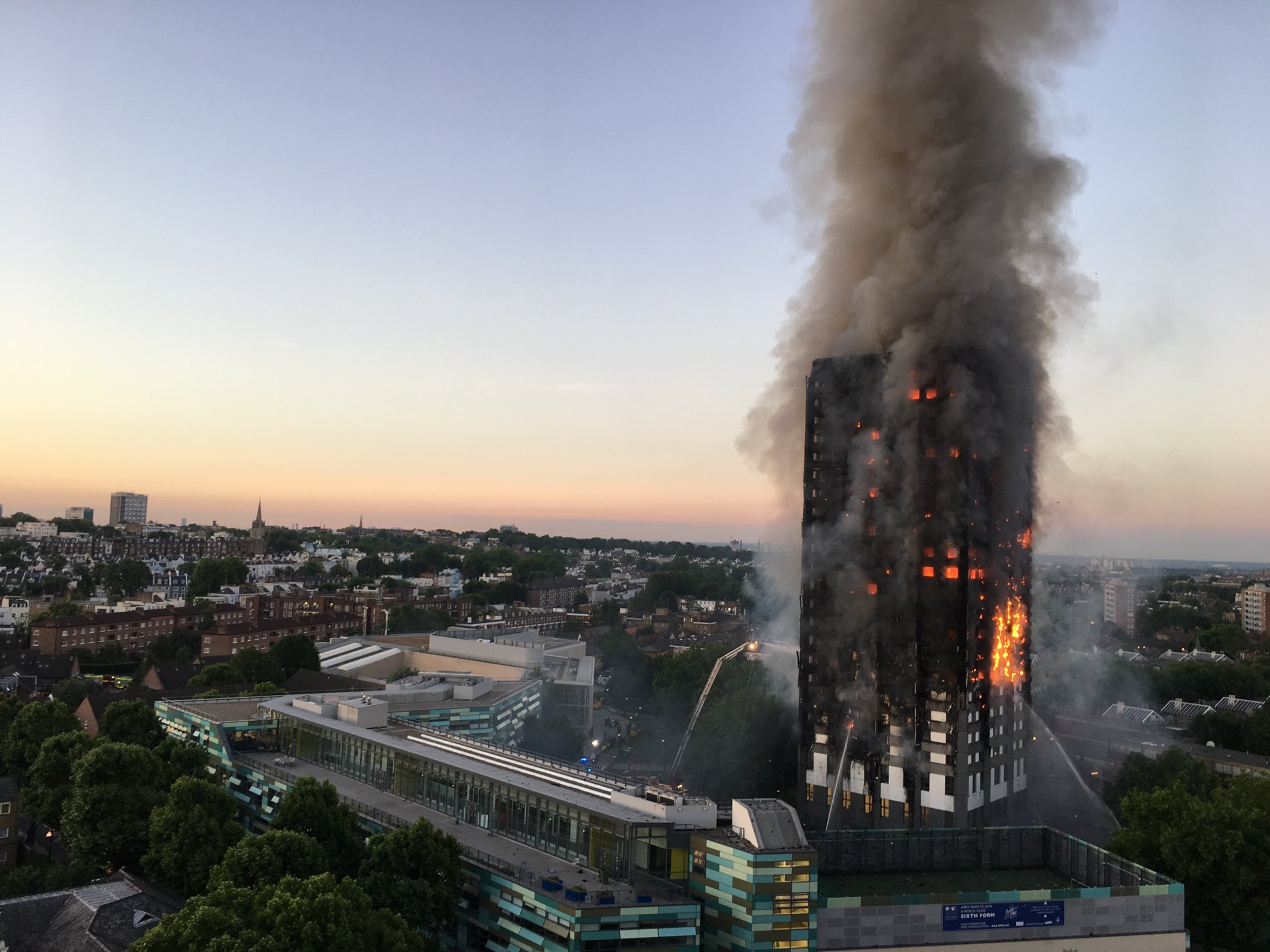
I am honoured to have been invited to write this column, especially as I am not an expert in fire or fire safety. I hope you will forgive me for treading into somewhat controversial territory. It would be easy to dismiss my views as a ‘non-technical’ outsider; I hope you won’t. I hope you will hear in them both a deep respect for the industry and a desire for change.
The 14th of June this year will mark the fifth anniversary of the Grenfell Tower fire. A date seared into our memories. A date that many hoped would be a watershed moment for fire and life safety.
Far from that, and without wanting to negate the many advances that have been made, events over the last couple of weeks have shaken to the core my faith in the sector leaving my trust at an all-time low.
At the Grenfell Tower Inquiry we’ve heard disturbing evidence from institutions who failed in their accountability to protect the public. Evidence that has raised questions about the role of supposedly independent professional bodies.
For example, we heard that for 14 years the Building Research Establishment (BRE) copied the same conclusions into a year-end report reaffirming the overall effectiveness of the building regulations and Approved Document B. That it accepted a new contract with the government that insisted reports should ‘not contain any policy recommendations’ or proposed revisions to guidance. And that BRE’s Dr Colwell knew of ACM’s high combustibility and use but failed to alert government or industry.
Such revelations are now a regular feature of the inquiry, and the scale of the building safety crisis in the UK, indicates that poor practices must be commonplace.
Alongside this, I was disheartened by some comments and the use of ‘yawn’ emojis in response to Paralympian Baroness Grey-Thompson’s recent impassioned speech in the House of Lords about fire safety and disability. In safe cultures, all lives matter and matter equally and all lives count. Given that 40% of the disabled people in Grenfell died – ‘yawn’ emojis seemed at best insensitive. According to the charity Kindling, 95% of fire deaths occur in low- and middle-income countries. If you are disabled or poor or old, you are more likely to die in a fire. The exchanges around Grey-Thompson’s address left me with the sense that the industry was in an existential crisis.
And perhaps most disturbing, I have been approached by several members of the fire profession saying they don’t feel they can discuss these issues openly. That speaking up and challenging is not safe and may have negative professional and commercial repercussions. This, in my experience, is not unusual in hierarchical, command and control professions. Equally, when those in positions of power realise that this culture of fear exists, they are horrified. I seldom find individuals who knowingly drive this culture, it is rather an unintended consequence of an historic way of operating that is perhaps past its sell-by date.
So, as we approach the fifth anniversary of Grenfell, my trust in the fire profession is at an all-time low. I don’t know who to listen to and have little faith in professional bodies or institutions, as I cannot tell if they are truly independent or being driven by some agenda. I gravitate to individuals who share my values but am also aware this is problematic as I’m not hearing diverse voices and have no way of assessing competence.
As I sit with this last paragraph I’m filled with sadness. I imagine people reading this and the reactions it might evoke, and I wonder if I should just delete it and write something more palatable or nice. But I can’t.
Because I believe this messy space is the incubator of change.
Trust doesn’t get restored with platitudes. Trust gets restored when individuals and institutions and organisations demonstrate they are worthy of trust. Change doesn’t happen through charters and slogans. Change happens when we grapple with dissonance, when we openly tackle and talk about the gnarly difficult problems. Of trade-offs and practicalities and ethics and morals. Change happens when we create spaces to listen to diverse and different voices. When we surprisingly find common ground and unexpected paths forward that we hadn’t seen before.
So, co-existing with sadness is hope. Because I love and admire the fire profession. Because I have looked into the eyes of the firefighters that entered the building that night. Because maybe, just maybe, we are beginning to talk about the issues that we need to – existential questions about equality and purpose and intent. And, if we can listen and learn from one another, on the other side of those conversations we might find trust and change.
Between 2011 and 2014, Gill Kernick lived on the 21st floor of Grenfell Tower, seven of her immediate neighbours were among the 72 who died. She campaigns for change and in 2021 her book Catastrophe and Systemic Change: Learning from the Grenfell Tower Fire and Other Disasters was published.
About the Author
Consultant: Safety Leadership and Culture.
