

Electricity has been one of the most important technological developments in history. It has vastly improved living standards the world over and powered countless generations of innovation. Indeed, many of the modern amenities we take for granted today – from on-demand lighting to computing and the internet – could not exist were it not for electricity. Yet, it is all too easy to forget how dangerous it can be.
When not properly controlled or protected against, electricity can be a wild and unpredictable force. It is highly sensitive to environmental factors and climactic conditions. In the wrong environment, it can be potentially deadly to those who use and try to control it.
This is particularly true of electrical installations as they age. Over time, circuits and controls deteriorate due to heat, humidity and damage during use. If safety precautions are neglected or ignored, the result can be dangerous hazards such as electric shocks, burns, explosions and fire that endanger the lives of installers and end users. Home Office figures suggest there were 27,621 accidental dwelling fires between 2017 and 18, 34 per cent of which were caused by ‘misuse of equipment or appliances’. These dangers are very real, so installations must always be treated with caution.
Only technology can prevent electrical fires
Fortunately, technology provides many ways to protect against the worst effects of electrical fires. It’s impossible for building, facility or energy managers to monitor all parts of a circuit at once, so organisations should look to solutions that actively hunt for faults and intervene to protect users from harm and mitigate hazards. When it comes to the many varieties of electrical hazard, sometimes the best form of defence is offence and prevention is better than reaction.
Electrical overloads and short-circuits
Electrical disturbances are very common in electrical circuits, often resulting to inconsistent power quality. However, when there’s a rise in electrical current that exceeds the capacity of the cable it is being carried by, it will cause it to overheat which may, in turn, lead to a fire. In the extreme case of a short-circuit, the sudden release of a large amount of energy can even lead to a dangerous explosion.
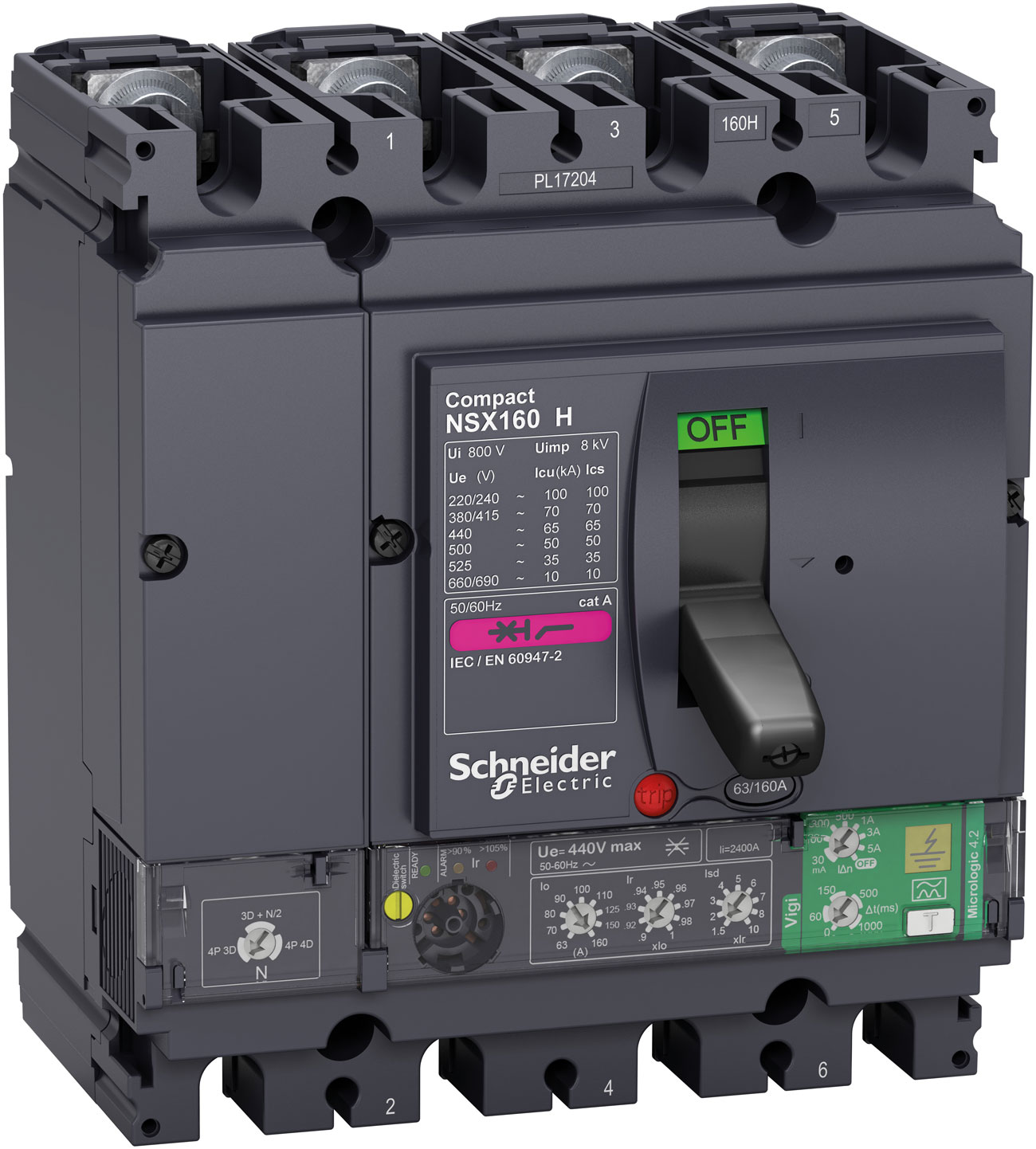
Since the very early days of electrification, fuses and circuit-breakers have been instrumental in preventing these kinds of safety hazard. The principle behind these technologies is that, when a disturbance or imbalance is detected, the circuit is immediately broken and will stop conducting electricity, preventing damage to equipment and the people who use them. Using the latest connected energy sensors, combining protection and communications allows the health of the load, supply network and protective infrastructure to be continuously monitored, viewed and diagnosed to ensure a reliable, efficient and safe installation.
Arc faults
‘Arc faults’ are often caused by human error or aging installations. For example, they can be due to loose terminals or cable damage. When these occur a localised hot spot is established that carbonises insulating materials. This carbonisation acts as a conductor, enabling currents to run through them in the form an arc of electricity. These arcs cause further burning that produces more carbon which, in turn, conducts increased current. Arc faults create a vicious circle that can quickly snowball into a fire hazard.
In many environments, arc faults are almost impossible to avoid or prevent. However, with the latest tools and technology they can be safely managed by operators. The latest generation of Arc-Fault Detection Devices (AFDDs) mitigate the risk of electrical fires caused by electrical arcs resulting from faulty or worn electrical appliances and circuits.
These devices continuously monitor circuits for fault-related electrical arcs. Upon detection, they break the circuit and prevent the arc from doing further damage. AFDDs should selectively distinguish between distortions that occur during normal operation, and potentially dangerous arcs that occur in faulty equipment.
Leakage currents
When there is a rise in current that exceeds the capacity of its cable, the components are likely to overheat with the potential to cause a fire. In the extreme case of a short-circuit, the sudden release of a large amount of energy can even lead to an explosion.
Since the very beginning of electrification, fuses and circuit-breakers have been instrumental in preventing these hazards. Yet a new generation of solutions is taking protection to the next level. By combining protection with enhanced communications, organisations can continuously monitor and diagnose the health of their loads.
When electrical insulation becomes degraded, or where there is excessive moisture or corrosion present, electrical currents can leak towards the ground or neighboring conductive elements. Indeed, the majority of electrical faults in low voltage installations are due to earth insulation failures.
In a dusty and humid environment, an insulation failure between line conductors and the earth can lead to an arc fault and start a fire. Indeed, test have shown fires can be started even is a fault current as low as 300 mA.
The dangers are well known to regulators. The IEC 60364-4-42:2010 (clause 422.3.9) makes it mandatory to install highly sensitive residual current devices (RCDs) in increased fire-risk locations. In the UK, the BS7671 standard requires installations to have RCD protection provided by a tripping current that does not exceed 300mA wherever an increased fire risk exists.
With the advent of technology organisations are now able to choose circuit breakers with earth leakage protection and have tripping capabilities – where the circuit is broken when the earth leakage current passes above a certain threshold – or a circuit breaker with earth leakage which sends an alarm to operators when the earth leakage threshold is breached, thus maintaining continuity of supply but warning of an impending fault that requires action.
Earth leakage circuit breakers can be used in lieu of traditional overcurrent-only breakers at no additional footprint, while increasing safety. The option of just enabling an alarm instead of tripping, can also avoid disruptions by limiting downtime.

Arc flashes
When a short-circuit occurs between the live parts of a system, the current travels through the air or nearby gases. This releases a large amount of energy in a fraction of a second, taking the form of heat, sound, light and pressure waves. This type of fault, normally described as an ‘arc flash’, poses a significant fire risk.
Personal protective equipment is crucial for workers where arc flashes are involved, but faster-acting devices are also key to mitigating them in the first place, enhancing safety. To reduce the severity of arc flash hazards workers are exposed to, arc flash energy levels must themselves be reduced.
Optical relays that detect the presence of arcing faults by looking for the associated flashes of light and irregular current flow are strongly advised. These relays will then activate a circuit-breaker, or an even faster shorting switch that creates a bolted fault that clears the arc. Another method is to use a maintenance selector switch, which temporarily lowers the instantaneous short-circuit current setting. Should an arc flash occur downstream, the reduced fault clearing time allows a decrease in the amount of energy generated by the electrical arc, and can limit the risk of injury.
Lightning
While often an extreme case, a lightning strike is a real possibility in most parts of the country. Every year, the UK, Ireland and the surrounding seas receive 200,000 to 300,000 lightning counts a year. On average, two people are killed and 30 injured each year due to lightning strikes, which often result in devastating fires.
A typical bolt of lightning carries an electric current of 30,000 amperes (30 kA). In the worst-case scenario, a similar discharge traveling along a power line to a facility, or if a facility is struck directly by lightning, can cause a massive fire hazard. A lightning-induced surge of current through an electrical network can cause the deterioration of electronic equipment, and even start a fire inside electrical devices.
The role of the building protection system is paramount in protecting a facility against direct lightning strikes. To be effective the system should consist of a capture device to take the brunt of a lightning strike, as well as down-conductors designed to convey the current into the inert earth. Any metallic frames should be linked together in a practice known as equipotential bonding to protect any workers from electrical shocks.
The power to know
When designing or implementing an electrical installation, safety should always be front of mind. Specifiers and installers should be aware to the dangers of arc flashes, faults and current leakage, preferring smart solutions that monitor proactively and intervene automatically to prevent and limit the damages of electrical fire.
Through analysis and monitoring of real-time data, IoT-connected devices not only tell you when exactly there is a problem but where the source of the issue is. This ability to anticipate and react quickly to hazards limits damage and protects contractors, engineers and end users from harm. Through connected product and edge control software – offered by Schneider Electric solutions such as EcoStruxure – circuits may be monitored to safeguard the health of the installation while making it more reliable, efficient and safe.
For more information, go to www.schneider-electric.com/en
About the Author
Alessandro De Danieli, Offer Marketing Manager at Schneider Electric.

You must be logged in to post a comment.