
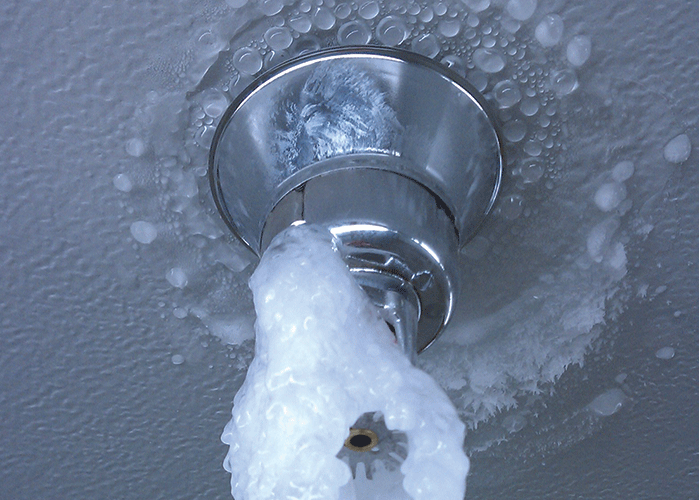
The answer to the question regarding who is responsible for maintaining the fire protection system once installed appears to be quite obvious and simple. Most codes, including reference standards such as NFPA 25 and NFPA 72, clearly state that the owner is responsible for maintaining the fire protection systems and that the owner may delegate that responsibility, in writing, to the occupant if the owner is not the occupant.
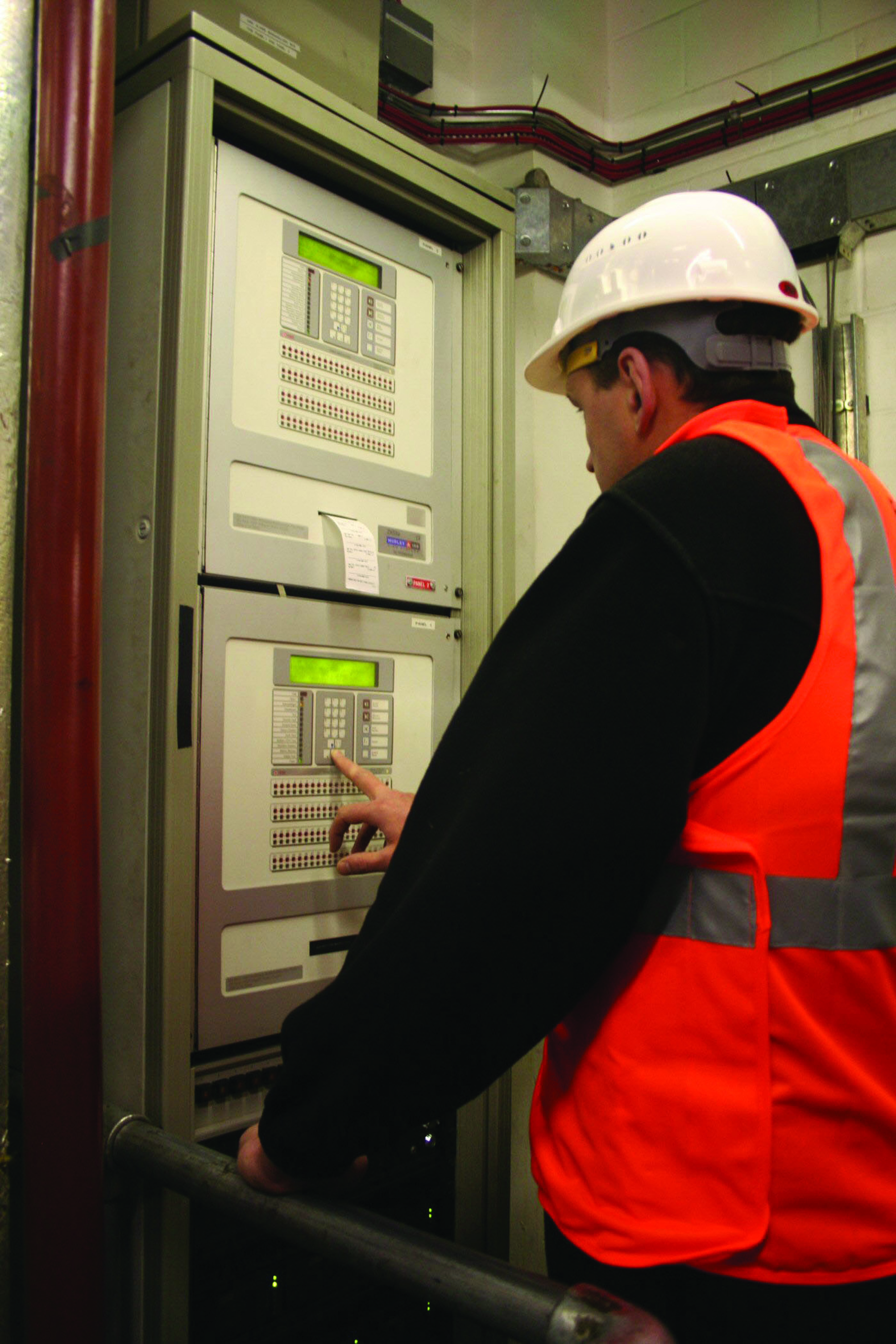
While some owners will use facility personnel to perform the required inspection, testing, and maintenance (ITM), many owners contract the services to a firm that specialises in providing such services. Sounds simple and straightforward, but there appear to be some gaps in the process.
Identifying the Problem Areas.
Over the past several revision cycles, the NFPA Technical Committee on Inspection, Testing, and Maintenance of water-based fire protection systems has processed numerous proposals and comments addressing the responsibilities of the owner and the inspector. In an attempt to address the issue more completely, the Fire Protection Research Foundation conducted a symposium during which the issues raised in previous revision cycles could be discussed in an open forum.
The final report from the Symposium is not yet available but will be posted on the Foundation website when it is complete. As such, any representation of concepts presented during the Symposium should be considered as my observations as a participant in the program.
The normal “wear and tear” type items that occur for any system are addressed by the various standards that detail the inspection, testing, and maintenance of such components. These would include items such as the operation of a control valve, the testing of the performance of a fire pump, and evaluating whether a standpipe system can deliver the required flow at the required pressure. Thinking beyond water-based fire protection systems, these also include whether the initiating devices on a fire alarm system work, dampers close or open as required for a smoke control system, and if there is enough agent in a special suppression system.
However, during the design of any fire protection system, the engineer designing the system makes various assumptions about the use and occupancy of a space and in the case of water-based fire protection systems, the adequacy of the water supply. Any changes or modifications made by the owner may impact the ability of the fire protection system to perform as intended. This was clearly one area of concern raised during the Symposium along with errors made during the initial design or installation of the system.
Design and Installation Errors.
It is generally assumed that fire protection systems will be properly designed and installed. To the extent that this is not the case, most standards that deal with ITM procedures do not require such features to be re-evaluated on a periodic basis. If an error occurs during design or installation it should have been caught during plan review, installation, or during the acceptance procedures or commissioning. For example, NFPA 25 contains language that states:
1.1.3.1 This standard does not require the inspector to verify the adequacy of the design of the system.
An Annex note for that paragraph indicates that the owner should evaluate the adequacy of the design of the system when changes are made that might impact the performance of the system.
The question that often arises is to what extent the inspector referenced in paragraph 1.1.3.1 should identify design and installation errors. It is generally accepted that owners probably do not want to pay for a complete re-evaluation of the system on a regular basis. It is also generally understood that an inspector may not be aware of alternative methods that were considered during the design process and also may not even know the applicable standard at the time of design and installation. As such, at this time a complete re-evaluation of systems on a regular basis is not required by most codes or the reference standards.
What if the design or installation error is in plain view while performing a required inspection activity? For example, what if a sprinkler is not provided in a space wherein sprinklers would normally be required? Paragraph 1.1.3.1 above would say that the inspector is not required to identify the lack of a sprinkler in the space. The NFPA Technical Committee has acted on proposals and comments to say that the inspector should not be required to inspect for areas where sprinklers are not provided. Does that mean that the contractor does not have a responsibility to report the lack of a sprinkler in space? If the contractor does not, who will? At the Symposium representatives for regulatory agencies and insurance companies commented that their resources are decreasing, so one cannot depend on those resources to identify such problems.
While not wanting to pay for a complete re-evaluation, some building owners will say that they know very little to nothing about fire protection systems and therefore rely on the contractor to identify such potential deficiencies. If the contractor observes and reports one such condition but fails to observe another, are they negligent? Will identifying the space that is without a sprinkler in a separate report containing the necessary language that the inspector has not performed a thorough re-evaluation of the system satisfy the legal system? Some attorneys will argue that any attempt to notify the owner of such potential problems, while not identifying all, will subject the inspector to litigation should a system fail to operate as intended.
As you can see, when considering all perspectives, this is not an easy issue to address. Considerable input was received during the Symposium and the NFPA Technical Committee will now consider the discussions during the next revision cycle. There did seem to be general consensus among the Symposium participants that communication between the owner and inspector could be improved so that the owner had a better understanding of the services being provided and what is not provided. For example, some system inspection reports clearly state that pitch of the pipe in a dry pipe sprinkler system is not included in the standard inspection protocol but it could be for an additional fee should the owner desire to have the pitch confirmed. Some insurance companies have launched programs to better education the owner regarding the fire protection systems in their building.
Management of Change.
Changes in a building or system that involve some construction activity or change of occupancy classification generally require a permit for the construction activity. Such changes are generally subject to some regulatory action that may involve plan reviews, inspections, and acceptance tests or commissioning, with some level of involvement by one or more regulatory agencies. The appropriate changes in the fire protection systems resulting from such activities should be caught, the same as would be expected for the construction of a new building or the installation of a new fire protection system.
What about the changes in use, process, or materials that can occur without any construction activity? NFPA 13 defines the commodity class for the storage of frozen foods in non-waxed, non-plastic packaging as a Class l commodity. If the same frozen food product is stored in waxed-paper containers in cartons, it is a Class ll commodity. If the food is stored on plastic trays, it is a Class lll commodity. If the wood pallets are changed to plastic pallets for food stored on plastic trays, the commodity classification is Class IV or Group A Plastics depending the fire performance of the plastic pallets. In other words, the appropriate commodity classification for the storage of frozen food products is clearly “It Depends.”
How many warehouse owners or operators will recognise the need to have the fire protection system re-evaluated based upon changes in the packaging or the pallets? Again, the regulatory officials and insurance companies have stated that reduced resources will limit their ability to identify such changes. The issue is considered a design issue, so the inspector is not required to evaluate what, if any, changes have occurred in the commodity classification of items stored in a warehouse.
While much of the current discussion is focused on NFPA 25, these issues are not limited to automatic sprinkler systems. Changes in the interior finish can impact the audibility of a fire alarm system. Adding partitions within a room with no change in room volume can still impact the effectiveness of a special hazard fire suppression system.
Retro-commissioning.
Based upon the situations identified above plus many others, some will argue that fire protection systems should be subject to a retro-commissioning process. The retro-commissioning process would confirm that changes have not occurred due to construction or changes in the use, process, or materials. Procedures commonly used to test systems, such as disabling certain control functions during the testing of the fire alarm system, are also being used as a reason for retro-commissioning.
The possibility of required retro-commissioning of fire protection systems raises another series of questions. At what frequency should the retro-commissioning occur? Should it vary based upon the occupancy classification or a risk assessment? Will the benefit outweigh the costs and inconvenience of performing retro-commissioning? Is the performance of fire protection systems acceptable or is it expected to decline for some reason?
Summary.
Maybe the only definitive statement resulting from this article is that the owner is responsible for the proper inspection, testing, and maintenance of fire protection systems. Decreasing resources are limiting the ability for regulatory agencies and insurance companies to assist the owner in fulfilling that responsibility.
Liability concerns may be preventing at least some inspectors from identifying potential design or installation errors. Lastly, there needs to be a process in place to address or manage changes that may adversely impact the performance of fire protection systems. While the management of change is the owner’s responsibility, they may not have enough knowledge to truly address the problem.
While the respective committees that develop the standards that address inspection, testing, maintenance, and possibly retro-commissioning continue to evaluate the problem and attempt to identify solutions, owners need to be aware of the level of service they are receiving from insurance companies, regulators, and inspectors and evaluate the adequacy of their preventive maintenance program.

For further information, go to www.koffel.com
