
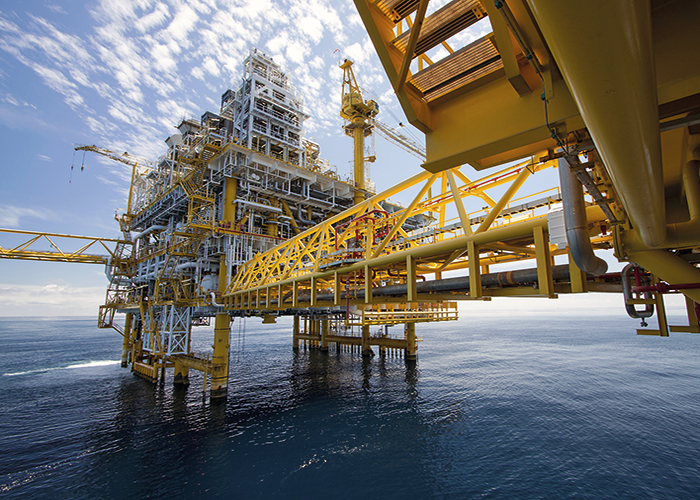
Fires and explosions, and the consequences to lives and assets, are a major safety concern in the process and oil and gas industries. Designing key safety critical elements (SCEs) to withstand the consequences of gas explosions and hydrocarbon fires, as well as reducing the risk of escalation is an important aspect in process plant design.
It is not always possible to completely eliminate the risk of catastrophic events. Therefore, it is important to effectively protect personnel from those events and reduce risk of escalation so the event is contained to a single fire area and does not spread to other areas or the whole installation.
Being too conservative in consequence modelling does not always result in safer designs, as the positive effect of some highly effective mitigation measures might be masked by the simplification and conservatism. During the past 30 years, the use of advanced Computation Fluid Dynamics (CFD) for explosion simulation especially for offshore installations has become the industry standard.
The embracing of similar advanced tools for fire related consequence modelling has been much slower. With the advent of new software tools, ever-faster desktop computers and improved user interfaces, more advanced fire simulation models are becoming more accessible to a wider range of fire safety engineers. Thus, CFD simulations are becoming a viable option for many aspects of fire safety engineering, including escape route studies and Passive Fire Protection (PFP) optimisation.
PFP is the use of low thermal conductive material, usually epoxy or special concrete… delaying the temperature rise in the protected structural elements.
Fires on Offshore Facilities
Several different types of hydrocarbon fires can be distinguished on offshore facilities. Pool fires occur as a result of ignition of liquid fuel spill and can be either a static pool or a flowing liquid. If the released liquid is at high pressure, the resulting fire is known as a jet spray fire. Following a gas leak, an immediate ignition would result in a gaseous jet fire. If the ignition is delayed, the released gas would be ispersed and mixed with air resulting in a flash fire or possible explosion.
The most common fires that PFPis employed to protect against are pool and jet fires. These fires can engulf the system – structure or equipment – in a flame or expose it to high radiative heat fluxes for prolonged periods of time.

PFP on Offshore Facilities
Passive fire protection, unlike active fire protection, does not need any external activation means or input from personnel. The common PFP material used varies from mineral based such as rock wool, organic resin based – intumescent coatings – and composites.
The use of PFP in the oil and gas industry, particularly on offshore facilities, has many advantages as well as disadvantages. The aim of applying PFP to structure and process equipment is to allow safe evacuation time of personnel and for firefighters to deal with the fire. This is particularly crucial on offshore facilities where escape and evacuation is more critical compared with onshore facilities. Prevention is done by maintaining containment of additional process equipment and isolating the fire to a single fire area.
Key structural elements also need to be protected from fires to prevent loss of structural integrity, which could further add to the spread due to falling heavy objects or even structural collapse of the whole installation. By preventing escalation, the PFP implementation helps protect people and assets. However, PFP increases the risk of corrosion and leak frequencies from process equipment. PFP also increases the dimensions of equipment, which causes a rise in explosion design loads. The inspection and maintenance of PFP requires an increased number of personnel in the process areas and creates a higher potential of ignition sources and increase in the number of exposed people.
Excessive use of PFP on structure and equipment has the potential of making the fire and hot gases significantly hotter than without it. Adding PFP also increases the total weight of the installation and increases the installation and maintenance costs of the facility. Therefore, the optimal, risk-based and proportionate use of PFP is required to provide the necessary protection.
PFP Implementation
The definition of the fluctuating heat load expected on a system – structure or equipment – can be useful in assessing the need for PFP. The reasoning is that there is no need to apply high heat load PFP in areas where these loads will not occur. While there are a number of standardised methodologies for determining risk-based explosion dimensioning loads (for example, Norsok Z-013), there currently are no standardised detailed methodologies for defining changing heat loads in a similar way.
A simplified approach can be followed to define the heat loads on a system. The approach starts with a screening of the areas of concern to identify the critical flammable fuel inventories / SCEs. On an offshore facility, these are normally the inventories containing the hydrocarbons. Assessment of the type of fire expected is done by investigating the representative mixture in the inventory and the conditions of containment. In process areas, the operating pressure in most inventories is usually relatively high and therefore jet fires are most common.
A first screening of the inventory volumes is conducted to determine if a fire occurs close by an SCE is large enough or is present for a critical period of time. For instance, a leak from a hydrocarbon segment given the segment characteristics – volume, pressure, temperature, representative mixture – can be evaluated to determine whether a leak rate above a cut-off value (0.1 kg/s for example) could happen for at least five minutes.
The effect of isolation and depressurising of the segment is taken into account in the evaluation. In addition, the leak frequencies of the segments can be included to evaluate the frequency of leak and potential fire occurrence from different segments. After the screening stage, areas with potential critical fires that could expose the SCEs to hazardous situations are subject to further consequence analysis to define the expected heat loads on the system. Specific system targets in the area are identified such as firewalls, separator vessels and shutdown valves. Fire scenarios are set-up to expose the selected targets to representative heat loads.
The fire scenarios are simulated with a suitable CFD consequence modelling software that has been validated for high-momentum gas jet fires such as FLACS-Fire. CFD simulations tools are used rather than simplified models and empirical correlations in order to account for the various scenario variables such as fire obstruction by geometry, leak characteristics and weather conditions.
Other more advanced programmes that simulate the material response to heat loads can be used for this purpose (more advanced non-linear finite elements analysis). For vessels and pipes, it is assumed that the running medium would absorb part of the heat loads applied on the target and thus dissipate more of the received heat radiation. The extent of this reduction will depend on the flow rate inside the pipe. Therefore, time-dependant heat transfer models are to be used for this purpose. Heat generation due to fire fluxes will compete with heat dissipation due to flowing medium until the fire decays.
Steel temperature is monitored during the heat generation and dissipation process to detect whether the steel temperature would reach critical values. In any of the described methods, where the heat transfer calculations indicate a failure in a given time range which is not compatible with the safety function and performance requirement, the PFP is implied or increased and the calculations are repeated until the system is observed to withstand the expected heat loads.
The optimisation of PFP application would significantly reduce both installation and maintenance costs.
Balancing Act
The importance of adequate PFP implementation on offshore facilities is undisputable. Prevention of escalation for at least sufficient time to allow safe evacuation is a minimum requirement with respect to safety.
The extensive use of CFD allows the inclusion of various affecting parameters such as fire interaction with geometry, release characteristics and weather conditions. The calculated incident heat loads are then used to assess whether the system would withstand the heat without protection or if implementation and where the increase of PFP is required according to a specific performance requirement. This optimisation of implementation of PFP provides an important balance between the benefits and drawbacks.
The costs of installation and future maintenance of PFP in areas where it does not contribute to safety can be reduced and limited significantly, while system protection can be achieved while limiting the disadvantages.
For further information, go to www.GexCon.com
About the Author
Camille Azzi is Senior Consulting Engineer at GexCon.
