
Across the world, there is near-unanimous agreement that action needs to be taken to halt climate change. Rarely do issues achieve such a strong consensus, with the scientific community, global governments, businesses and consumers all broadly agreeing that more needs to be done to create a sustainable future for our planet.
The UN’s Net Zero Coalition – which targets net zero global greenhouse gas emissions by 2050 – has placed a ticking clock on climate action. However, according to the UN, current climate plans laid out by the biggest global polluters – notably the EU, USA and China – fall well short of what is required.1
This has resulted in the Glasgow Climate Pact, agreed at COP26, which called on all signatories to strengthen their Nationally Determined Contributions (NDCs) – in other words, to take more drastic steps to reduce the emissions they produce.
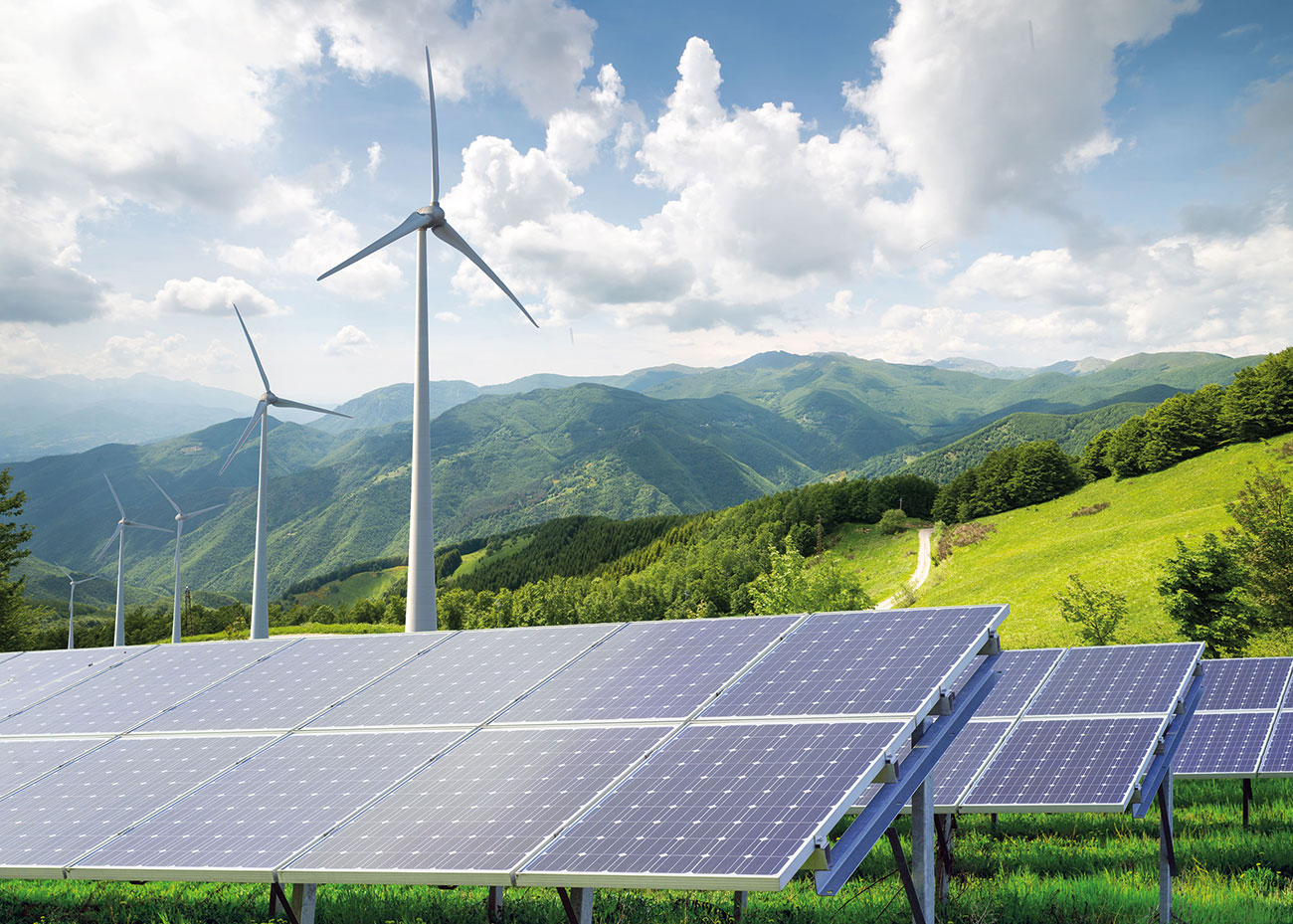
In this environment of ever-increasing pressure surrounding climate action, there is set to be a rapid increase in the amount of renewable energy generated and consumed. To achieve this in the timescales laid out by global Net Zero goals, green energy generation must become safer and more cost-effective to encourage more widespread adoption across the world. Preventing costly damage to wind turbines, solar panels and other renewable energy generation systems is, therefore, of paramount importance if this technology is to even partially phase out fossil fuels.
Images supplied by Author / Contributor
The risk of fire increases as renewable energy grows
Every renewable energy generation system is at risk of fire. The three most common methods of green energy generation are photovoltaic (solar power) panels, wind turbines and hydroelectric power (generated by the movement of water). All of these systems contain converter cabinets, capacitor cabinets and transformers to convert the energy generated into electricity and adjust the voltage of this electricity so that it can be delivered safely to the power grid.
A fire can easily break out in any of these ignition points. The value of the damage caused by a fire in a generator system can vary wildly depending on a number of factors, but it can easily total into the millions. The average cost of a wind turbine is estimated to be between $4m and $8m USD, according to insurers. In some cases, these fires can pose a significant risk to human life, such as in the case of the 2020 Srisailam dam fire in India,2 where a control panel short circuit in the underground facility caused a blaze to break out.
As sustainable energy generation continues to proliferate, so too does the risk of fire. The BRE National Solar Centre study,3 carried out on behalf of the UK government, found that, while fires in photovoltaic systems were relatively rare, the total number of incidents did increase proportionally as the number of systems that were installed also went up. Naturally, this presents a risk to large solar farms as well as domestic and commercial properties that have solar panels installed.
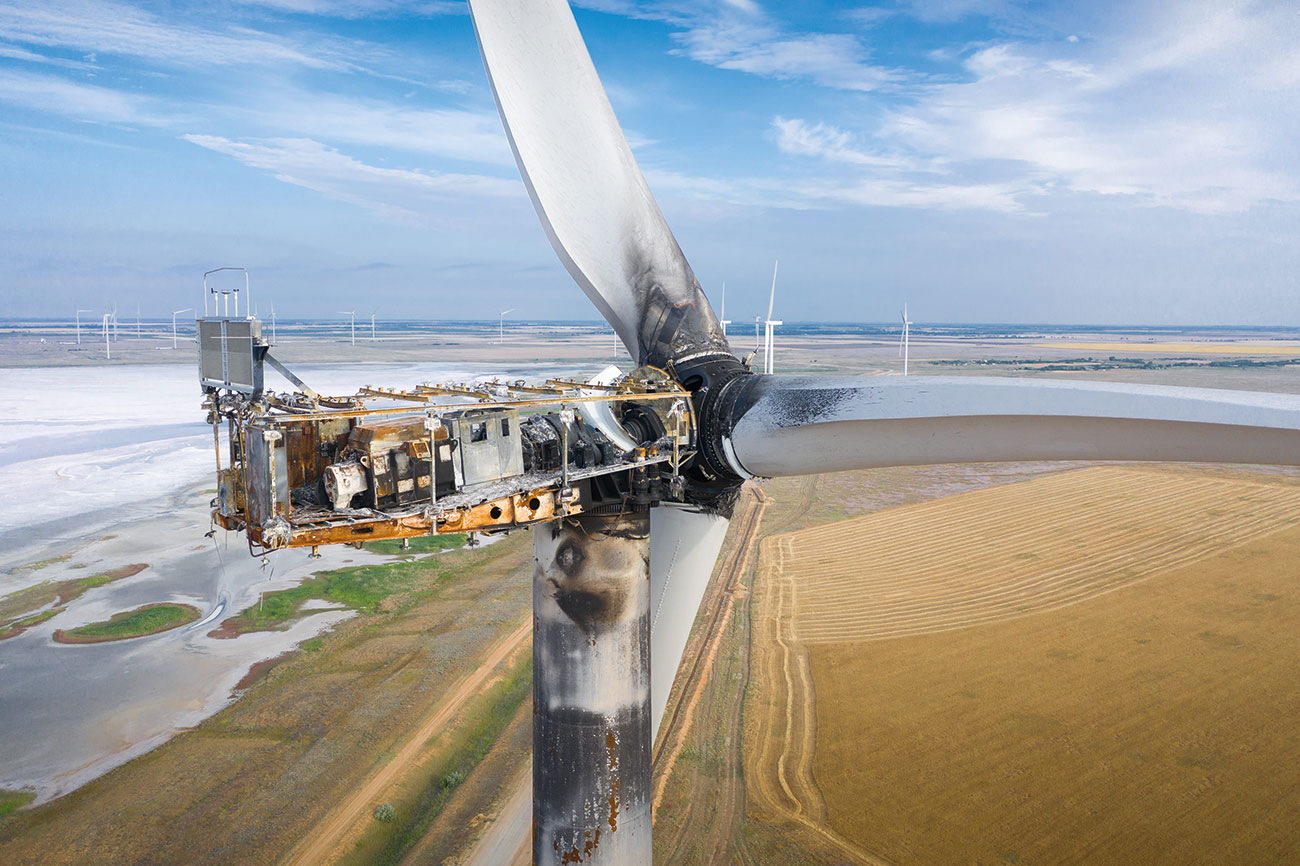
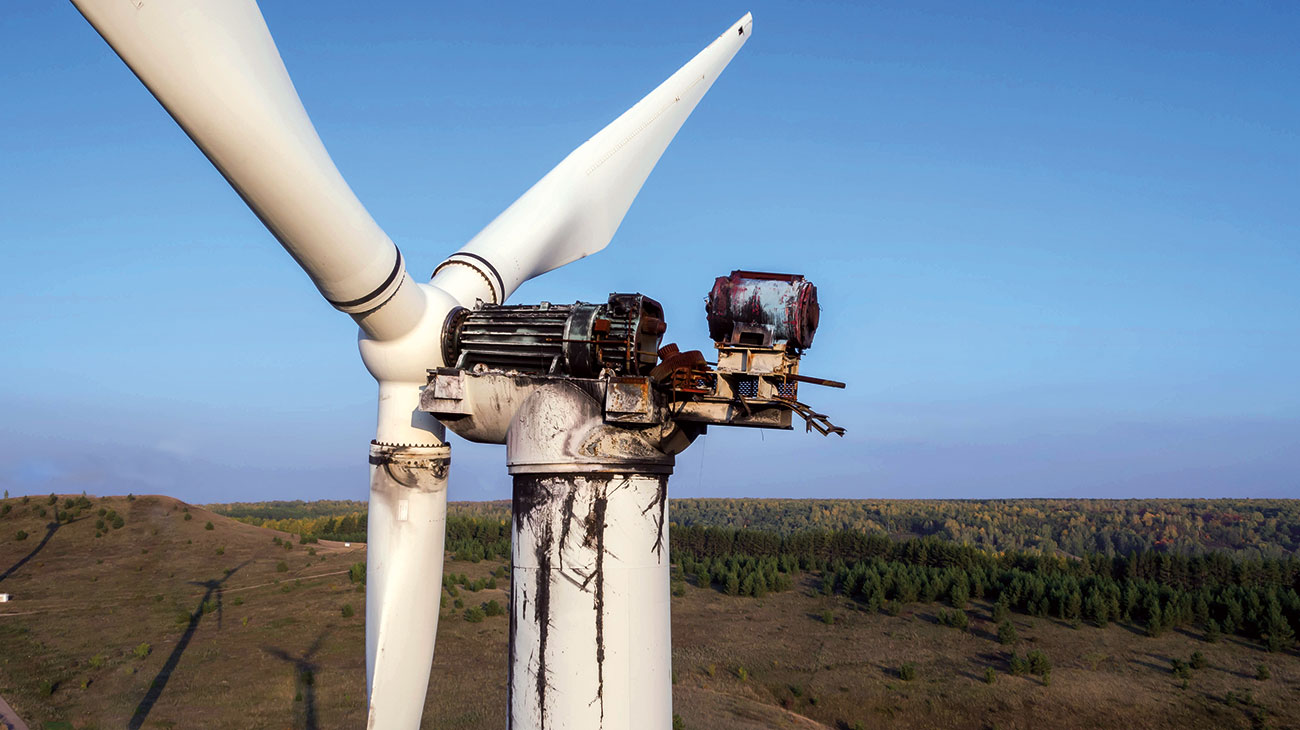
Likewise, as the number of offshore and onshore wind turbines continues to increase across the globe, so too does the number of fire incidents. Fire is the second most common cause of catastrophic wind turbine failure (only behind blade failure), according to research from Imperial College London.4 The most common cause of wind turbine fires is from an electrical fault – such as overloading, arcing, or cable failure – but they can be caused by poor maintenance and even lightning strikes.
Depending on the area of ignition, these fires can prove difficult to fight. According to a report by International Association for Fire Safety Science (IAFSS),5 91% of wind turbine fires are not even reported at all, while a study from the Caithness Windfarm Information Forum (CWIF) found that of the fires that are attended, 90% of fires in the turbine nacelle are left to burn.
The crucial role of automatic suppression
Every second is crucial when it comes to suppressing any fire, but the unique properties of renewable energy generation systems mean that this mantra is even more important. These systems – particularly wind turbines, which tend to be located as remotely as possible – cannot rely on manual fire suppression. Yet, as laid out above, the consequences of doing so can lead to extremely expensive asset damage or severe risk to life.
Automatic fire-suppression systems are the obvious solution to this problem. These systems automatically detect a fire and deploy the suppression system to fight it at the point of ignition. This means the fire never gets the chance to spread out of control. However, they are not a one-size-fits-all solution. Each installation has its own unique requirements.
At Ardent, we work with two different automatic systems for static equipment. The first, and most common, is a pneumatic system. These systems utilise a network of pressurised tubes, routed around every potential fire hazard in a cabinet, to detect and deliver their suppression agent. When a fire ignites, the heat melts the tube, creating a rupture. This rupture causes the suppression agent to be deployed directly onto the cause of the fire.
As mentioned, this is not a universal solution. By its very nature, a pneumatic system is designed to rupture. This can lead to false discharge issues in areas with heavy or constant vibration, such as a wind turbine nacelle brake.
To rectify this issue, we developed a new system known as the linear heat detection (LHD) cable. This cable is routed around all potential fire hazards much like the pneumatic system. However, instead of using a pressurised tube, it uses copper wires coated in a heat-sensitive polymer. Once the heat from a fire melts this polymer, the two wires contact and cause a short circuit that signals a control module to deploy the suppression system. This eliminates the risk of false discharges caused by damaged or kinked cabling – in fact, the LHD cable can differentiate between damage caused by fire and other means. This means it will only deploy the fire suppression agent in the event of a fire.
Depending on the nature of the system being protected, either a pneumatic or an LHD system may be preferred. However, when specifying the system, consideration must also be given to the choice of suppression agent. And, when dealing with electrical cabinets and sealed panels, one choice stands out above the others.
Images supplied by Author / Contributor
Gaseous suppression
The ultimate goal of suppressing fires on renewable energy generators is asset protection. Automatic suppression systems are beneficial as they can deploy before the fire has the chance to spread. However, using the wrong suppression agent can, in some cases, cause almost as much damage as the fire itself. When dealing with expensive wind turbines or advanced photovoltaic systems, this unnecessary damage comes at an exorbitant cost.
There are three main types of suppression agents – wet, dry and clean. Wet agents consist of a water-based suppressant that, while useful for cooling superheated components in a fire, should never be installed in electrical systems. Dry agents – powder-based solutions – have been shown to offer the best extinguishing time in studies. However, they are not always best suited to static equipment due to the residue they leave behind. This has to be cleaned up before the system can be put back into service.
In the interest of avoiding expensive repairs and extensive downtime at a time when the world relies on each wind turbine, solar panel and hydro system more than ever, a clean gaseous suppression agent is the optimal solution. These systems use a non-corrosive, non-conductive gas to starve a fire of oxygen and smother it before it can spread. As its ‘clean’ moniker suggests, the gas disperses quickly and leaves behind no residues, making it quicker and easier to make necessary repairs to get the affected electrical system back into operation.
As a fast-deploying solution that causes no collateral damage, the clean agent system has an enormous role to play in protecting the green energy assets of the future. If the global reliance on these assets continues to grow, it must be supported by improved safety systems.
Renewable energy must be made more viable through loss reduction and efficiency improvements. Automatic gaseous suppression agents provide this, giving renewable energy generation systems a secure foundation to build upon.
For more information, go to www.ardent-uk.com
References
1. https://www.un.org/en/climatechange/net-zero-coalition
2. https://timesofindia.indiatimes.com/city/hyderabad/telangana-9-dead-in-srisailam-power-plant-fire-mishap/articleshow/77675557.cms
3. https://assets.publishing.service.gov.uk/government/uploads/system/uploads/attachment_data/file/786882/Fires_and_solar_PV_systems-Investigations_Evidence_Issue_2.9.pdf
4. https://www.imperial.ac.uk/news/153886/fires-major-cause-wind-farm-failure
5. https://www.iafss.org/publications/fss/11/983/view/fss_11-983.pdf
About the Author
Neil Crowther is Managing Director at Ardent.

You must be logged in to post a comment.