
The fire-protection industry is accustomed to change and innovation. Despite being able to trace its roots back at least 2,000 years to ancient Roman times, the fire-protection industry is forward-thinking and has generally demonstrated a willingness to adopt technology and new processes to reduce the risk and impact of fire on people and property.
Fire-protection systems are frequently grouped as either passive or active systems. Passive fire protection is intended to limit the spread of fire and smoke and includes the construction materials and the building designs to compartmentalise fire and enable building evacuation. On the other hand, active fire-protection systems slow or stop fire and smoke and include fire-detection, fire-alerting and fire-suppression systems, including sprinklers and extinguishers. Most active fire systems are linked to building fire panels, and the panels are connected to fire dispatch centres to ensure rapid deployment of fire brigade assets.
Standards for the design, installation and commissioning of active and passive fire-protection systems provide the necessary guidelines to ensure buildings are safe for their intended use. Recent disasters like the Grenfell fire in London in 2017, which sadly saw 72 people perish, reinforce the imperative to improve active and passive fire protection systems. Clearly, innovations in designing and installing passive and active fire-protection systems are vital.
Innovations in fire-protection systems
At every fire-industry tradeshow like the recent Fire Australia conference in Melbourne or FIREX International in London, manufacturers and distributors display their latest innovations in fire-protection systems. Recent innovations include self-testing smoke detectors, mobile phone apps that offer remote fire systems monitoring and advanced watermist systems that quickly control and suppress fire in road tunnels.
As technology generically leaps forward, innovations in fire protection often follow quickly. For example, recent advancements in telecommunications networks have fuelled the development of the Internet of Things (IoT). When IoT is teamed with advanced sensors that monitor room temperature with astonishing precision, firefighters can quickly determine where a fire has started and how it is spreading. Likewise, IoT-based wireless smoke detectors can alleviate the need to rewire heritage buildings and self-report battery levels and maintenance requirements.
Innovations in fire-protection maintenance processes
Along with innovations in the design, manufacture and installation of fire-protection systems, it is also essential that improved methods of maintaining or servicing these systems are continually reviewed and developed.
The ongoing maintenance or servicing of fire-protection systems is well established by standards, regulations and the manufacturers of fire-protection systems. It’s better for a fire-protection maintenance professional to discover an issue or defect with a fire-protection asset instead of a fire brigade turning up at the front door with lights flashing and sirens blaring. Fire-protection standards like the Australian Standard 1851 provide rules and regulations that building owners must meet regarding fire-protection maintenance. Additionally, each Australian jurisdiction has regulations that draw from AS 1851 and often provide further requirements on servicing frequency, reporting, training and technician certification requirements.
A challenge for fire-protection maintenance service providers and their teams of field technicians is the large number of standards and regulations they are required to access and be familiar with. AS 1851 mentioned is more than 200 pages, and fire technicians usually need access to multiple standards. Searching through hundreds of pages of information on mobile phones or thumbing-through printed copies of standards to locate appropriate information is time-consuming and fraught with potential error.


Just-in-time access to maintenance standards
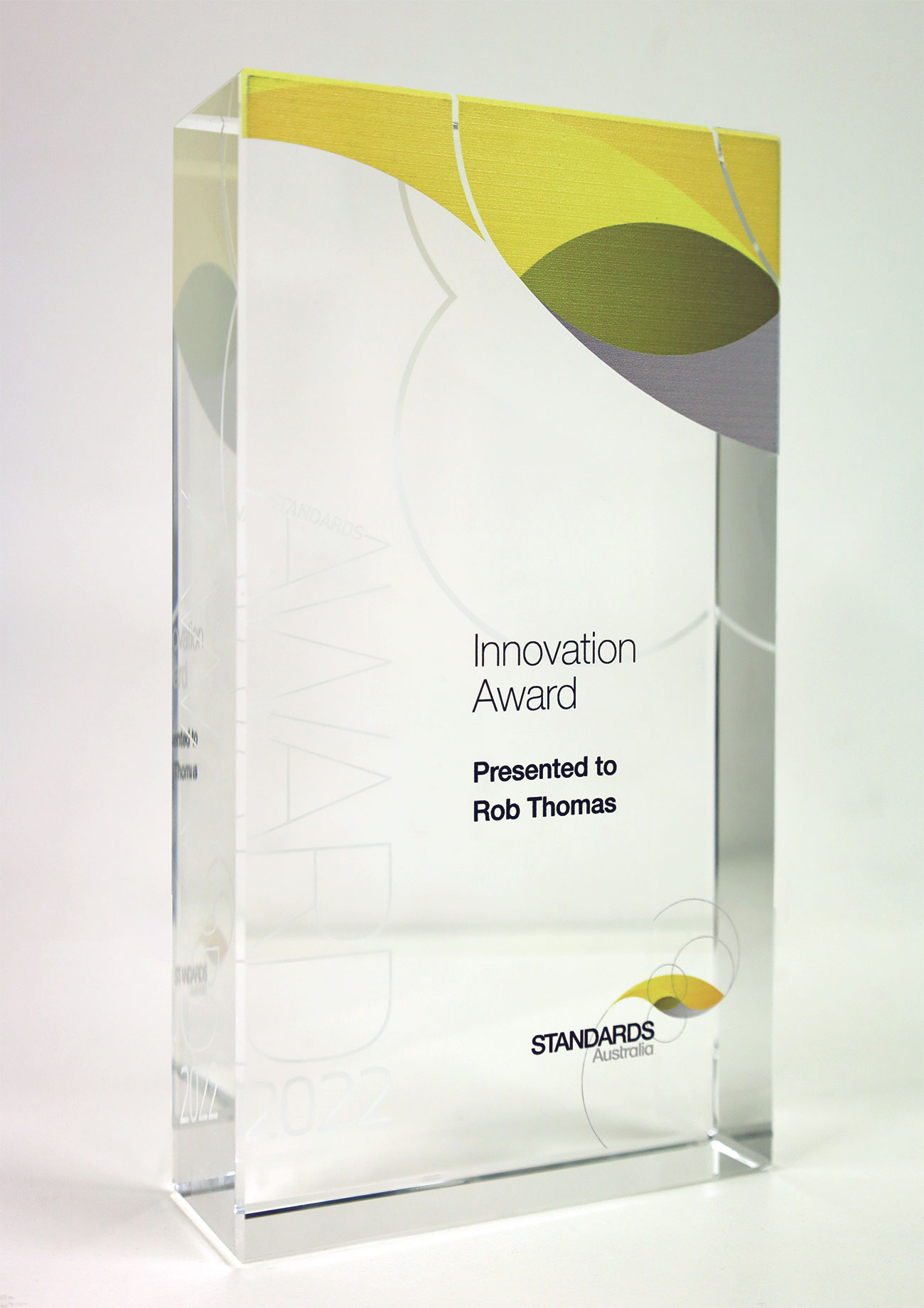
In late May, Standards Australia presented their 2022 Innovation Award to Rob Thomas, a former fire technician and manager of one of Australia’s largest fire-protection maintenance service providers. This award recognises those who have championed new and better ways of delivering standards to end-users, where that Innovation meets a clear need and benefits the community and industry.
Rob has pioneered an innovative approach to delivering the Australian Standards to fire technicians in the field in partnership with Standards Australia. The first-of-its-kind system offers just-in-time and in-context access to vital information as fire technicians inspect fire-protection assets, saving time and reducing the chance of errors. Rob Thomas is the founder and Managing Director of FireMate, a software-as-a-service provider to the fire industry.
Adrian O’Connell, Chief Executive Officer of Standards Australia confirmed that Standards Australia’s vision is that standards, already part of safety, modernisation and risk management in the fire industry, should be used in innovative and cutting-edge digital solutions.
The digital transformation of fire-protection maintenance and servicing enables maintenance providers to improve service levels to building owners while also increasing their efficiencies. The safety of people and places must continue to be the focus of future developments and should underpin all development efforts.
For more information, go to https://firemate.com

You must be logged in to post a comment.