

Reservations about increased fire hazards from electric cars led to bans on parking garages in some cities in Europe. Reports of burning electric cars are worrying not only for the owners but also for the operators and designers of parking garages.
What is the fire risk resulting from vehicles with alternative drives? What is the fire behaviour of batteries, and what needs to be taken into account during charging? The SUVEREN research project addressed these and other questions. The results provide valuable recommendations.
The registrations for electric vehicles almost doubled in the last few years. Thanks to political initiatives and subsidies, electro mobility is experiencing a boom, e.g. according to the German government’s plans, seven to ten million electric vehicles shall be registered in Germany by 2030 and one million charging points shall be available.
Charging facilities
Legislative reforms in different European countries request apartment owners to provide charging facilities for electric vehicles. Since most apartments do not offer a charging option for electric cars within the building, it is obvious that electric vehicle users utilise charging places in garages, especially in urban areas.
In principle, charging stations in garages and the charging of electric cars do not represent a change of use of the facility. They are part of the technical building equipment. However, guidelines dealing with the retrofitting of electric charging infrastructure in garages indicate the largely unexplored fire behaviour of electric vehicles.
Safety in urban structures
The SUVEREN research project dealt with ‘Safety in underground urban structures when using new energy sources’. A consortium consisting of the German Institute for Materials Research and Testing (BAM), the Research Institute for Improvement of Inner-City Traffic and Underground Construction (STUVA) and the fire-protection company FOGTEC carried out the investigations, funded by the German Federal Ministry of Education and Research (BMBF). One of the most important goals was to develop concrete and implementable recommendations for dealing with new energy sources in underground car parks.
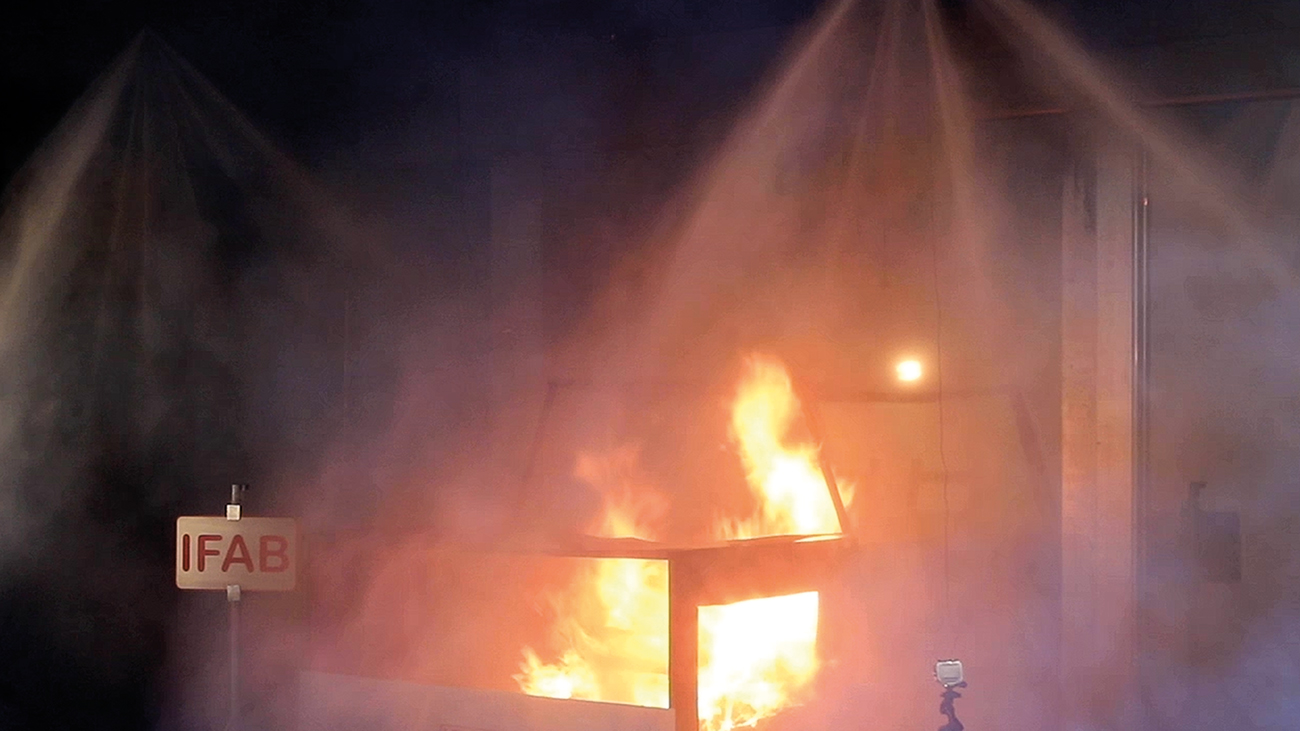
Three test series with different targets, fire loads and setups were carried out in the fire laboratory of the Institute for Applied Fire Protection Research (IFAB). The aim of the first test series was to investigate the ignition and fire behaviour of lithium-ion batteries and to understand in principle the processes and reactions involved. In the second series of experiments, the focus was on firefighting and detection technologies, and the third looked at the scenario of electric vehicles in garages.
Fire behaviour of lithium-ion batteries
To evaluate the fire behaviour of lithium-ion batteries, a dedicated fire-test enclosure (calorimeter) was developed that enabled the measurement and determination of numerous fire parameters. An exhaust hood was connected to the enclosure collecting and analysing all gases produced during the fire for determining the generated heat release rate (HRR).
Batteries that were ignited in the SUVEREN calorimeter by mechanical action or overcharging sometimes showed very fast and violent reactions with explosions and extensive jet flames. A module with almost 300 round cells and an electrical capacity of 2.5kWh reacted completely in two to three minutes. For another module with 3.75kWh, the final reaction was not complete for about 30 minutes. The tests showed that battery fires could differ significantly depending on cell composition and cell type.
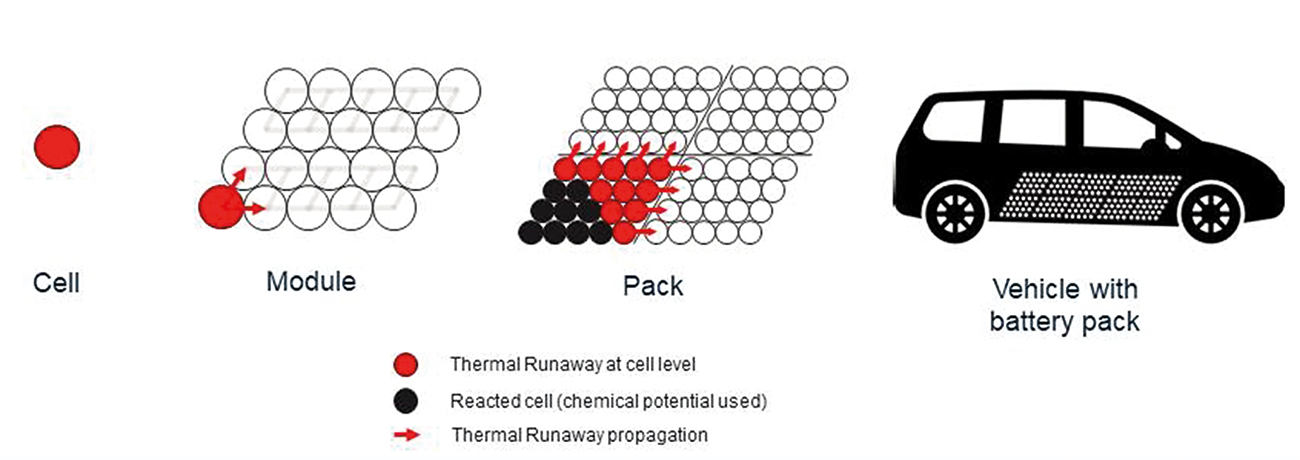
The initiation of a fire usually takes place in a single cell of the battery pack. Qualitative defects, ageing processes, electrical faults such as short circuits, thermal overload or mechanical effects, e.g. caused by an accident, can be the trigger for an unstoppable chain reaction called thermal runaway of the lithium-ion battery. The reaction starting in a single cell spreads to the entire battery in a short time by heating the adjacent cells. If high temperatures and large jet flames occur, this can immediately lead to a fire of the entire vehicle.
Images supplied by Author / Contributor
Comparison of different firefighting technologies
To interrupt this form of fire development, the heat generated during these reactions must be extracted and the battery cooled. Most effective cooling is achieved directly on the surface of the battery pack, where temperatures range up to 1,000°C.
Gases produced during the tests were analysed by an infrared spectrometer (FTIR), which showed up to ten highly toxic and corrosive substances, e.g. hydrogen fluoride (HF), in critical concentrations. In principle, the release of toxic gases follows the development of the heat release and represents an increased health risk to the safety of people, particularly in an underground car park. This applies to both general combustion products, such as carbon monoxide (CO), and to more battery-specific decomposition products such as hydrogen fluoride (HF).
In the second series of tests, various firefighting means were tested and compared under identical, reproducible and scientific conditions, such as sprinklers or high-pressure watermist. Special high-pressure watermist nozzles, atomizing water at 100 bar pressure, were installed, using ten times less water than conventional sprinkler technology. The countless droplets quickly cooled down the fire and limited the spread of thermal runaway within the tested lithium-ion batteries.
However, gas-based extinguishing agents such as nitrogen (N2), carbon dioxide (CO2), Novec, Aerosol and two extinguishing agent additives were also tested. An important finding from this was the significant influence of the environment as well as the design of the battery pack and its integration into the vehicle on the firefighting success. Although all tested agents had an effect on the fire, appropriate full-scale fire tests have to be conducted for the extinguishing agent and system technology depending on the environment and battery composition. The high temperatures generated can affect the thermal stability of some agents and cause their decomposition into other hazardous and corrosive substances. Information on this is usually provided in the manufacturers’ data sheets. Therefore, attention should be paid to whether persons in the firefighting environment could be harmed by the extinguishing agent itself.
When comparing the various firefighting systems, it was found that water is very suitable for fighting battery fires due to its heat capacity and its energy-binding potential during evaporation. These results formed the basis for further fire tests on the firefighting performance of electric vehicles.
Images supplied by Author / Contributor
Greater fire load in modern vehicles
Usually, batteries of electric cars are housed in an enclosure mounted under the vehicle floor, which hinders direct cooling and allows the fire to spread to the entire vehicle and the surroundings. In addition, the vehicle itself makes it difficult for the extinguishing agent to reach the source of the fire, since in most cases it is discharged via a ceiling-mounted firefighting system. Due to the extensive fire loads and high temperatures, the aim of firefighting systems is to contain the fire and prevent it from spreading to adjacent vehicles and to reduce elevated heat radiation to the building structure. In order to develop effective firefighting systems, it was first necessary to define the fire load of modern passenger cars.
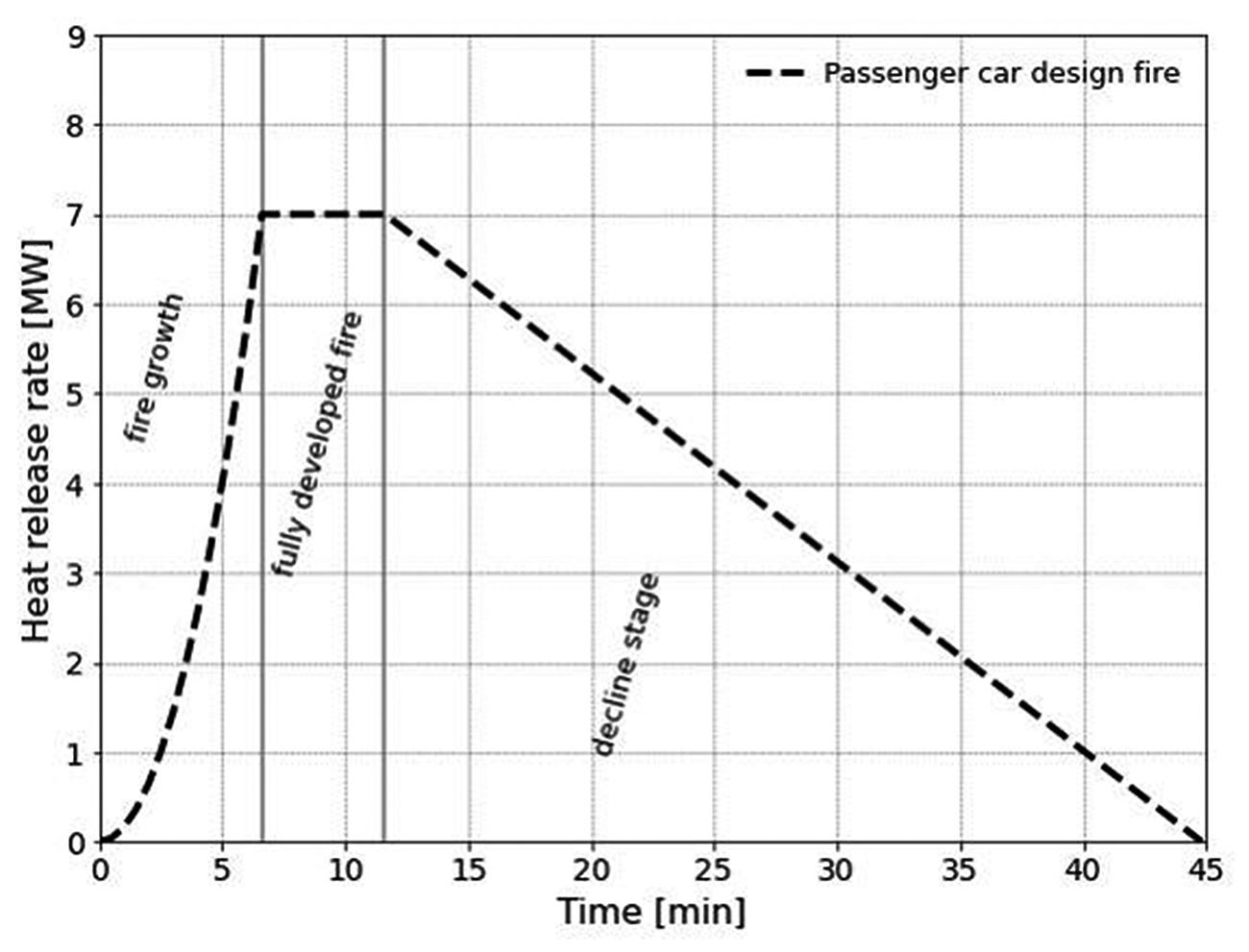
It was found that changes in vehicle types, design and equipment, irrespective of their motorization, have an impact on fire behaviour. This is primarily due to the increasing use of combustible materials, especially plastics. In the event of fire, these contribute to the release of toxic smoke gases and to heat generation. The larger and heavier the vehicle, the more intense the fire event. During the course of the SUVEREN research project, comparable and publicly available data on passenger vehicle fires were analysed. The aim was to quantify the described changes in order to describe the fire of a passenger car in a reproducible and comprehensible way and to develop a design fire from this. Design fires are often used in fire protection to demonstrate the effectiveness of fire-protection measures. During its elaboration, care was taken to ensure that the proposed design fire covers the fire progression of both electric and combustion-engine passenger vehicles. The defined fire-progression curve takes into account the faster and more severe fire behaviour of electric vehicles. Regardless of the drive type, a maximum vehicle heat release rate of 7MW can be expected.
Firefighting in garages
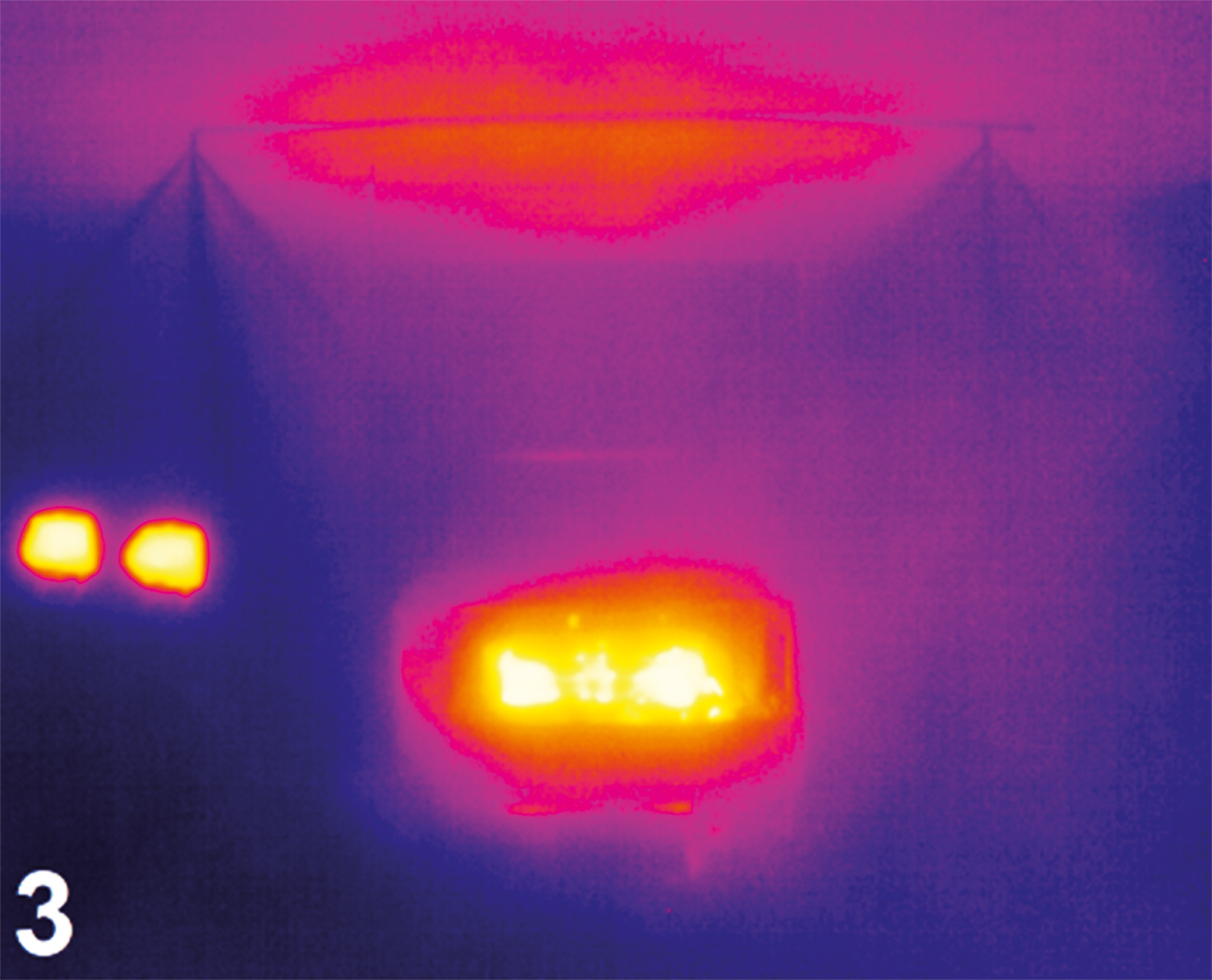
A third series of tests simulated the effects of electric vehicle fires in garages. For this purpose, a car-park site was simulated on the fire test ground of the German Aerospace Research Institute (DLR). The fire progress was evaluated based on the design fire developed in the research project. A passenger car mock-up and target vehicles were arranged within the test hall equipped with temperature measurements. The focus was on the effects of a firefighting system and the related temperature development.
Intense heat can affect the load-bearing structure and affect the stability of a garage. Fires in multi-storey car parks and garages, such as the car-park fire at Muenster-Osnabrueck Airport (Germany) in October 2019, where more than 70 cars were severely damaged or destroyed, show that in the absence of fire-suppression systems, the fire spreads to adjacent vehicles and makes it difficult for the fire services to extinguish the fire. A further extensive fire took place in the King’s Dock parking lot in Liverpool, where around 1,400 cars burned out, unable to be extinguished by firefighters.
To prevent such events, the fire tests were intended to develop a system that can detect and fight vehicle fires as early as possible. Currently, electric vehicle fires are often controlled by fire services by immersing the damaged vehicles in large water-filled containers. This approach is difficult in parking lots and underground garages due to the limited space available. The results of the SUVEREN fire tests showed that appropriately tested systems effectively limit the spread of fire to one or a few vehicles, provided that they are activated in an early stage of the fire development.
Since the fire and temperature development of electric and combustion engines vehicles are very similar, the question of fire probability remains, which cannot finally be answered at present. Investigations and statistics still do not allow us to determine whether the age of a vehicle has an influence on the fire risk. With conventional vehicles, the risk of fire increases as the vehicle ages. It could be assumed that this also applies to electric vehicles.
Important aspects during charging
Although the highest quality standards are set by national and international standards for all components of electric vehicles and the charging infrastructure, the SUVEREN research project investigated which causes lead to a fire event during charging. During the charging process of electric vehicles, the traction battery is in operation, electrochemically speaking. If charging is slow, this may be due to the vehicle battery being overheated or too cold to be charged at full power. The vehicle then automatically limits the charging power. During fast charging processes, so-called ‘supercharging’, the charging infrastructure is heavily loaded by the high currents. To avoid malfunctions, it is therefore essential to meet regular inspection intervals for this charging infrastructure.
Additionally, the behaviour of people has an influence on safety, e.g. when inspections are not carried out or improper operation occurs. If the wrong hardware is used (e.g. cables and adapters) or a power socket not intended for charging, this can cause fires. Regular inspections can detect damage to the charging infrastructure, which can result from vandalism and parking accidents and represent an increased risk in the charging area.


Conclusions
The SUVEREN research project confirms that:
- the intensity of vehicle fires has increased significantly in recent decades
- the fire intensity does not depend on the type of vehicle drive but on the materials within the vehicle
- the electric vehicle battery can be a cause of fire that should not be underestimated
- the fire risk of electric vehicles is higher during the charging process
- there is a need for further research and regulation, especially for the safety of charging areas in car parking areas
- safety in underground parking and garages should not depend on the vehicles parked or charged, but on the fire-protection concept
A fixed firefighting system can prevent fire propagation to other vehicles and increases the safety of firefighters. Particularly in underground garages, fire protection of charging areas is recommended as these areas have the highest probability of a fire.
For more information, go to www.fogtec.com
About the Author
Ruediger Kopp completed his studies of Chemical Engineering and Safety Engineering at the University of Dortmund as Diploma-Engineer. For 25 years, he has been involved in the development, approval and marketing of high-pressure watermist systems. He is Managing Director for fixed watermist systems at the company FOGTEC Fire Protection based in Cologne.

You must be logged in to post a comment.