
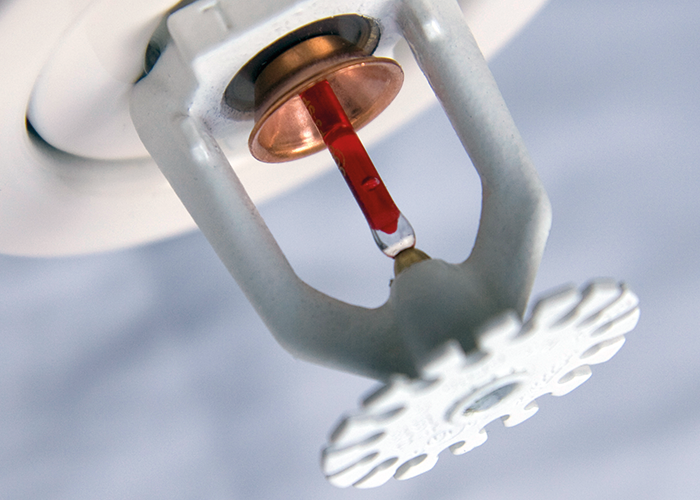
Sprinklers were invented in the 19th century yet manufacturers continue to invest huge sums to improve them. Fire Sprinkler International 2016 is the place to catch up with developments.
“Build a better mousetrap, and the world will beat a path to your door.” According to Wikipedia the phrase is a misquotation of Ralph Waldo Emerson. But we all understand the sentiment – if a product is well-known and accepted, there is a market for it, eager to see improved versions. So it is with sprinklers, which depending on what you define as the first sprinkler (or mousetrap) have been around for as long as 200 years. Yet manufacturers continue to invest many millions every year to develop new sprinklers, valves and other components. Meanwhile standards evolve to include these new concepts and as a result building occupiers enjoy better fire protection, often at lower cost. All these improvements combine to make sprinkler systems an increasingly attractive option to protect people and property from fire. Regulators recognise this and each year we see new code requirements or incentives to fit sprinklers in buildings. Thus while Eurostat shows European construction down over 20% from its peak in 2008, the European sprinkler market has grown and is expected to continue to grow.
Out of research we see new designs for warehouse storage protection, to protect risks that previously could not be protected, or to protect existing risks at lower cost. Research has led to improved residential sprinklers, which can protect homes with fewer sprinklers, reducing cost, or at a lower hydraulic demand enabling more systems to be directly connected to the mains, so saving the cost of a pump and tank. Innovative piping systems and pipe hanging systems reduce installation time, which again reduces costs; valves are lighter, more compact and offer more features. Committees of experts review all these innovations before deciding how to include them in standards, and under which constraints.
Analyses of field experience identify which measures improve the reliability of sprinkler systems. As one would expect, inspection, testing and maintenance are crucial. After all, if the diesel tank for one pump driver is never filled the tank for a second pump driver will probably not be filled either. Standards are updated to incorporate this learning. Most sprinkler systems are fed by a network of steel pipes. Steel, air and water in a warm environment make ideal conditions for corrosion. Field experience again shows which factors affect corrosion and innovators are coming up with ways to detect and avoid it.
All these subjects and more will be addressed at Fire Sprinkler International 2016. Every two years the European Fire Sprinkler Network organises this major, international two-day conference. This year it will be held in Munich on 19-20 April. We are partnering with the Bundesverband Technischer Brandschutz, the German fire protection systems association, to hold a fully bilingual event with interpreters for every presentation. Our last conference, in London in 2014, was sold out with 350 delegates. With a large exhibition already sold out, Fire Sprinkler International 2016 promises to be every bit as successful and will be the place to be if you have a professional interest in water-based fire protection systems.
With 50 top speakers from 10 countries we have an extensive and attractive programme offering something for everyone, so that some delegates may feel that they would like to be in more than one room at the same time. Our themes are business sustainability, innovations and standards. Morning plenary sessions will be followed by three parallel afternoon workshop sessions. We are delighted that Volker Bechtloff, Managing Director of our platinum sponsor, MinimaxViking, will be our first keynote speaker, asking how we can innovate in a market that prizes proven technology. Clive Weston, Vice President of Tyco Fire Protection Products, will give the second keynote presentation: an insightful vision of sprinkler systems of the future. A strong research contribution will be led by Frank Drolsbach, Operations Vice President of FM Global Germany. Matthias Ott of the Munich Fire Brigade and Georg Spangardt of the Cologne Fire Brigade will give their views on sprinklers, as will Knut Czepuck of the State government of North Rhine Westphalia and Jan Heinemann of the insurer HDI Risk Consulting. Karim Karzazi, convenor of the CEN sprinkler committee, and Russ Fleming, Managing Director of the International Fire Sprinkler Association, will cover developments in European and NFPA sprinkler standards. Two workshop sessions will discuss interesting applications, looking at the protection of unusual buildings with innovative designs.
We constantly seek to improve the performance and reliability of sprinkler systems, guided by laboratory research but also by field experience to teach us what works and where weaknesses may lie. Marek Pliml of VdS will lead a field experience workshop. In Europe most fire safety building codes are based on passive fire protection, with sprinklers absent except as an additional measure in buildings at greater risk from fire. Fire engineers propose alternative solutions to those in prescriptive codes and therefore often include sprinklers in their designs. Our fire engineering workshop will present the latest thinking in how to make the best use of sprinklers in fire engineered solutions.
Water mist has increasing regulatory recognition, an example being the recent publication of British Standards for residential and commercial systems. Yet while water mist has been available for more than 20 years, that is not long by sprinkler standards. Many readers will know that water mist systems have had high profile successes, extinguishing real fires. Less well publicised are some costly failures which have hit insurers hard. A combination of water mist system standards, approved products, accredited installers and third party inspections will help water mist system reliability to approach that of sprinklers, which record 95-100% reliability in European countries that have adopted this comprehensive approach to quality. Our water mist workshop will present the latest thinking.
Some risks, such as flammable liquids, cannot be protected by water alone. The addition of foam concentrates to water enables foam to be generated by sprinklers and other devices to suffocate flammable liquid fires. Similarly, the foam concentrate reduces water surface tension so that it can more easily wet surfaces or penetrate fires in solids. For the first time, Fire Sprinkler International will include a workshop on foam systems.
Since the start of this year, all new applications to build houses or apartments in Wales must include a residential sprinkler system. Most fire deaths occur in the home so if we want to reduce fire deaths that is where we should focus efforts. Decades of statistical experience from North America, as well as dozens of anecdotal fire reports in Europe, show that sprinklers almost eliminate fire deaths in the home. Europe is catching up with sprinklers now required or incentivised in certain residential buildings in several countries, particularly in care homes. Our care homes workshop will provide tips for installers.
Sprinkler systems are useless without water. In most of Europe, commercial and industrial systems demand too much water to run off the water main. A pump and tank are needed. Our pressure workshop will review the latest thinking on standards for sprinkler pumps and pump drivers. Reducing the pressure helps moisture in a dry pipe system to evaporate, so reducing the likelihood of corrosion. This and other ideas to manage corrosion are included in the conference programme.
We recognise that for many delegates, networking with professional colleagues and opportunities to speak to international experts are as valuable as the presentations themselves, so we have included ample breaks. At the same time delegates can visit the exhibition, with almost 40 stands, to learn more about the latest products and services from each exhibitor. And as we will be in Munich, on the first evening delegates can look forward to a Bavarian evening and following the conference we will host an optional dinner in the famous Ratskeller!
Fire Sprinkler International 2016 is the major event in the sprinkler calendar. We are excited by our programme and hope to see you in Munich on 19-20 April.
For more information, go to www.firesprinklerinternational.com
About the Author
Alan Brinson is Executive Director of the European Fire Sprinkler Network.
