
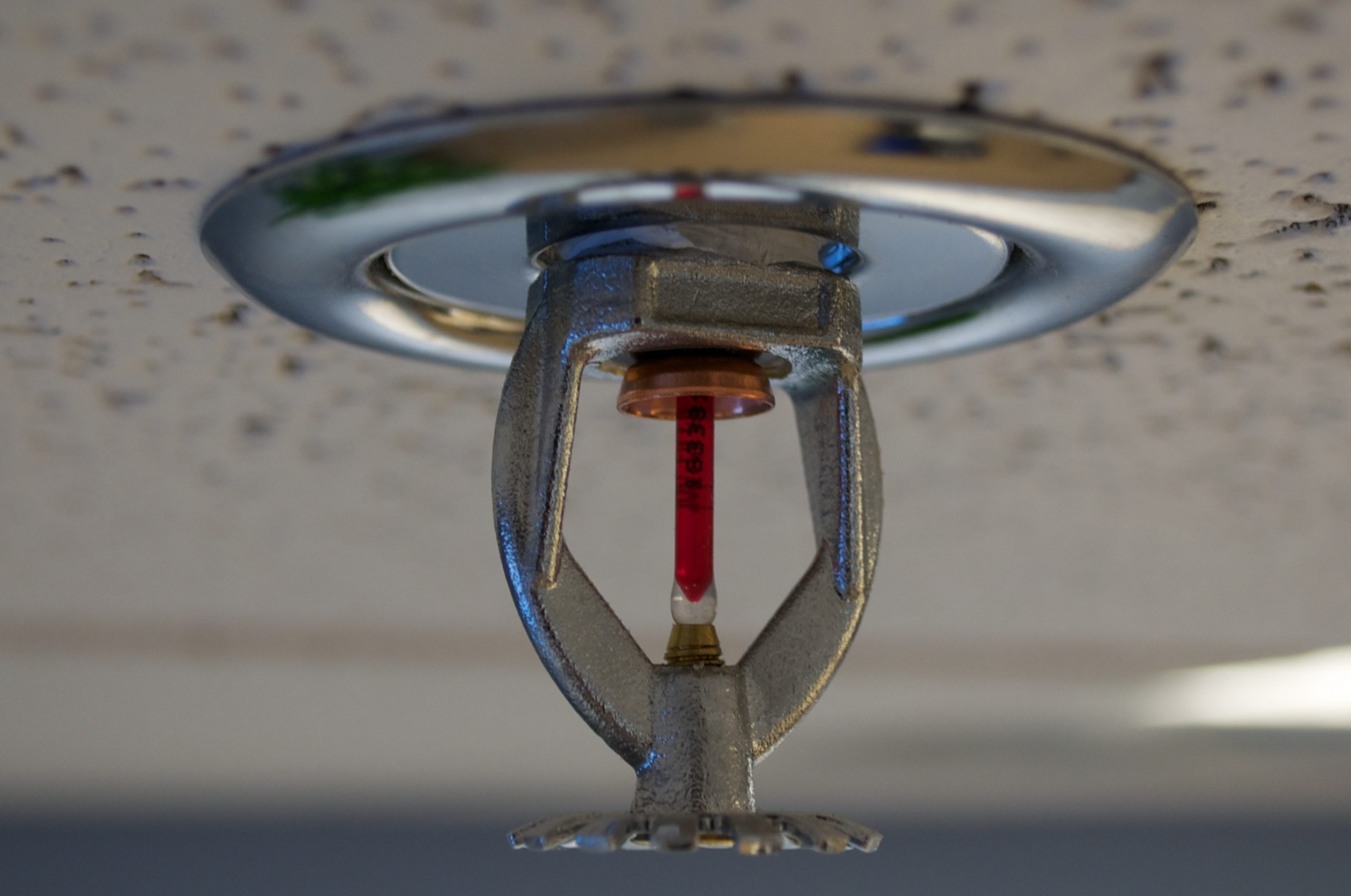
Across Europe national sprinkler markets are booming, with many showing record levels of activity. Installers complain they cannot find staff and are poaching from each other, training programmes for designers and fitters are booked out. Yet according to Eurostat, building activity in Europe remains below its 2008 peak. Instead, a higher proportion of new construction is being fitted with sprinklers than in the past. This is good news for fire safety.
For 16 years the European Fire Sprinkler Network, its members and like-minded organisations have advocated greater use of sprinklers to improve fire safety in Europe. Each year we have seen incremental steps, country by country, in the regulatory recognition of sprinklers. Change does not happen by itself. Although sprinklers have a long and successful record somebody has to point this out and provide evidence. Today local people are coordinating promotional efforts in Belgium, France, Germany, The Netherlands, Norway, Poland, Sweden and the UK, and we are currently searching for someone to take on this role in Spain. Thanks to their efforts the pace of regulatory change is accelerating, with jurisdictions that never considered sprinklers as a fire safety tool now beginning to do so.
Sadly, many changes continue to be disaster-driven, with Notre Dame leading to sprinklers or water mist being retrofitted in other French cathedrals and the Liverpool Echo fire seeing sprinklers more widely installed in car parks in many countries. Yet Grenfell rightly looms over all other fires. Although at the time of writing, little regulatory change has occurred in the UK, there is widespread expectation that change will come and will include increased sprinkler requirements. Responsible developers in England are therefore designing apartments in anticipation, and in response to public demands for sprinklers. Some are fitting sprinklers in all new apartments, others in those higher than 18 m to align with existing Scottish requirements. Meanwhile Scotland will go further, with the Scottish government having announced that from 2021 it will require automatic fire suppression systems (sprinklers or water mist) in all new apartments and all social housing. Regulatory changes usually only affect new construction but dozens of local authorities in England have announced retrofits in high-rise social housing. Well over 1,000 buildings are affected and hundreds are already protected with sprinklers.
Regulators elsewhere in Europe are also using sprinklers to address fire safety challenges. Ireland has announced proposals to permit open-plan flat layouts with residential sprinklers and enhanced detection, basing its proposals on research conducted by BRE for the NHBC and codified in BS 9991. In Madrid the regulator is considering the use of sprinklers to compensate for the lack of refuges in existing apartment buildings and in The Netherlands sprinklers are being considered for the protection of concrete in road tunnels. None of these ideas would be new, all having already been applied in other jurisdictions.
Standards underpin all these initiatives. While sprinklers are being installed in large numbers in apartments in some countries, in others the first such system has yet to be installed, not least because most countries did not have a national residential sprinkler system design standard. EN 16925, the European standard for the design, installation and maintenance of residential sprinkler systems, is now available, is a national standard in all 34 CEN countries and can be used as a regulatory reference. EN 12845, the corresponding standard for commercial and industrial sprinkler systems, has been available for many years but is dated. CEN is making great progress with a revision that will introduce many cost-effective design options, so making sprinklers even more attractive as a fire protection solution. By coincidence, Germany is about to implement a new model administrative code that for the first time calls for sprinklers to follow EN 12845. Water mist is a valid alternative to sprinklers in many applications, and standards for water mist systems, application fire tests and key components are due to come out over the next few years.
Since 2003 the European sprinkler market has approximately doubled in size. Yet regulatory requirements or incentives to fit sprinklers in buildings, and the resultant intensity of sprinkler usage vary hugely from one country to another. Norway uses more sprinklers per thousand inhabitants than any other country in the world, and proportionally more than 10 times as many as some other European countries. The market can grow further and European fire safety with it. Sprinklers have an excellent story to tell, are a core fire safety measure in some countries and will become one in others.
About the Author
Alan Brinson is Executive Director of the European Fire Sprinkler Network.
