
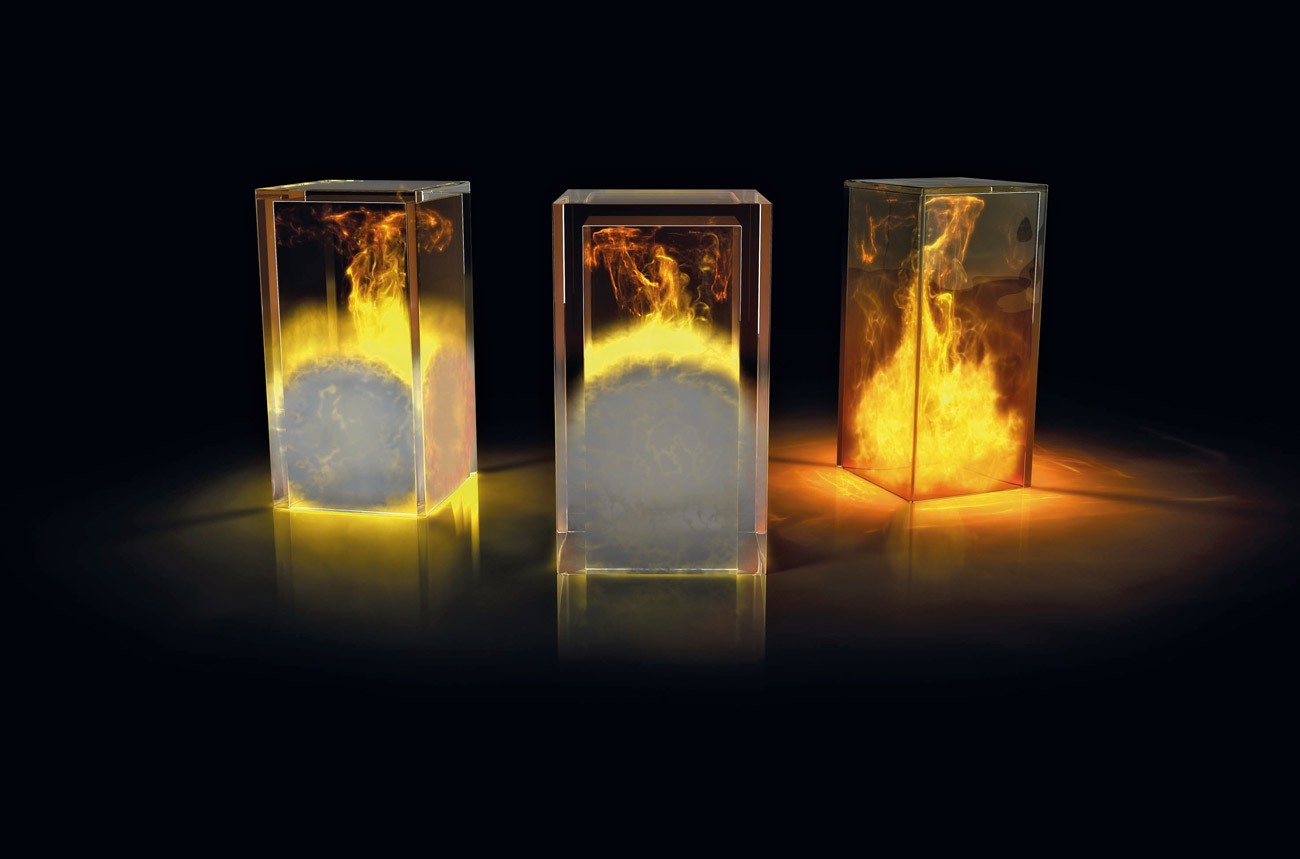
The 23rd – 29th September marks Fire Door Safety Week. It’s a campaign that’s run each September with the objective of raising awareness about the critical role that fire doors play in buildings, and encouraging best practice for their manufacture, installation and maintenance.
This year, it quite aptly falls at a time when the world of fire protection is going through a shake-up. Specifiers are rightly looking for much more assurance that the products they use are fit for purpose.
This applies not only to passive fire protection products including fire-resistant glazing systems and doors, but for active fire prevention measures too such as sprinklers and fire alarms.
Following the review of building regulations and fire safety by Dame Judith Hackitt, there is an increased emphasis on testing, certification and traceability required for any product marketed as having fire protection capabilities.
This was clear from walking the halls of the recent FIREX 2019 event – Europe’s only dedicated fire safety exhibition – which took place in June in London.
It was encouraging to notice that a widespread genuine interest in and concern about progressive fire safety practices was coming from a much broader audience. Last year, most of the conversations I had at the event were with those whose roles are specific to fire safety – typically those with ‘responsible person’ status. This year however, I had many more discussions with fabricators and installers which, I think, demonstrates just how prominent the issue has become across the entire breadth of the industry.
Third-party certification
We are witnessing a significant ratcheting-up of the testing and certification requirements for manufacturers of building products claiming fire-safety benefits.
The fire door industry is currently being reviewed by the government, particularly regarding composite doors containing glass reinforced plastic (GRP) after it was discovered that some doors did not deliver their claimed protection duration when tested as part of a Ministry of Housing, Communities & Local Government (MHCLG) investigation.
Strengthening the involvement of third-party certification bodies in the industry is a major component of this review, and the outcome is eagerly awaited.
While third-party certification is not currently mandated by law, there is a legal responsibility on anyone specifying fire-protection products to ensure the manufacturer is ‘competent’. Clearly, getting products that are supplied by a company that is part of a third-party certification scheme is the best way of ensuring that this is the case.
This is something we at Pilkington UK have always done where fire-safety products are concerned, and every specification of fire-resistant glass we offer has been independently tested or assessed. Production runs are also routinely subjected to testing at our own ’in house’ test furnaces to provide assurance that every product that reaches the market is consistently up to standard and fit for purpose.

Collaborating with fire door component manufacturers
Not only are we testing our own products, but we’re working with other fire door component suppliers to ensure their solutions are as providing the best levels of safety possible.
This is the logical outcome of our 40 years of experience in fire testing which has proved many times that only fully tested systems can be trusted.
Since the Hackitt review, all fire door component manufacturers have needed to provide test evidence that shows how robust their solutions are, and how they contribute to the overall performance of the door.
Recently, we’ve supported a number of component and door manufacturers in testing their products in conjunction with our fire-resistant glass products, either in monolithic or double glazed formats. Testing of both timber and composite doors with associated side screens and fan lights has been carried out successfully in both directions (to the fire, and away from the fire). This testing regime is in line with MHCLG guidance and but also to relevant European standards.
By allowing companies involved in the whole passive fire protection industry to use our ‘in house’ test furnace facilities, we’re collaborating for a safer built environment.
Shifting cultures
The Hackitt review called for a ‘universal shift in culture’ to restore trust in the safety of our built-environment, and the glazing supply chain is not exempt from this. While this clearly isn’t something that can be achieved overnight, there’s clear action being taken at every level of the supply chain to mitigate even the slightest levels of risk.
At Pilkington UK, we’re committed to collaboration across the industry and investing in R&D to keep offering products that are not just fit for purpose but ahead of the curve of regulations.
Let’s all use Fire Door Safety Week to showcase the work the industry is doing to enhance safety in the built-environment – while helping customers and end-users to understand the critical role fire protection products plays in our lives.
For more information, go to www.pilkington.com
About the Author
Steve Bond is Customer Support Manager – Fire Products at Pilkington United Kingdom

You must be logged in to post a comment.