
Despite recent tragedies throughout the world, some countries, even in 2020, continue to use unsafe, inappropriate construction methods and materials. Flames recently spread across ‘flammable cladding’ in a fire at the University of Bolton in the north-west of England. The fire tore through a block of student apartments in Bolton, Greater Manchester, on Friday, 15 November 2019.
It did so by ‘crawling up the cladding like it was nothing’, according to eyewitnesses. Some 40 fire vehicles and 200 firefighters were sent to tackle the blaze at the six-storey building. Flames poured from the windows on the top floors of a building known as The Cube on Bradshawgate, in the centre of the city.
The tragic Grenfell fire in London in June 2017 and the 2014 fire at the Lacrosse apartment building in Melbourne’s Docklands in Australia along with many others have highlighted the fire-safety risks arising from the use of combustible cladding.
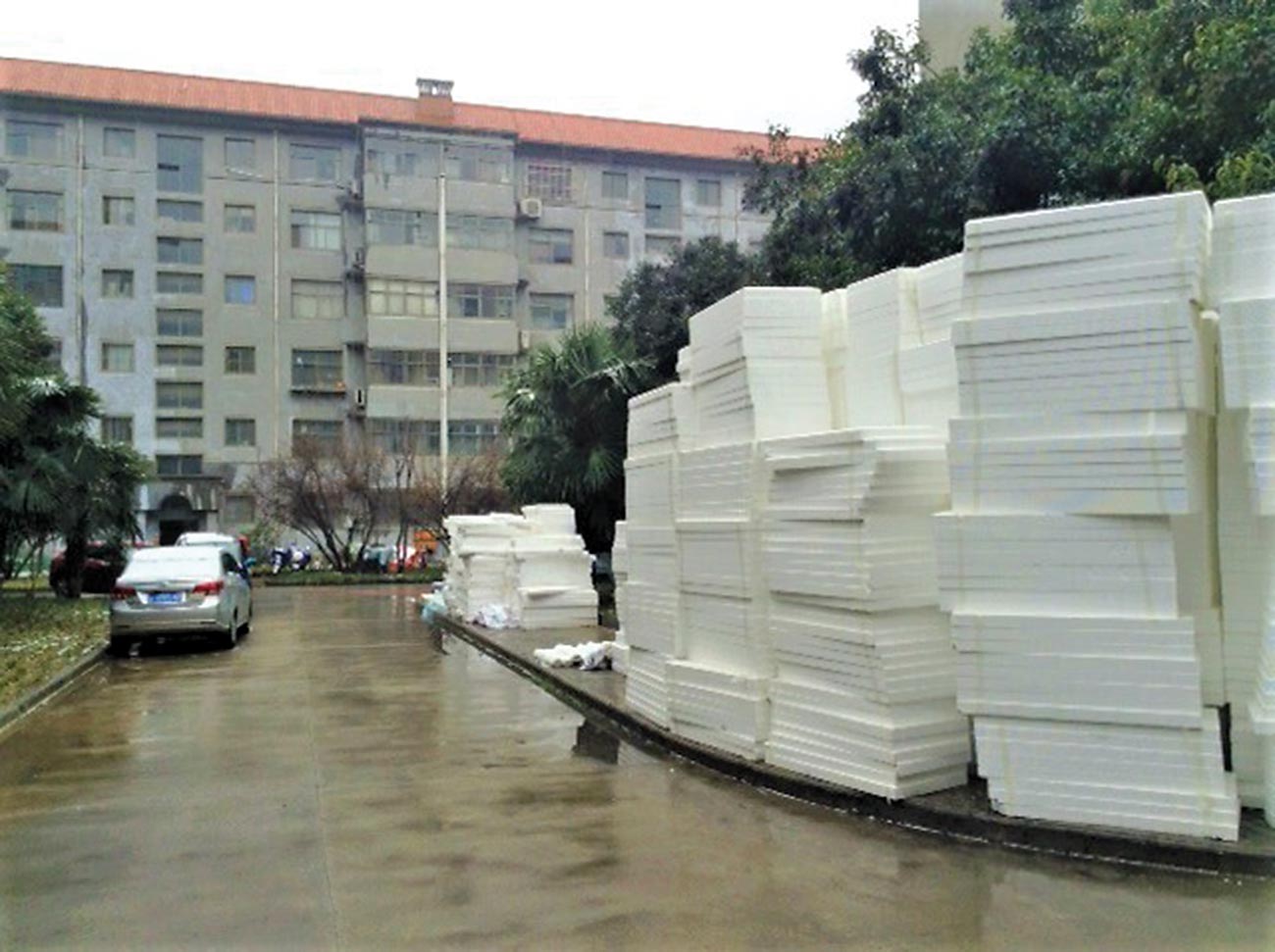
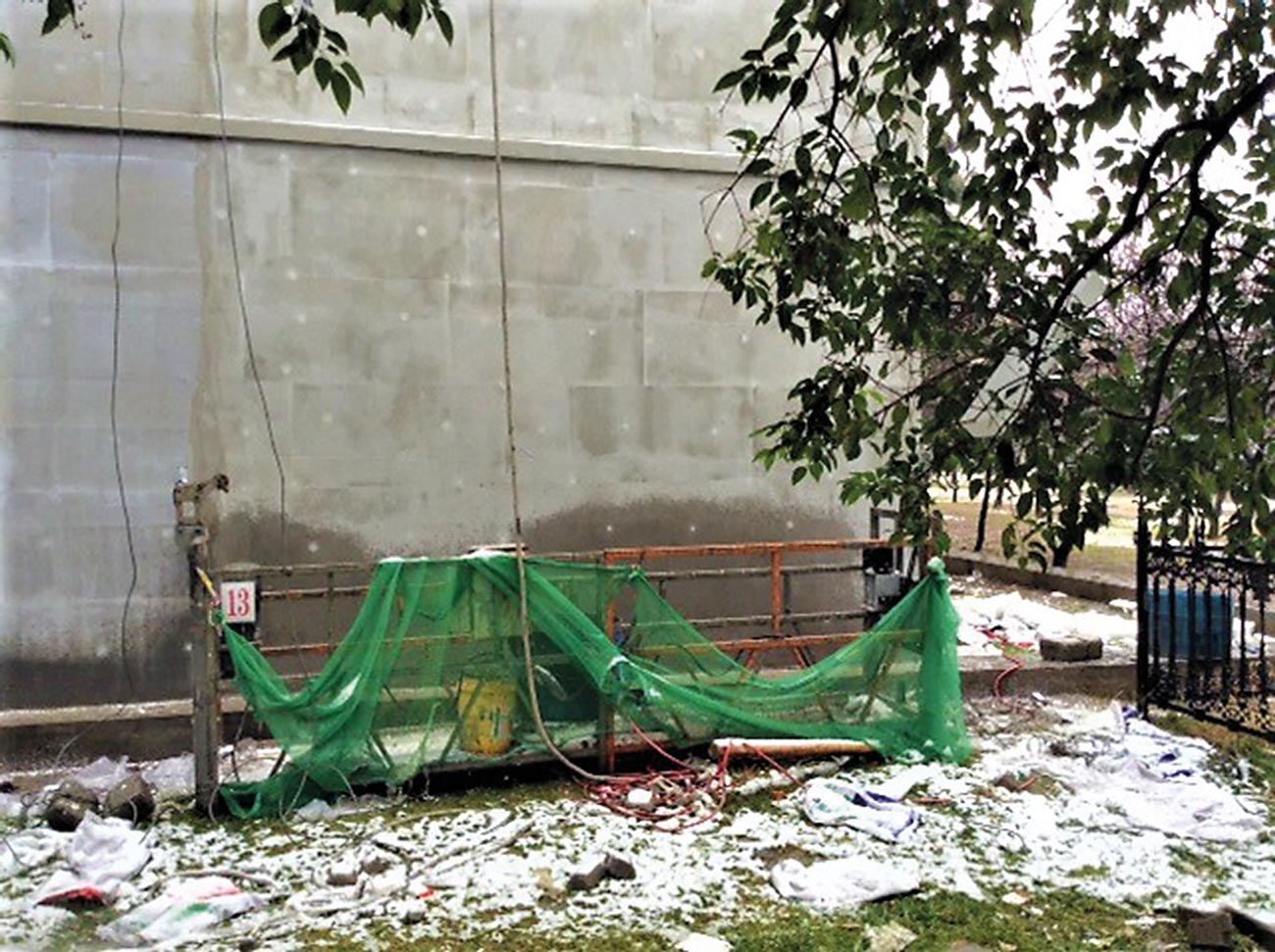
Insulating materials of the type blamed for the rapid spread of the Grenfell Tower residential block fire in London are widely available in China and appear to be commonly used, as seen in Figure 1.
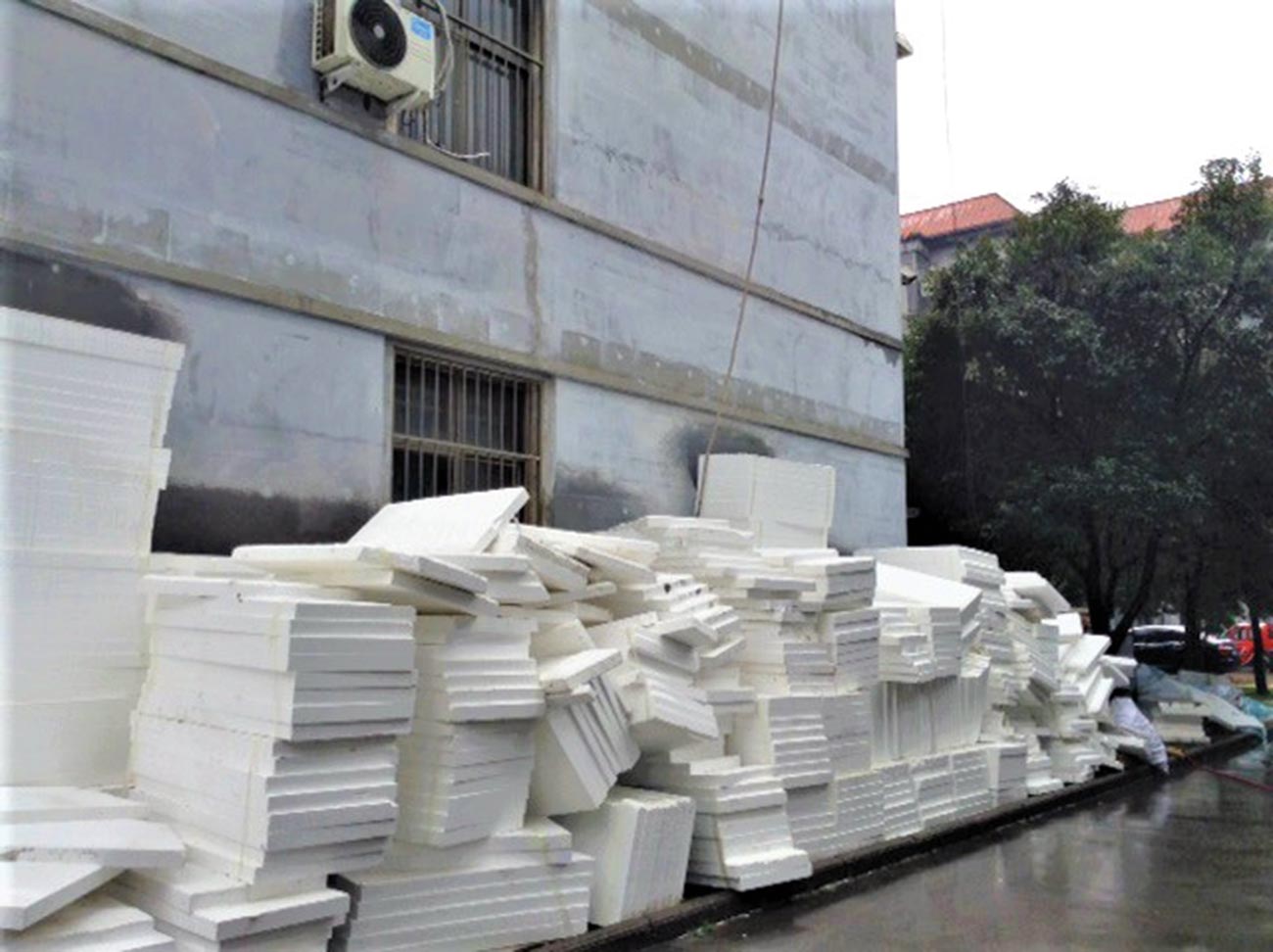
Foam insulation similar to that used on the exterior of the tower is both manufactured in China and used often by construction companies detailed in this site study. Inappropriate usage is a risk to life and property.
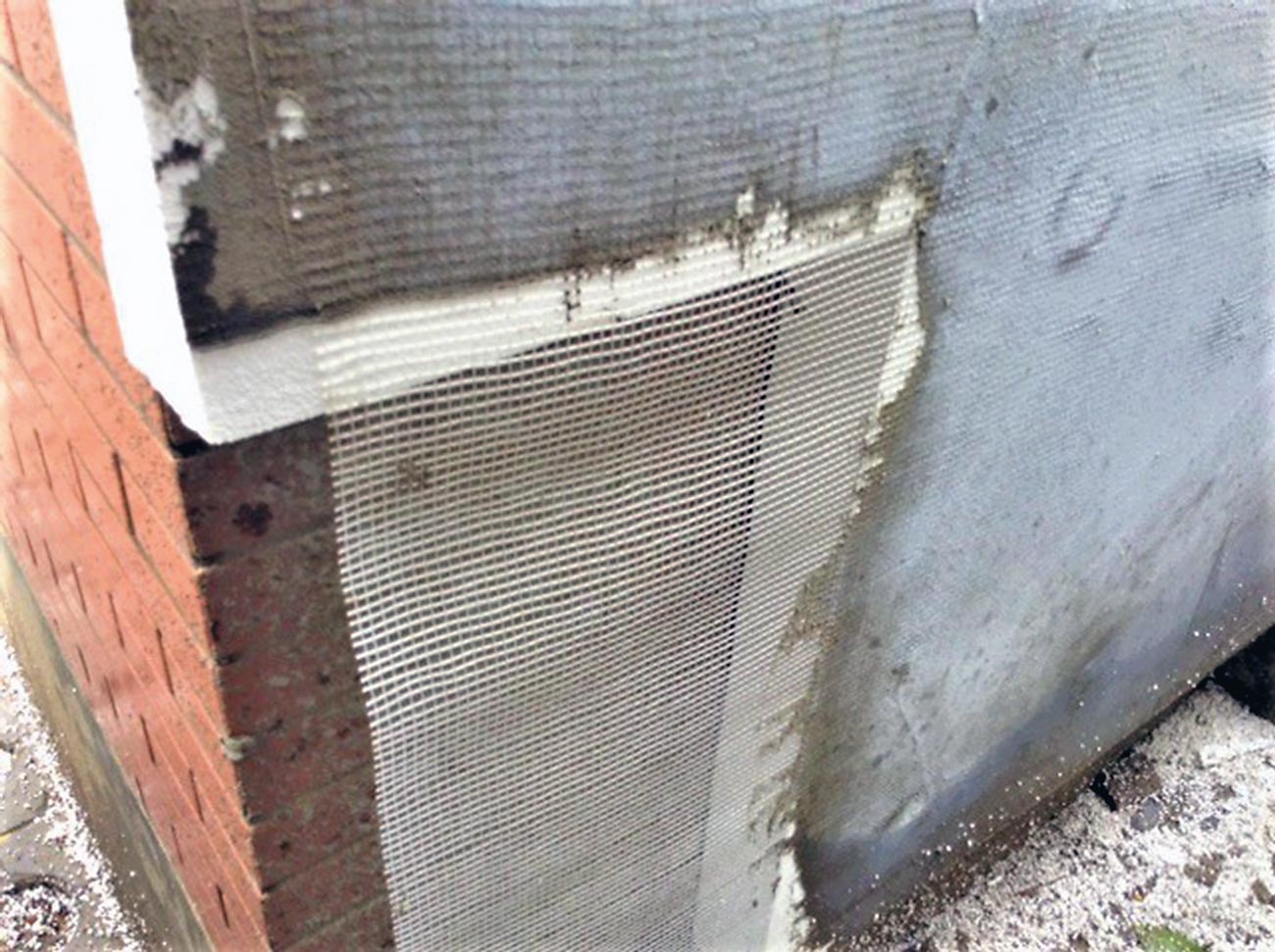
When it burns, a kilogram of PS will release more energy than a litre of petrol. Key characteristics of PS include low cost, ease and speed of installation and its thermal-insulating properties. PS is typically rendered with cement when used as a cladding material.
Chemical fire retardants may be added to PS, but these do not prevent combustion from large fire sources. Furthermore, these retardants may leach over time.
In Miskolc, in Hungary, in August 2009, three people died in a fire at a nine-storey block of apartments. The facade of the block of flats was renovated in 2007 and covered by an insulation system consisting of 70mm-thick flame-retarded combustible polystyrene insulation with only a thin render on top, similar to that seen in Figure 2.
In April 2005, in Berlin, two people died in an apartment when 80mm-thick EPS cladding on the exterior of the building caught fire, while a 1996 a fire at Düsseldorf Airport killed 17.
Australia: major public-safety risk
In November 2017, an Interim Report found that systems failures have led to major public safety risks and widespread non-compliant use of aluminium composite panels (ACP) and expanded polystyrene (EPS) cladding in the building industry across Australia.
Inappropriate use of ACP (with polyethylene in its core) and EPS present a significant risk in Australia, and have been implicated directly in the Grenfell, Lacrosse and many other fires. In addition to being a fire hazard, both products are prone to melting, dripping and collapsing. When burning, polyethylene and polystyrene release two and a half times the amount of energy as an equivalent amount of timber.
As such, use of these products as external wall cladding presents a substantial risk to life and property, as seen in Figure 3, particularly in multi-storey buildings.
Despite these risks, the author has found that buildings in Asia are still being constructed or renovated with inappropriate use of ACP and EPS. This article therefore recommends that governments act to restrict the use of ACP and EPS in buildings above two storeys.
The European Fire Fighter Unions Alliance lobbied the EU on the subject, producing a score of examples where insulating materials had played a role in accelerating fires. About 500 million square meters of external facade insulation systems have been used to insulate buildings in Germany alone.
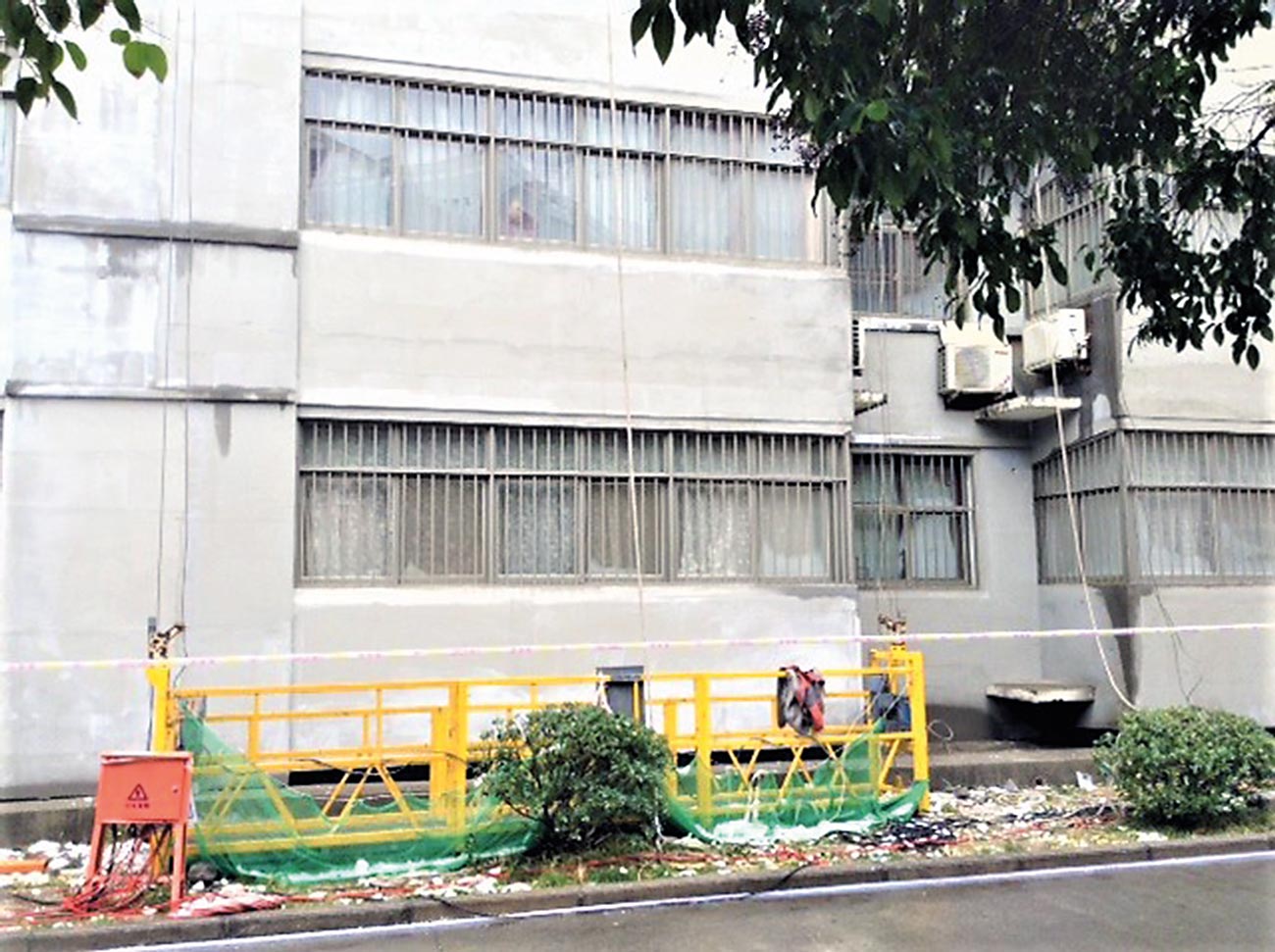
In the future we will have more insulation in our homes and buildings, because of global environmental demands to save energy and CO2. A lot of that plastic insulation will accelerate fire spread, one reason being that it’s made of oil. The use of this oil-based insulation is held to be safe if it is covered by a non-flammable casing or durable rendering. Moisture ingress to the newly fitted insulation at the study site will threaten the system’s long term integrity, as seen in Figure 4. However, extruded polystyrene (XPS) insulation, polyurethane foam insulation and expanded polystyrene (EPS) – have been linked to disastrous fires in several locations since the late 1990s, according to firefighters.
London: Grenfell Tower
Seventy-two people died in the blaze on 14 June 2017. ACP with a polyethylene core contributed to the fire load and the rapid spread of the fire up the vertical face of the high-rise building. In addition, the use of ACP cladding on the Grenfell Tower has been linked to the rapid spread of the fire around the outside of the building, alongside the chimney effect of the cavity between the wall and the cladding, and has been highlighted as a likely major contributor to the tragic loss of life in that incident.
Soil tests around Grenfell Tower have revealed toxins that could have health implications for local residents, according to early findings from a toxicology study. Professor Anna Stec (UCLAN), who conducted the study, is said to have found ‘huge concentrations’ of potential carcinogens in the soil and dust around the west London tower block.
Fire history in China
Access to historic information and Health and Safety data is strictly controlled within the Peoples Republic of China (PRC). The information discussed in this article is based on a site in China. A university campus is home to 60,000 residents. Accommodation blocks (as shown) contain only a single exit, often blocked by charging e-bikes. The six/seven storey stairwells are not lit and there are no fire or smoke alarms at this site. Windows are covered with bars on the first two levels. There is a strict night-time curfew with a lights-out policy and locked gates to inner roads and areas.
China has suffered fatal fire incidents in the past involving combustible cladding and insulation. Two savage fires which engulfed whole buildings demonstrate the potential dangers of combustible cladding and external insulation.
In September 2009, a fire in the CCTV Tower in Beijing killed a firefighter and caused €110 million worth of damage when it spread rapidly over sections covered by XPS insulation. In November 2010, in Shanghai, a fire in a building that was being renovated and externally clad in polyurethane foam left 58 people dead.
Television Cultural Centre, Beijing
Construction was started in 2004 and was expected to be completed in May 2009. On 9 February 2009, stray fireworks from Chinese New Year celebrations landed on the roof of the building, 31 storeys up, starting a fire which spread rapidly down to the lower floors, causing the death of a firefighter from toxic smoke inhalation and seven injuries. The whole 159m-high building, topped out but still under construction, was ablaze at the height of the fire. Hard facts are difficult to find after a news curfew, but insulating foam panels and polystyrene insulation have been implicated.
Apartment Building, Shanghai
On 15 November 2010 a 28-storey apartment building, which was under renovation, was consumed by fire. The 85m-high building was fully scaffolded for the installation of energy-saving insulation when the fire occurred. Sparks from welding operations ignited construction materials incorrectly stored (as seen in Figure 1) and the nylon safety mesh on the outside of the building. Fire then spread rapidly along the scaffolding and through the interior of the block. Fifty-eight people lost their lives and 70 were hospitalised, including 17 who were seriously injured. Firefighters rescued more than 100 residents and others climbed down the scaffolding.
The fire was believed to have spread on polyurethane insulation to external walls. The fire may have been caused by the accidental ignition of polyurethane foam insulation, incorrectly stored on site commonly used in China without the addition of flame retardants, as seen in Figure 5.
Conclusions
The continual use of construction materials discussed in this article as external wall cladding presents a substantial risk to life and property, particularly in multi-storey buildings. Building construction codes across the world are being amended after consideration of recent events set out herewith. The use of combustible cladding is a serious issue facing the PRC in 2020. This article recommends that action to restrict the use of ACP and EPS in buildings above two storeys is implemented.
For more information, email p.hughes58@outlook.com
About the Author
Professor Peter Hughes from England completed his PhD in material science at the University of Central Lancashire in 2013. He completed a post-doc research programme in Japan. He is currently based in China with supervision roles in the UK, Ireland and Japan.

You must be logged in to post a comment.