

Polyurethanes (PU) are plastics that are usually manufactured on the basis of petroleum, which means they are combustible. Nevertheless, their use in fire protection applications is on the rise. Combustible fire protection: a contradiction? A short overview of fundamentals, requirements and applications.
The goal of fire protection in buildings and other industrial facilities such as rail vehicles or ships is to prevent personal injury and property damage, and is regulated worldwide by national and international laws, standards and guidelines. Of the two basic concepts, preventive and defensive fire protection, the former deals with preventing fires and minimising damage in the event of a fire. Examples of preventive fire protection solutions in construction include firewalls and fire doors, fire-resistant glass, fire penetration seals and the use of fire-retardant materials.
Plastics
Modern plastics exhibit diverse material properties that can be adjusted to the design and processing requirements of the particular application, but are generally manufactured on the basis of petroleum, which means they are combustible. To reduce the potential hazard presented by plastics in the event of a fire they are generally treated with special additives to improve their flammability properties.
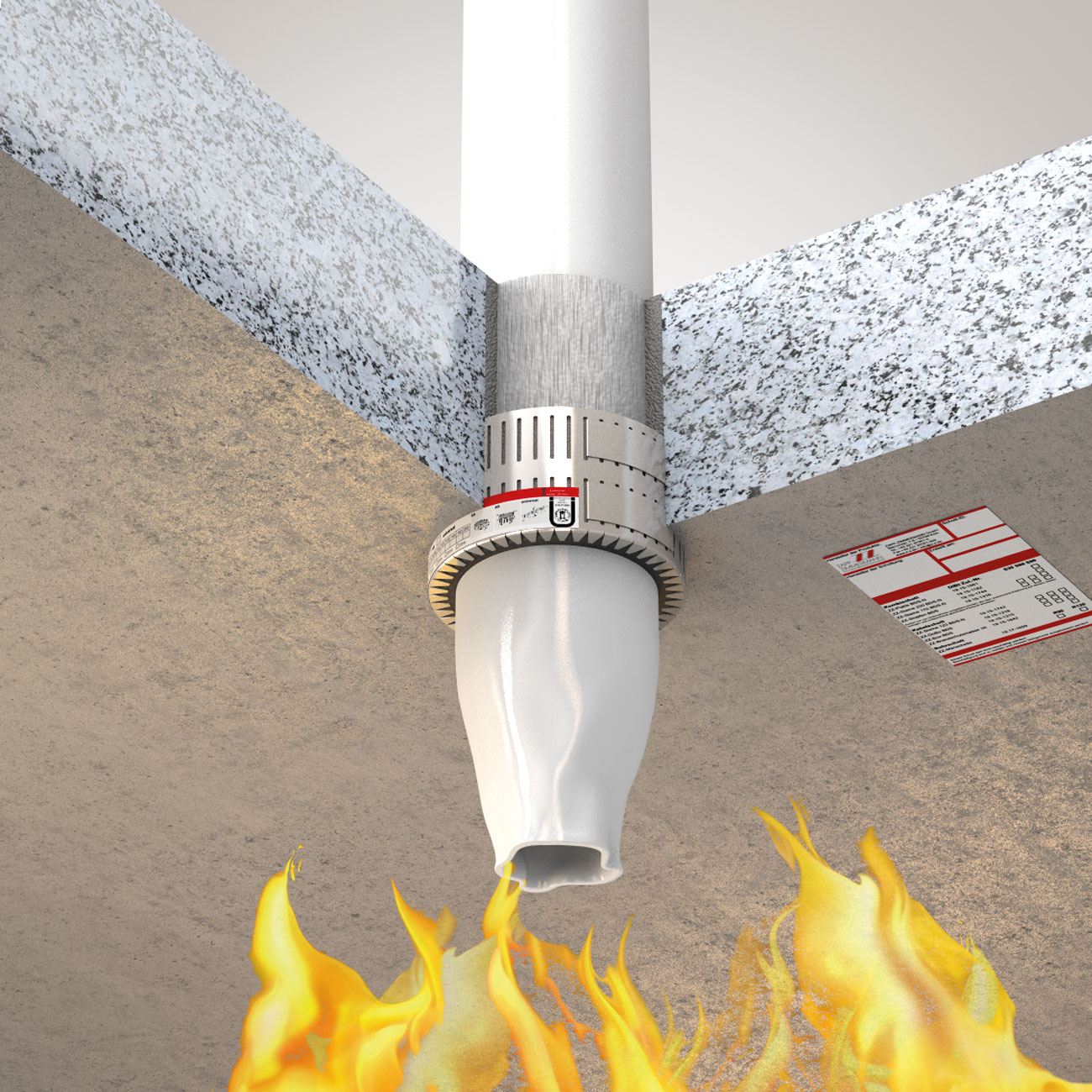
In the case of intumescence, which is examined in more detail here, an expanding foam body is formed on the component, which hinders access to oxygen and protects the remaining material against heat and direct flames. The formation of this insulating layer is brought about by various organic and inorganic raw materials, or a combination thereof. Intumescent fire protection products are used especially in the form of coatings and fire penetration seals.
In the case of penetration seals, the increase in volume associated with intumescence is especially important. The expanding foam body can fill damaged areas of penetration seals that occur, for example, during combustion of flammable penetrants, thus ensuring integrity. By choosing suitable additives it is possible to adjust both the extent and the force of the intumescent process (expansion force) and the solidity of the resulting insulating coating. The inserts of collars, for example, have a high intumescent factor together with a high expansion force, so that they can compress plastic pipes and seal the remaining opening after they have burned away.



Polyurethanes
Through the selection of raw materials the material properties of polyurethane can be adjusted with respect to density, hardness and elasticity. To produce the widely used PU soft foams, in most cases it is only necessary to add water, which forms gaseous carbon dioxide (CO2) during the curing reaction as an expanding agent for the foam. Other additives control the speed of the cross-linking reaction and the viscosity of the raw materials. These two options for controlling the properties are especially relevant for two-component in-situ foams and casting compounds, which deliver virtually constant end results regardless of the ambient conditions, as long as the material is at the correct temperature. In addition, the cross-linking reaction of polyurethanes takes place at relatively low temperatures, so that the fire protection additives do not already start developing their effect during the processing of the material.
With the right moulds it is possible to produce complex three-dimensional moulded components that are comparable to thermoplastics produced in injection moulding processes. In controlled applications, this enables custom solutions that save time during installation.

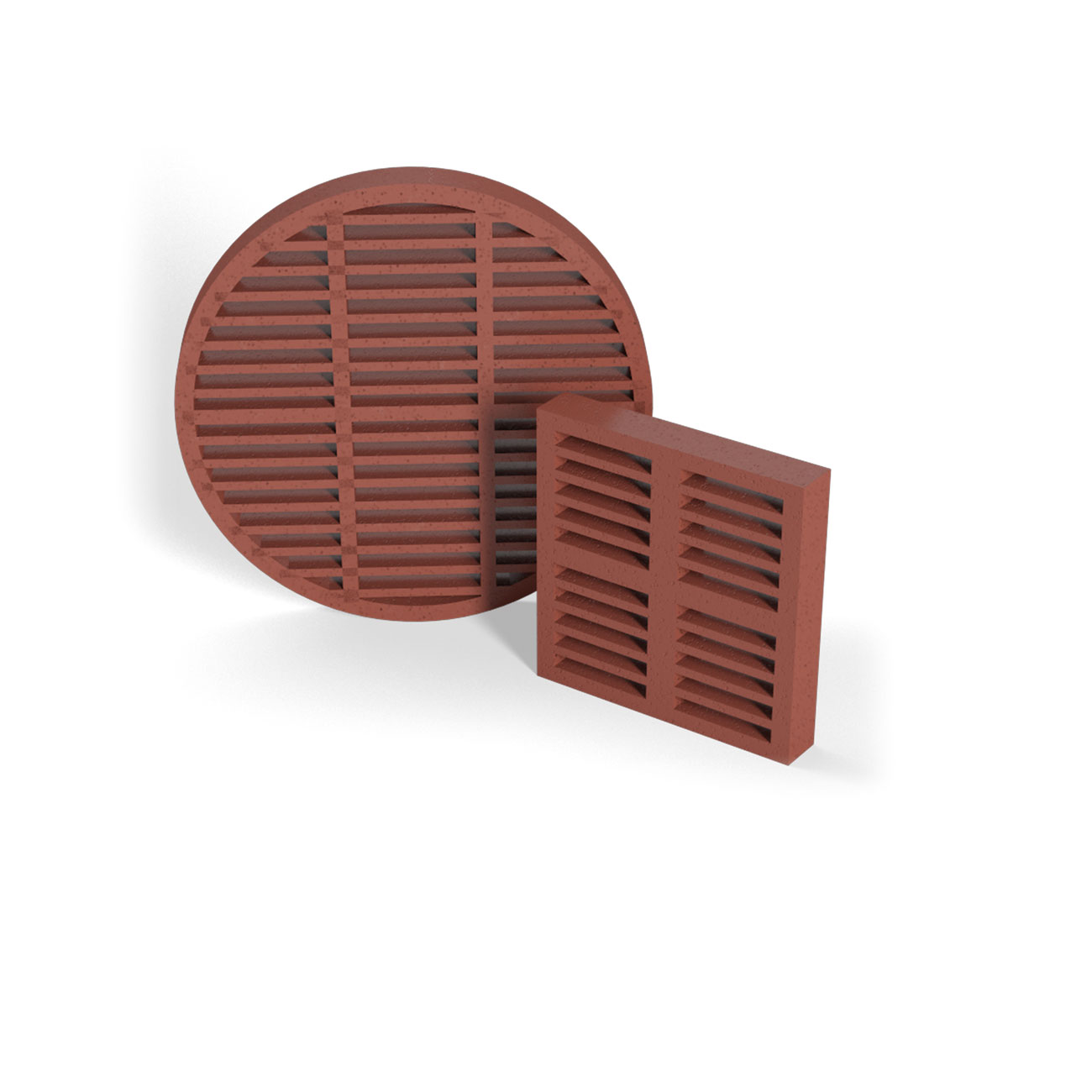
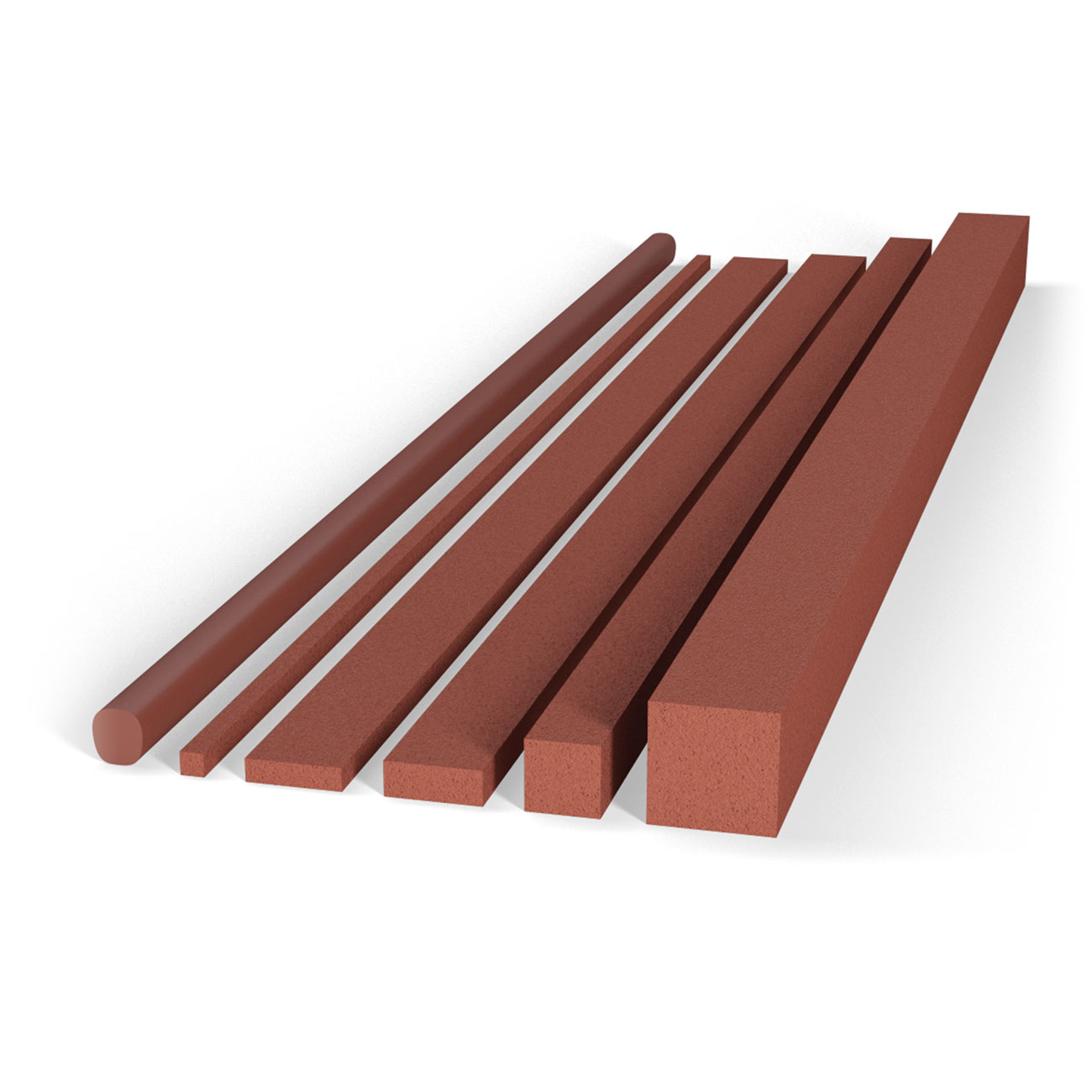
Especially the soft foams that are used today as the standard PU fire protection solution for penetration seals feature outstanding processing properties. Standard insulation knives can be used to adapt the moulded components, if necessary. But even oversized moulded components can be inserted into openings, since the material is compressible. Another advantage of the PU systems is that they eliminate the mixing of materials and time-consuming formwork. Reactive systems such as two-component in-situ foams are ideal for sealing openings with numerous or irregular penetrations. During expansion the PU foam body automatically adapts to the closure. This eliminates the need for time-consuming custom cutting. Since two-component foams can generally be combined with other moulded components, large openings with irregular penetrations can also be sealed very quickly by using moulded components to fill empty areas and in-situ foams for areas with penetrations.
Generally, PU soft foam systems are free of fibres and the additives are permanently fixed in the PU matrix. During insertion, cutting or other processing of the moulded components, there is no release of particles that could negatively impact the ambient air.
Fire protection
In fire protection, one must differentiate between the fire properties of the building material and the application. Most PU fire protection materials are combustible. Proof of the fire protection effectiveness in the application is usually determined based on test procedures for the specific situation. Penetration seals for buildings in Europe are regulated by EN 1366-3, and in the USA by ASTM E814, which has been incorporated in the two certification standards UL 1479 and FM 4990. Fire tests for proving the fire resistance are conducted respectively in installations with wall and ceiling elements featuring standard penetrations, such as cables and pipes. The control of the temperature profile in the test chamber is based on ISO 834-1 and simulates the profile of a solid-substance fire. Other test curves exist for special applications such as tunnel or liquid-substance fires. A basic requirement in all cases is the successful room integrity, or preventing the fire from spreading past the component as a result of direct flames. In the USA, the F rating contains an additional requirement for the mechanical stability of the burned out penetration, the so-called hose stream test. In this test, the fire penetration seal is sprayed with a water jet immediately after passing the fire test. The surface of the seal is sprayed several times with water at a pressure of 2.1 bar; if water penetrates the seal, this results in failure of the entire test. Another requirement in many cases is limiting the heat transfer. For the duration of the test, the temperature rise (ΔT) on the side facing away from the fire must not exceed 180 K on the seal surface and the penetrations on the wall or ceiling.

Assessments in accordance with these standards are meanwhile increasingly recognised outside of the original countries. This makes it possible to use tests based on the US standards to receive civil defence approvals for the United Arab Emirates or Qatar, for example.
Summary
Fire protection measures serve to protect human life and property. Fire protection products on the basis of polyurethane are used in preventive fire protection in buildings and are characterised by diverse adaptable mechanical and technical properties for optimal fire protection. In extensive tests conducted by certified material testing institutes, these systems consisting of combustible materials successfully demonstrated their fire resistance and have received numerous certifications with a high application range. Their increasing worldwide use across industries is due to their outstanding technical properties and economical advantages. PU-based fire protection systems represent equivalent or superior alternatives to the systems otherwise in use.
For more information, go to www.z-z.eu
About the Author
Dr. rer. nat. Dipl.-Chem. Philipp Toth Product Manager at ZAPP-ZIMMERMANN GmbH

You must be logged in to post a comment.