

International Fire Protection magazine took the opportunity to speak with Nicharee to discuss ‘Why fire engineering?’, ‘Why watermist?’ and what were the future aspirations for this award-winning scientist.
1. From where does your interest in fire-safety engineering derive?
According to the statistics of fire incidents in Thailand, my home country, more than 3,000 accidents happen each year. I believe fire accidents can take place at any moment even though we attempt to eliminate or minimise the probability of those tragedies. Fire safety measures such as the following shall be implemented to expand the researcher base in this field, develop a more competitive environment for applied research, and increase the number of regenerative fire-safety organisations originating in Thailand. From my point of view, the trends in fire-safety studying will be increasing to lessen the possibility of fire risk and hazards in the future. That is the main reason I decided to continue studying Fire Safety Engineering.
2. On your first day at university, did you know that you would be writing your master thesis about watermist?
Not entirely. Since I decided to study in the fire-safety field at the Tokyo University of Science, the research topic for my master’s degree had not been decided yet. As far as I am concerned, the most important part of the research is to deliberate about what I am profoundly interested in. During the first half-year, I made an effort to discover several research topics related to fire and combustion by reading various scientific journals to discuss with professors. Appropriately, the influence of watermist on the combustion of polymers became an issue for my research.
3. Tokyo – where you have studied – is an exciting city, but I suppose that is not the reason why you went there to study/finish your studies?
I desired to be employed as a researcher at the institute during my time as an undergraduate. Studying academics is important for my career in the future. I consequently decided to pursue a master’s course in Japan and applied for the programme known as the Ministry of Education, Culture, Sports, Science, and Technology (Monbukagakusho: MEXT) scholarship. This programme is issued by the Japanese government that supports foreign students who are interested studying at higher-education institutions, which are selected on the recommendation of the Japanese University. Thereafter, I was selected as a candidate and became a graduate student in the department of Global Fire Science and Technology at Tokyo University of Science, Japan.
4. Have you been to other universities before you moved to Tokyo?
I graduated from the Faculty of Science at Chulalongkorn University in Thailand, majoring in Material Science. Chemistry has been one of my favourite subjects for as long as I can remember. I personally like learning something new by conducting and analysing experiments. Thereafter, the faculty of science became one of my choices for studying for an undergraduate degree. I conducted research on the suppression of corrosion for an anode electrode of secondary batteries, using the coating of conductive polymers with zinc-oxide nanoparticle composites. During the research, I became more interested in fire safety because of the awareness of lithium-ion batteries and fire explosion. I decided to continue my future study in the fire-safety field in Japan.
5. How was your interest in watermist aroused?
I am personally keen on how water suppresses the fire. Although many people have done research on the mechanism of fire extinction, a fundamental understanding is still complicated and tangled to figure out. I find that the more I discover regarding watermist, the more questions I get than answers. Remarkably, I suppose that one of the things that makes watermist intriguing is how challenging it is to fully comprehend the mechanisms of fire suppression by watermist.
6. What do you think are the great advantages of watermist technology?
From my point of view, the watermist fire-suppression system is a recent technology, which provides several benefits. The prominent advantages of the watermist system are its effective physical mechanisms for fire suppression: cooling effects and oxygen displacement effects. According to the physical mechanisms, watermist could eliminate both heat and oxygen to accomplish the effectiveness of fire extinction, which makes watermist differ from conventional water sprinklers.
7. How was the time during which you wrote your thesis? How will you look back at it in years to come?
At that time, when I wrote the dissertation it was, without a doubt, worthy to achieve because of experiences in regards to expertise and experience. I spent the initial phase of the project gathering and analysing the experimental findings for my master’s thesis. Then, I started writing a dissertation that included background information, experimental tools, results and discussion. The last step was preparing a presentation for the final to evaluate my master’s thesis.
8. What do you think the future of water mist will look like?
I suppose that the concern over environmental repercussions will cause a significant development in the application of water fire-protection technologies. In the future, from my standpoint, the development of watermist will increase so that it may eventually outperform conventional sprinkler systems.
9. What are your personal plans for the future regarding your career?
I am going to continue a career in the fire-safety industry. The reason that I want to work in this field is because of the increase in the construction of residential and office buildings; thus, the increase in fire accidents became a considerable concern. The demand for fire-safety specialties was predicted to be increasing every year. Developing fire-safety measures is necessary in order to reduce the probability of fire incidents and damage.
10. Will watermist be a part of your future?
Definitely. As I mentioned before, watermist is a primary part of my PhD research. Basically, my research for a master’s degree is focused on the production and toxicity of the main fire gases such as carbon monoxide and hydrogen cyanide. In my doctoral course, my research aims to gain a better understanding of the chemical reaction between watermist and combustible gases which are imperative in designing fire suppression in watermist technology. I believe that a deeper knowledge of the watermist fire-suppression system will be a career asset in the future.
Summary of master’s research
These days, watermist fire-suppression systems are viable options as an alternative instead of bubble, inert gas and halogenated extinguishing systems and have been commonly used for fire extinguishment in underground parking lots in Japan. Recently, few types of research have been studied on toxic gases generated from polymeric materials burned with watermists. Assessing the fire hazards of gas from burning polymers with watermist is necessary.
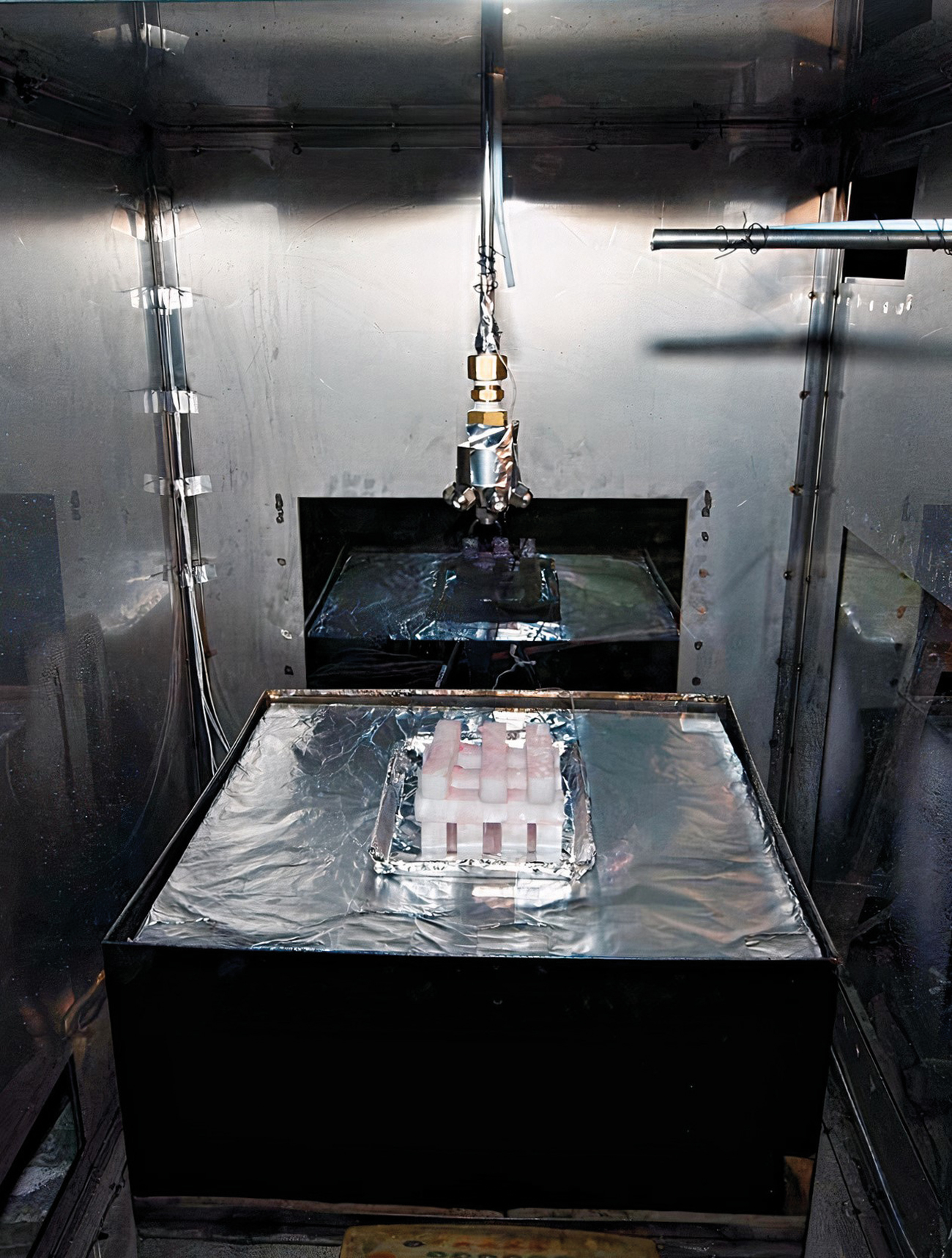
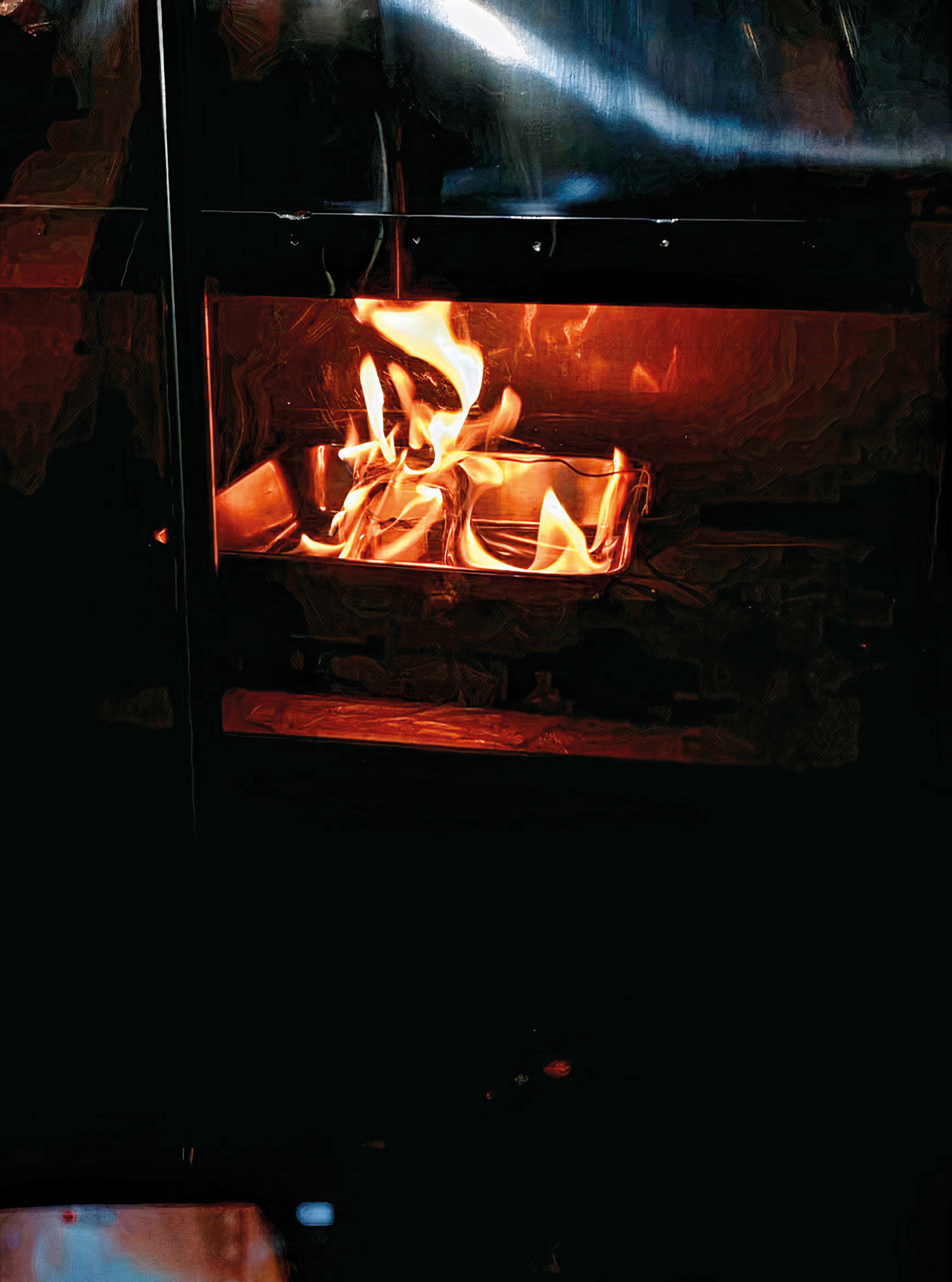
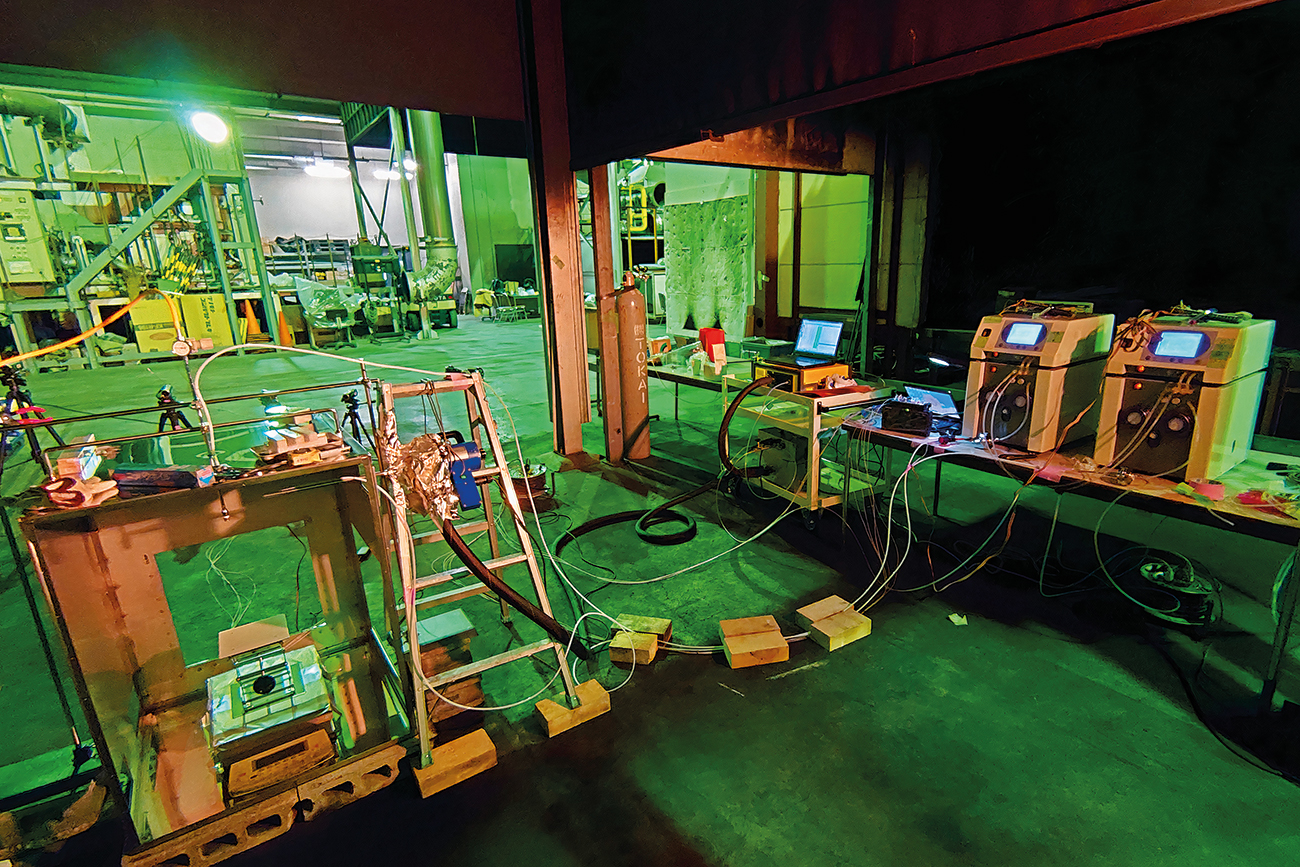
This study aims to analyse and evaluate the toxicity of gases with the influence of the different sizes of watermists discharged depending upon the nozzle on polymers burned in a confined space. The experiments were conducted in a stainless chamber connected to Nondispersive infrared (NDIR) and Fourier transforms infrared (FTIR) gas analysers for measuring the concentration of several gases produced by combustion. Timbers, polypropylene (PP), polyethylene (PE), polymethylmethacrylate (PMMA), polyurethane foams (PUF) and polystyrene foams (PS) were used as test samples. Two nozzle models used in this experiment were manufactured by the Ikeuchi company, the nozzle models of ‘7KB’ (Nozzle A) and ‘J’ (Nozzle B). The size of droplets and water flux density discharged from the nozzle were regulated, referring to the experiment conducted by Tokyo Fire Department to quantify for the accurately scaled-down full-scale experiment.
The preliminary test results of watermist characteristics showed that the averaged watermist droplets diameter spraying on horizontally projected areas with nozzles A and B were 0.16 and 0.32mm, respectively. Experimental results confirmed that the mechanism of watermist for the extinguishment of polymers burned can be indicated by the cooling effects and oxygen dilution. The fire-suppression capacity depended on the characteristics of the fuel sample and watermist volume flux on the horizontally projected surface area.

Produced toxic gas concentration results illustrated that carbon monoxide concentration increased throughout watermist application in association with the attenuation of entrained oxygen concentration to the combustion of polymers. As a result, carbon monoxide concentration by burning timbers gradually decreased with the small size of water droplets when the fire was completely extinguished. In the case of polypropylene and polyethylene, the concentrations of HCN were unexpectedly measured with water discharged. It can be deduced that formed NO concentration affected HCN concentration due to thermal NOx reaction that occurred in polypropylenes burned at approximately 800°C and produced HCN as an intermediate product.
Fire toxicity with the calculation by Fractional effective dose methods (Purser’s model) was evaluated. With FED and LFED calculated results by cumulative carbon monoxide and HCN indicated with a certain dose level it was shown that fire hazard potency of thermoplastics burned with watermists discharged by the large size of water droplets was over the threshold level for incapacitation.
For more information, go to www.iwma.net

You must be logged in to post a comment.