
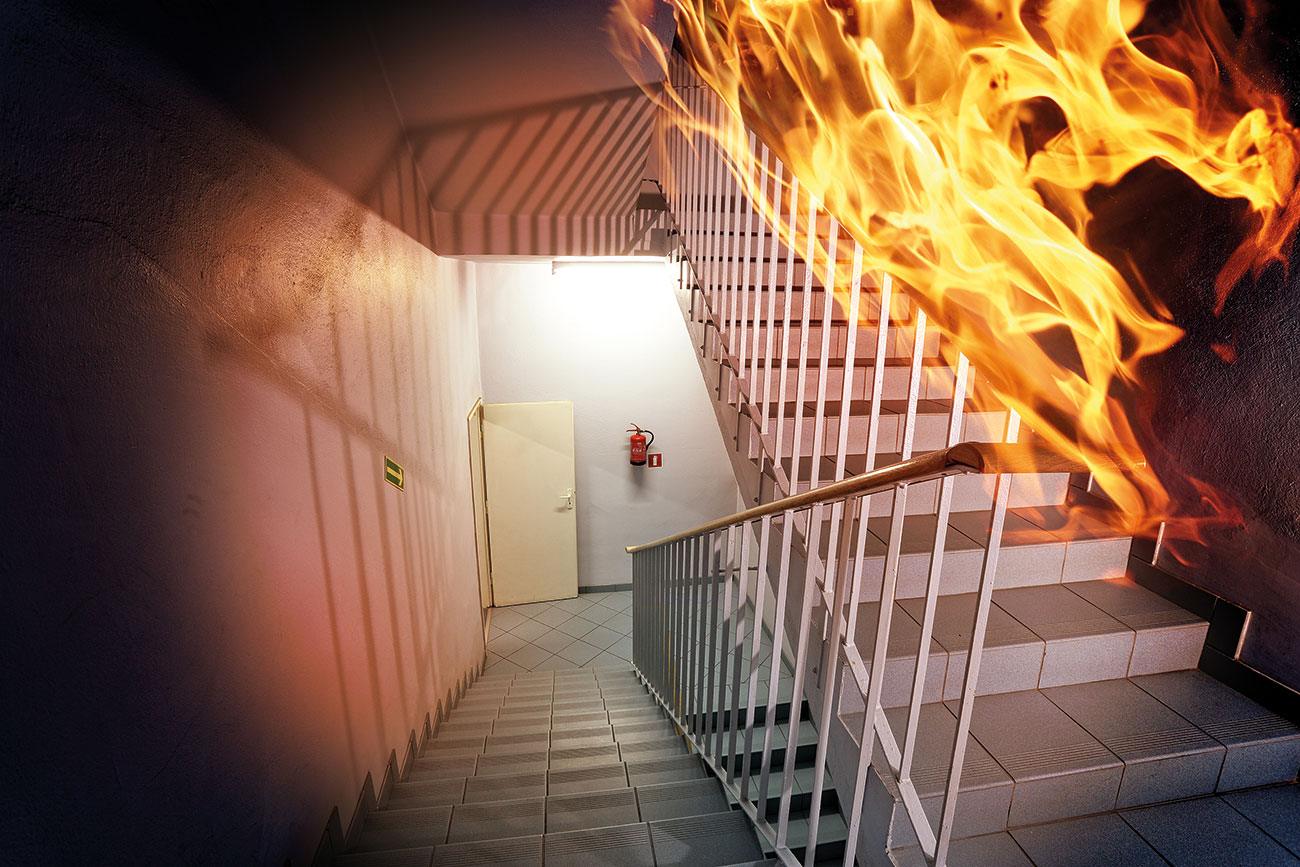
A fire that tore through the Cube high-rise student accommodation in 2019 is a stark reminder that our new 11m sprinkler threshold for high-rise residential buildings does not apply to student accommodation. The requirement, which took effect last November, also does not apply to care homes. Iain Cox, Chair of the Business Sprinkler Alliance looks at the arbitrary nature of our building regulations and makes the case for sprinklers to be considered as a viable option across the built environment.
On Friday, 15 November 2019, 200 firefighters and 40 fire engines were called to tackle the blaze at the six-storey Cube building, housing students at Bolton University. Thankfully, all 217 students were able to escape safely without any casualties, but once again the disruption and knock-on effects were undeniable, with the financial loss falling on both the university and the public purse. Fires such as this are the cause of significant economic, environmental and community costs, which can ultimately be borne by the taxpayer. The vice-chancellor of the university estimated spending between £1m and £1.25m on the immediate response to the fire to rehouse students evacuated from the building and replace necessary possessions lost in the fire. Whether this cost was met by the government or the university, UK plc will have been impacted The vice-chancellor has stated that the fire damage costs will be met by insurers, but insurance never covers all costs.
The fire brought into sharp focus the destructive impact of fire, challenges with regulatory guidance, the hidden costs of such incidents and begs the question how can its impact be averted?
A ‘near miss’
The Mayor of Greater Manchester, Andy Burnham, said the fire was a ‘near miss’ and was right to highlight the need to reflect on this event. Comments from those involved in the development of this building highlighted the Cube’s compliance with Building Regulations. This would puzzle many given the outcome. However, this mismatch between expectation and outcome delivered by Building Regulation is not uncommon. Many building owners believe that if they build to regulation, they are creating a resilient building – this is not the case, they are simply creating a compliant building where the requirement is for life safety, not property protection. According to research carried out by YouGov for the Business Sprinkler Alliance, nearly seven out of 10 (69%) businesses are unaware that current building regulations in the UK do not adequately prevent and protect buildings against the devastating effects of fire.
The arbitrary nature of the regulations
When you look at the devastating fire that tore through this high-rise student accommodation in Bolton, many will find it hard to realise why the new height requirement for the provision of sprinklers does not apply to student accommodation such as this. The 11m requirement also does not apply to care homes, therefore fires such as the one that ravaged the Beechmere Care Home in Cheshire in August 2019 are not covered.
Whilst thankfully all 150 staff and elderly residents were evacuated safely from the Beechmere Care Home in Crewe, the building contained no sprinklers. If the incident commander had not overruled the ‘stay-put’ policy and ordered a full and immediate evacuation of the residents, the outcome of this fire would have been very different, with potentially tragic consequences. Technically, the building should have had compartmentation but clearly it didn’t. According to Lee Shears, Head of Protection at Cheshire Fire & Rescue Service, this decision to evacuate saved lives. He said: ‘It’s clear that the fire wasn’t behaving in the way that we would expect, and I must praise the swift and decisive actions in ordering the immediate evacuation of residents.’ This fire also raises the question of why elderly people, many of whom need assistance, were housed in an unsprinklered building.
It makes one question the arbitrary nature of the regulatory system and why other building types are not covered by the change to sprinkler requirements. If the risk is the same (or greater) than for high-rise residential, why are we not requiring sprinklers for all such buildings?
Furthermore, the regulations are based on historical data despite buildings today being substantially different from their predecessors in terms of materials, construction and use.
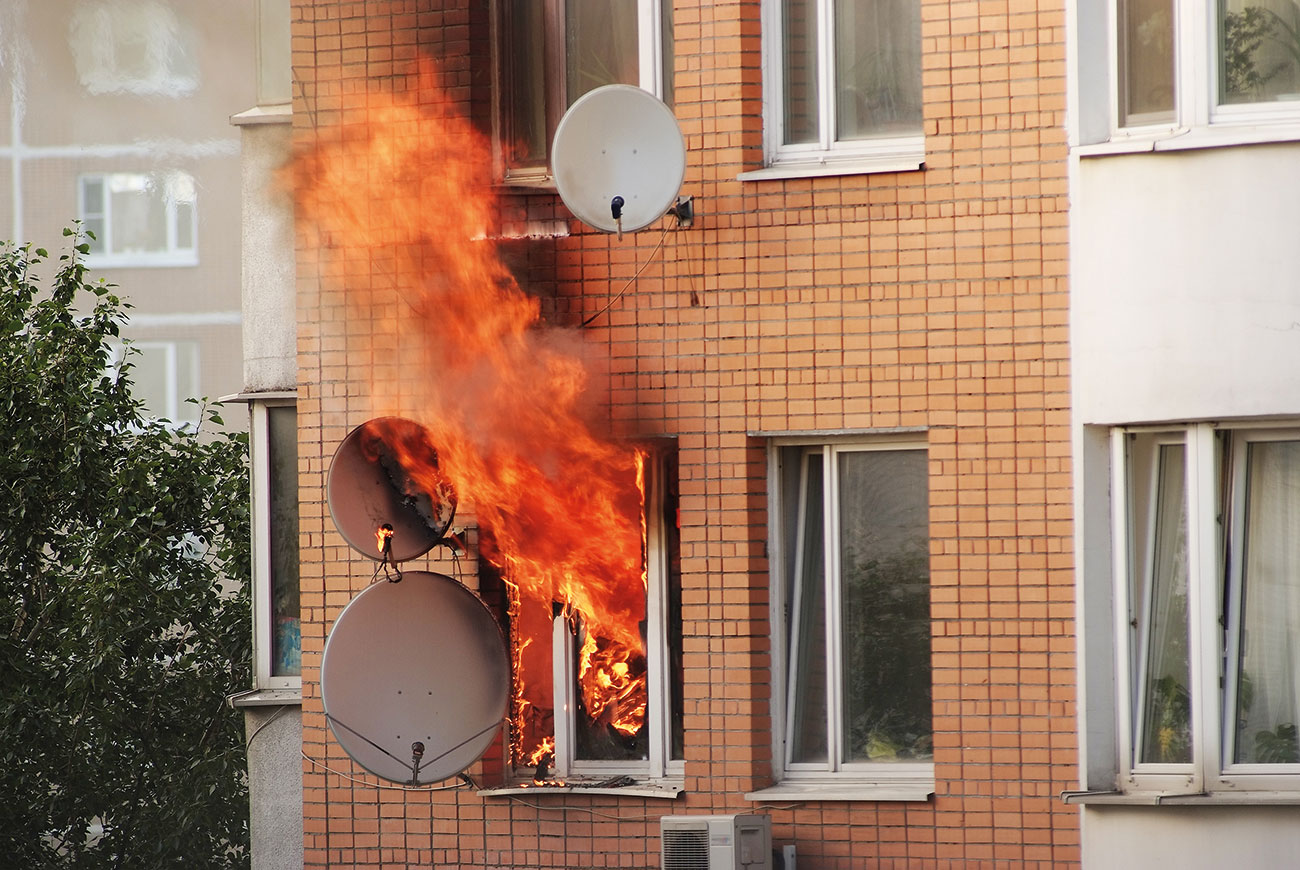
Sprinklers ensure resilience
The BSA believes that sprinkler systems should be considered more readily as a viable option right across the built environment whether it is a hospital, school, retail or leisure facility, or commercial and industrial building.
Fires such as these highlight the rationale for greater consideration of property protection alongside life safety as a reasonable outcome. An expectation of property protection alongside life safety would result in more buildings being designed to be resilient to disproportionate damage, using combinations of passive and active fire-safety measures. The BSA believes that sprinkler systems would be a major part of this change and believes they should be considered more readily as a viable option right across the built environment.
The fires at the Cube student residence and the Beechmere Care Home are another telling reminder of the wider impact of fire. We shouldn’t be looking at large properties such as these being devastated by fire and think such an outcome is a success. The inclusion of a sprinkler system can prevent major financial and property losses, containing what could be a potential major disaster and ensuring it is only a minor inconvenience. Proven time and again with consistent reliability, it is a small price to pay to prevent a property or business owner’s hard-earned success from going up in flames.
Building owners need to ask the question: ‘what’s the outcome I want to realise if my property suffers a fire?’ If we do not try and change the outcome, regulatory success will continue to look like the examples that we have seen. Why can’t we protect the building as well as the people in the building, and what’s wrong with not losing the building?
For more information, go to www.business-sprinkler-alliance.org
About the Author

Iain served in Royal Berkshire Fire and Rescue Service for 34 years, appointed Chief Fire Officer in 2003 he was awarded the Queen’s Fire Service Medal in 2009 and retired in 2013. He served as the Chief Fire Officers Association’s Director for Protection and Prevention between 2009 and 2011. Iain is currently the Chair of the Business Sprinkler Alliance and is a board member of BAFE. Iain holds a BSc from Reading University and an MA in Management from Coventry University.

You must be logged in to post a comment.