
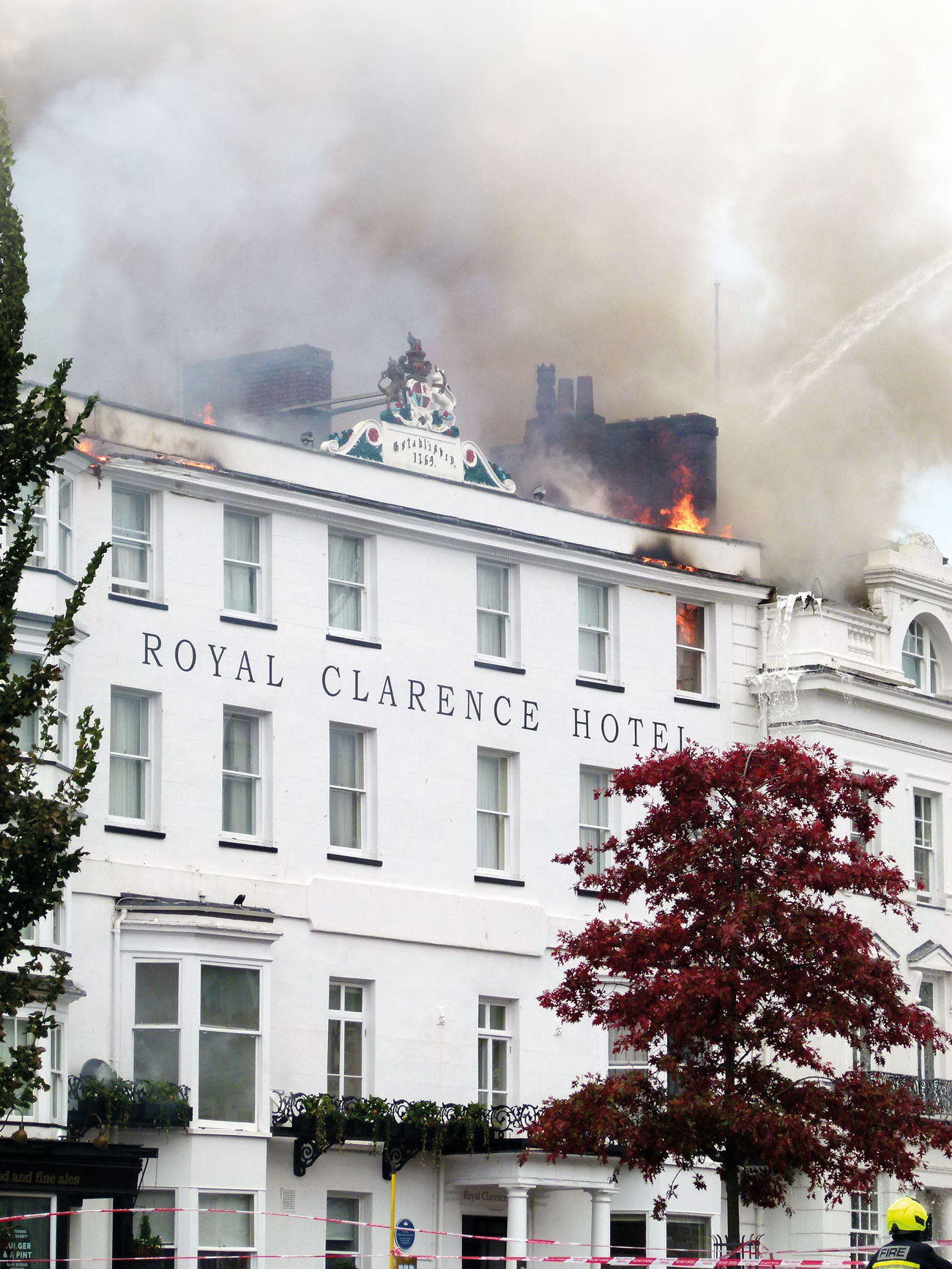
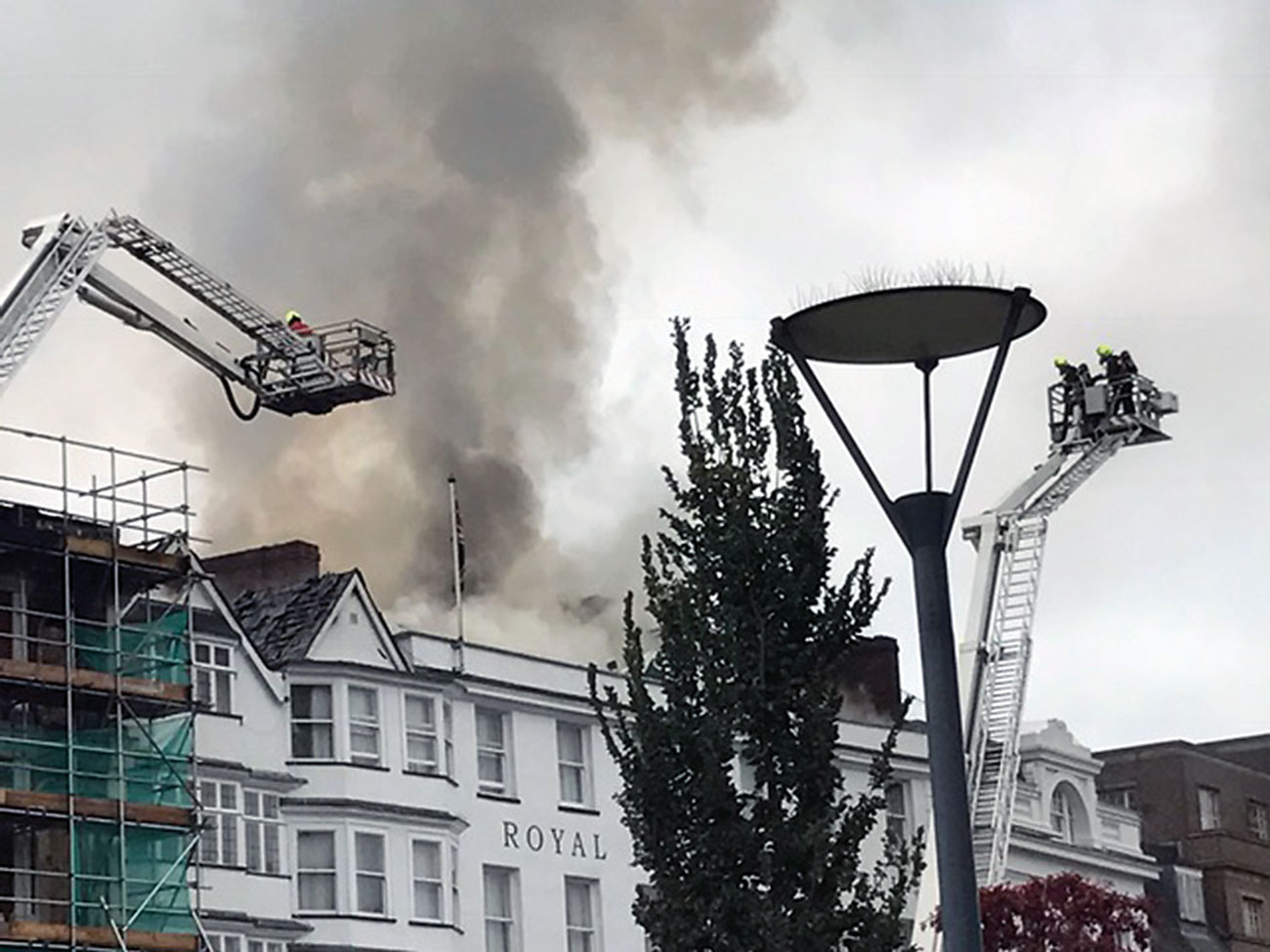
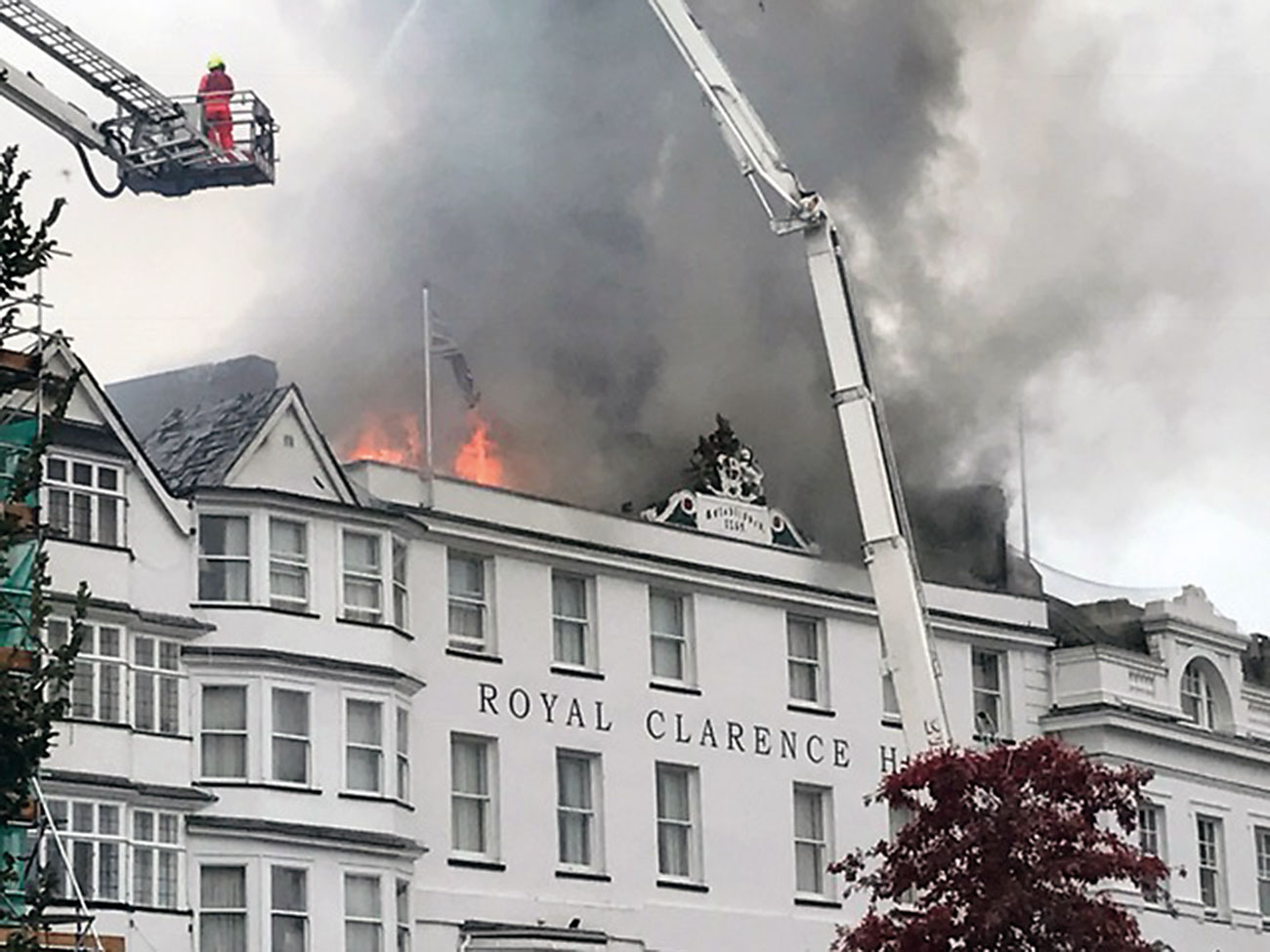
In my previous articles about the fire at the Royal Clarence Hotel fire I raised a number of questions that needed answering unfortunately, none of the questions that I raised have been answered and there remains many areas of concern1.
The BBC Inside Out – South West programme that was broadcast in November 2018 did provide more interesting developments that were not contained within the official report and now we are informed that there is to be a review of the official report following concerns about its independence. Unfortunately, the review is to be carried out by the West Midlands Fire Service (WMFS) and overseen by the National Fire Chiefs Council (NFCC) and in my view and many others that have commented on social media, this totally fails the independence test.
The key areas that were raised initially were:
- What was the cause of the fire?
- Why did the fire spread to the Royal Clarence Hotel?
- What can we learn from this tragic incident?
The Report into the fire
The Devon and Somerset Fire and Rescue Service (DSFRS) report into the fire2,in my view, does not answer many of the questions that I raised and only gives me more concern about the accuracy of serious fire investigations carried out by an organisation that has a vested interest in the outcome. In addition to this it is not clear if there been sufficient transparency to ensure that the public interest is being protected.
The key questions that remain unanswered are as follows:
- What actions were taken by DSFRS following the discovery of hidden voids in the Royal Clarence Hotel (RCH) in 2015?
- What actions were taken prior to the fire to prevent fire spread from adjacent buildings to the RCH?
- What recommendations were made at the planning stage to prevent fire spread from No 18?
- Why are different times indicated for when the incident was declared a “Major Incident” – 0521hrs and 0542hrs?
- Why was it thought that the fire was under control at 0653hrs?
- What firefighting actions were undertaken between 0653hrs and 1000hrs approx. for the fire to suddenly spread to the RCH?
- Why was there no reference to the window in Room 402?
- Why is there no reference to the fire Risk Assessments (FRA) for the buildings involved?
- Why was there no reference to the HSE Report or to “hot work” being carried out the day before the fire?
- What have we learnt from this fire?
When you read the official report it can be seen that much of what happened before the fire at 18 Cathedral Yard appears to be directed towards the HSE. The key questions that remain unanswered here are:
- Why does the HSE Report indicate that the emergency services were made aware of a smoke/fire detector activating within a business premise on the High Street when this is not referred to in the official DSFRS report?
- Why was there no discussion between DSFRS and the HSE at the planning stage?
- Why is there no reference to a FRA – only a Fire Plan?
- Why was the possible cause of the fire by “hot work” not investigated further?
- Why didn’t the HSE have any information on the following:
- Information obtained from the previous contractors that were replaced shortly before the fire?
- Actions that were recommended or required to prevent the fire spread from 18 Cathedral Yard to adjoining properties?
- The Health and Safety File?
- The Construction Phase Plan?
Note: A few days prior to the fire an ex senior fire officer was carrying out a fire risk assessment at an adjacent property and was on the roof when he observed what he felt was “unsafe demolition” work and recorded this on his phone. He then sent the video to the HSE who did not visit site but just issued telephone guidance. Why was there no mention of this in the HSE Report?
Initial Conclusions
Now that I have had the chance to examine both of the reports from DSFRS and the HSE it is my opinion that there are many questions that still need answering if we are to learn from this tragic fire. I remain unconvinced that best practice was used before, during or after the fire and I believe that this was a major contributory factor in the loss of the Royal Clarence Hotel.
In addition to this, the receipt of a number of phone calls and communications after my article and the BBC investigation, from persons that appear to have a very good insight into what happened during the fire, have convinced me that there is still a lot of information that has not yet been disclosed.
During my investigation I have not received any communication from DSFRS about my concerns and my Freedom of Information (7th Sept 2018) requests for the following information remain unanswered:
1. The fire ground incident log
2. The fire control incident log (in relation to this incident)
3. Witness statements or notes taken by the Officers who compiled the report.
4. Relevant information from Incident, Operations and Sector Commanders.



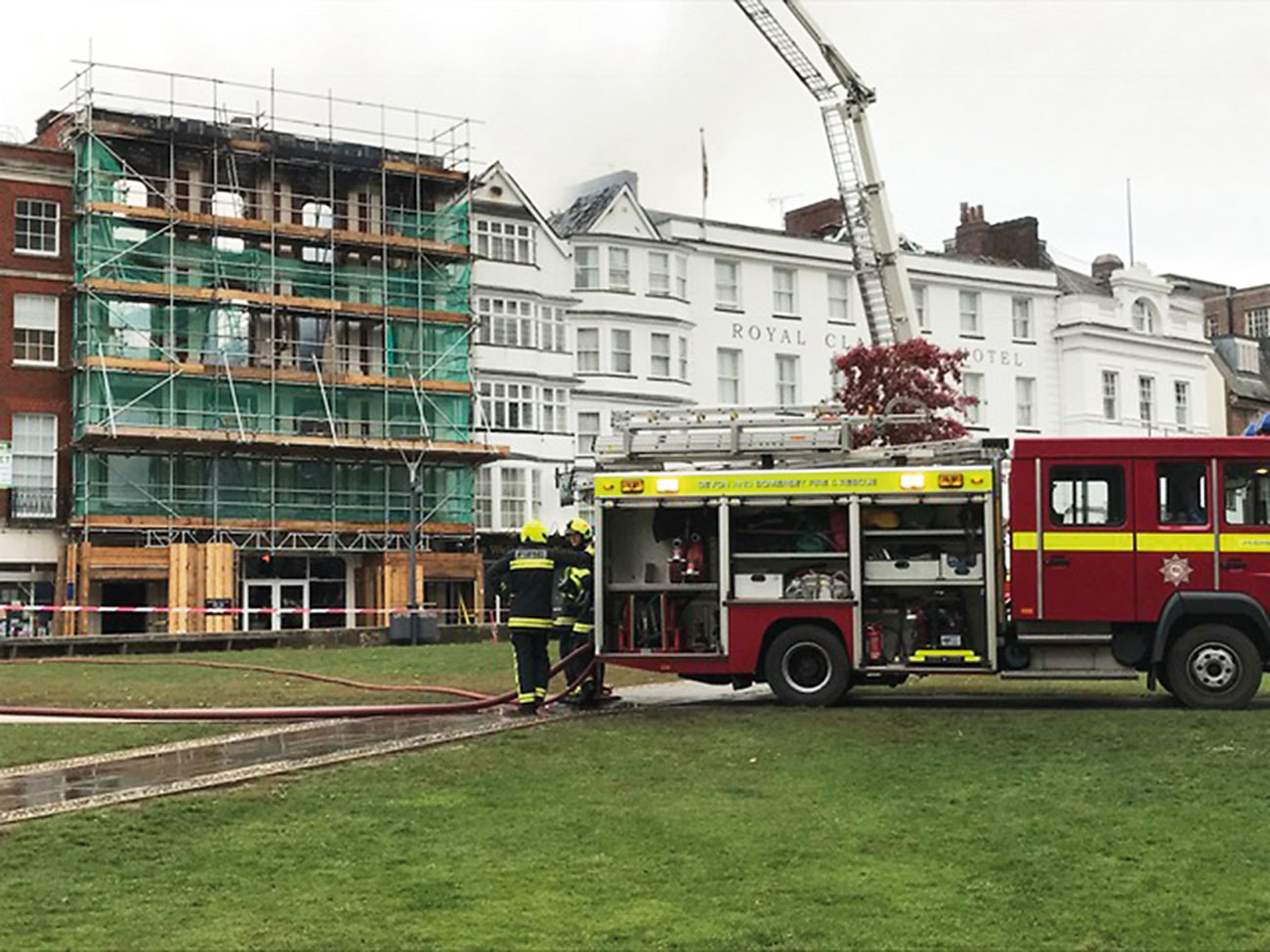
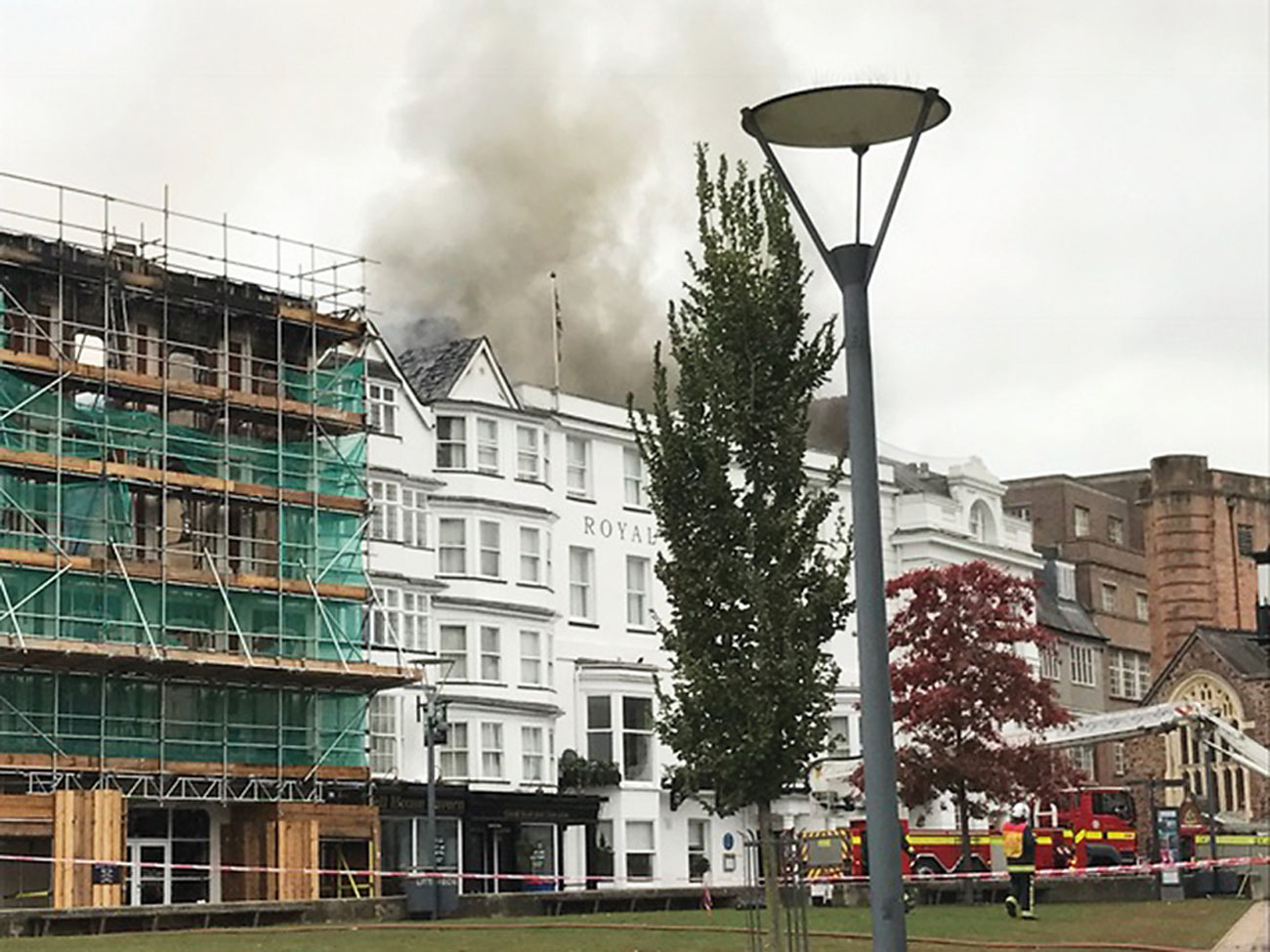

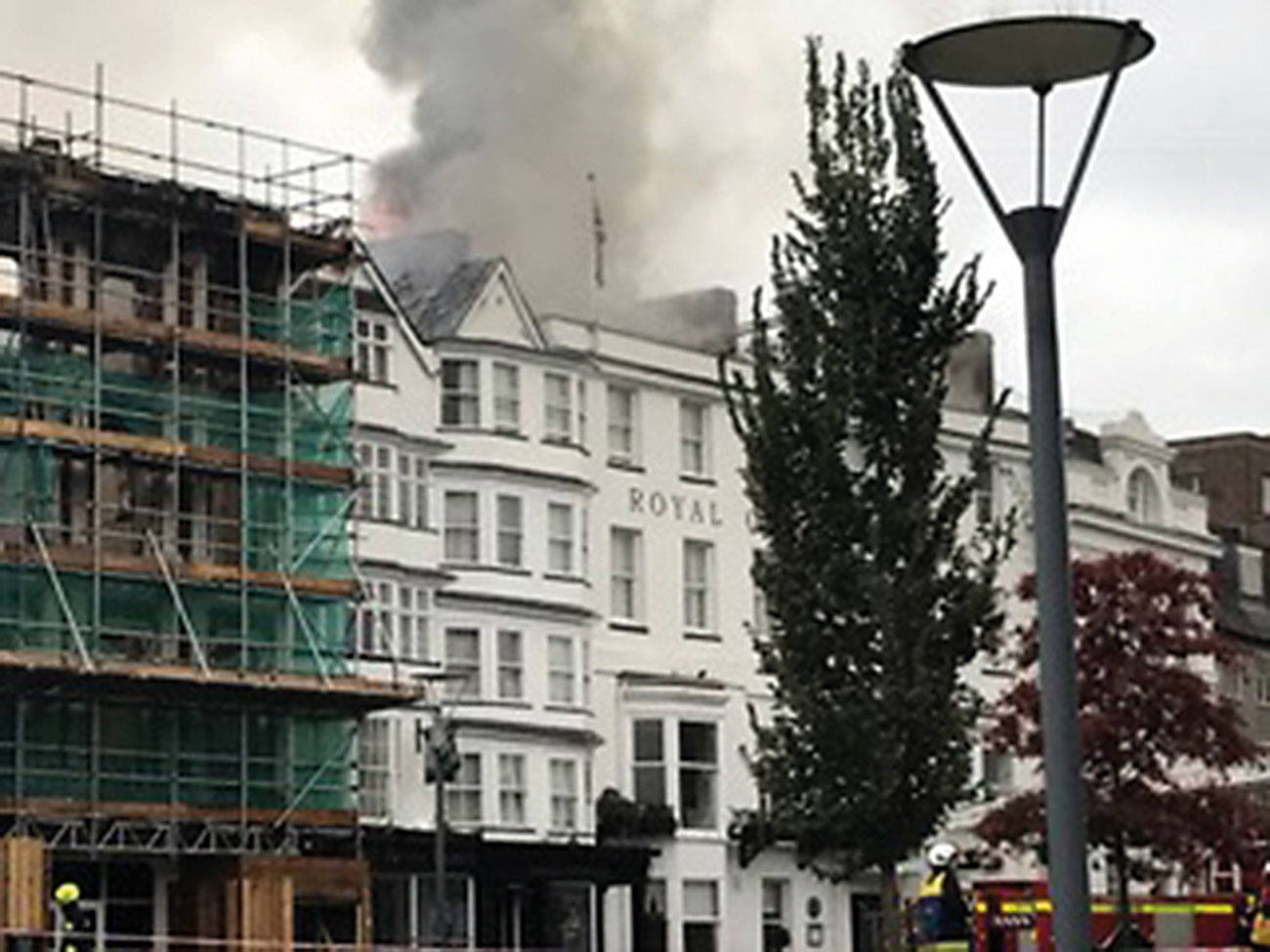
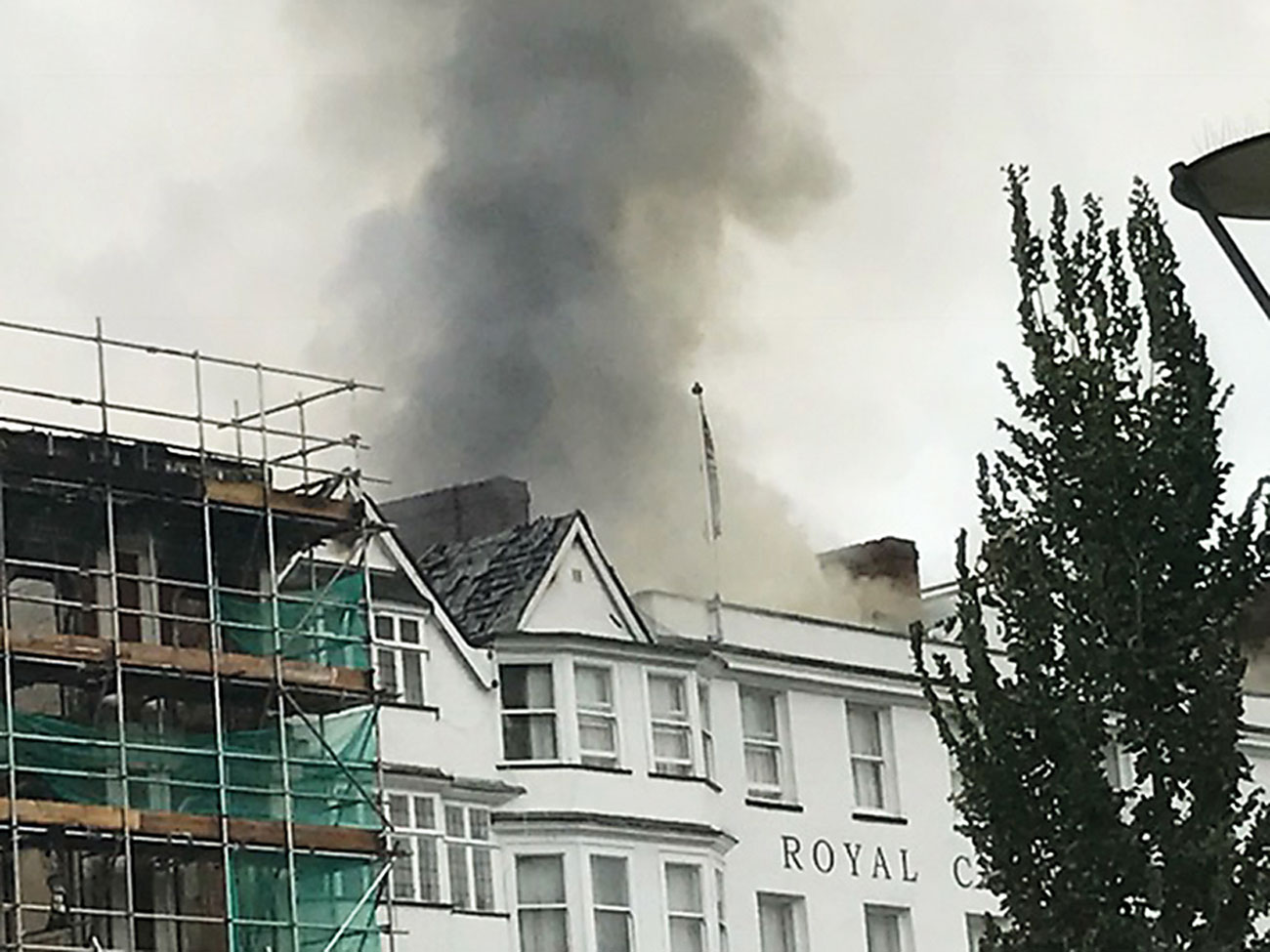
In my investigation into the Penhallow Hotel Fire4, I was pleased that Cornwall FRS took the time to respond to my findings and this was their concluding remarks; “It is fair to say that in responding to some of the points raised by Mr Cox we only just scratched the surface. There is no doubt that this tragedy has raised a significant number of issues for us as an organisation as well as the wider fire community. As a consequence, we are currently developing a case study which we will be presenting in due course”. They also added that independent investigation was worthy of debate.
I was also pleased to attend the case study that was subsequently developed and whilst it did not reflect many of the aspects that I had outlined in the article and the presenters were unable to answer a number of my questions, at least the importance of the fire was not lost.
As I have stated previously there have also been a number of recent developments that convince me that there is still a lot of information that has not been made available by DSFRS and this is based on the following information:
- The BBC Inside Out – South West programme that was broadcast in November 2018 and included a statement by the DSFRS Sector Commander Dave Jones (now retired) for the RCH that evidence he submitted was not used to complete the report. Dave Jones advised Senior Officers that crews should be sent back into the hotel at a crucial time, but this was not acted upon, or included in the report and he felt that “he was not being taken seriously” even though he was passing on relevant information. He also stated that “You don’t start dismantling equipment and sending appliances home until you know the fire is out and unfortunately, they had to cover up failings because the picture was not a good one”.
- Evidence was also given by a retired local GP who witnessed the event and stated, “They’ve let this building burn, and they are not putting any more water on it”. He subsequently wrote to the Chief Fire Officer about his concerns but did not get a reply and on the programme, he stated, “people who don’t respond either think that you are not significant enough or are covering something up”.
- Evidence was also given by celebrity chef Michael Caine who was a former co-owner of the hotel who stated, ‘that it was inconceivable that a fire that that was seemingly under control had got out of control”.
Whilst this review has been referred to by DSFRS as being an “independent review” in my experience being carried out by another FRS does not qualify this as being truly independent because staff move between fire and rescue services, many for promotion, there are a lot of joint initiatives and National Fire Chiefs Council (NFCC) provides collective responsibility for professional and technical matters for Fire and Rescue in the UK. In addition to this the “terms of reference” have not been seen, what information is to be made available and who is to be interviewed – so another unknown factor but a statement from the NFCC indicated the following “The review will consider aspects of the response to the incident of 28th October 2016 in relation to the account detailed in the subsequent report, with the findings being provided to DSFRS later in the year.”
I think that these words from Theresa May when she was Home Secretary provide a good summary of the situation, she said “the previous system of fire and rescue services reviewing each other’s performance provided no assurance whatsoever to the public”. She went on to say, “It is not so much marking your own homework as setting your own exam paper and resolving that you’ve passed, and it has to change.”
It is hoped that the review of the report to be carried out by the West Midlands Fire Service (WMFS) does at last reveal the answers we require about this tragic loss to our heritage, but I have to add that in my experience and previous investigations this rarely happens.
For more information go to alanfcox@gmail.com
References
1 https://www.ifsecglobal.com/royal-clarence-hotel-fire-destruction-uks-oldest-hotel/ & https://www.ifsecglobal.com/frs-report-royal-clarence-hotel-fire-full-holes-missing/
2 https://www.dsfire.gov.uk/News/Newsdesk/documents/CathedralYardReport.pdf
3 https://www.ifsecglobal.com/fire-news/royal-clarence-hotel-fire-hse-report-like-fire-service-report-fails-answer-key-questions/
4 https://www.ifsecglobal.com/the-penhallow-hotel-fire-accident-arson-or-incompetence/
About the Author

Alan Cox started his career in the fire and rescue service in both operational and fire-safety roles, before moving to the NHS where he was responsible for a large district health authority. His current role is offering pro bono advice to consumer organisations and individuals that feel the explanations/advice that they are given by enforcing authorities may not be correct and requires an independent view.
You must be logged in to post a comment.