

By Darren Hockley, Managing Director at DeltaNet International
With the Covid-19 pandemic having taken precedence over the last 18 months, organisations are now welcoming employees back to the workplace. Although it’s probably the last thing on employees’ minds after returning to the workplace following a prolonged period away, it’s crucial organisations focus on and refresh vital health and safety training for employees during this time.
In light of Fire Door Safety Week, this is a prime time for organisations to emphasise the importance of fire safety and improve fire door safety in the workplace.
Making prevention a priority
Conduct fire safety risk assessments
Organisations are liable for conducting a fire safety risk assessment, and the government’s five-step checklist enables them to assess their fire risk and plan fire safety. Risk assessments allow businesses to identify fire hazards and anyone at risk, e.g. people with disabilities should have a fire safety emergency plan in place. Organisations must use the checklist to assess, eliminate or minimise fire risks. Businesses must report the findings, create an emergency plan, and train employees on fire safety. They should also ensure it is continuously updated and reviewed when things change in the workplace.
Put in place fire safety equipment
Appropriate fire safety equipment must be present in the right places. This includes near escape routes, as well as elevated risk areas, e.g. kitchens, where flammable materials such as oil and gas are located. It’s up to the facilities managers or business owners to understand which fire extinguishers are suitable and needed in the building. Knowing the difference between using carbon dioxide, powder, foam and water can help tackle fires appropriately and protect electrical equipment.
Keep flammable materials clear from exit routes
When it comes to leaving the building in an emergency, the last thing employees need to worry about is a fire blocking the fire exits. So, ensuring flammable materials stay as far away as possible from the exit routes is vital. While many materials in the workplace are flammable, e.g. paper and cleaning products, having fire extinguishers at the ready near these points is most important.
Test and review electrical equipment
Most workplaces are heavily dependent on electrical equipment, usually having an abundance of IT hardware in use. Routinely test electrical equipment for any defects, damage or deterioration of the electrical installation. Faulty electrical equipment could generate sparks flying, creating a fire safety hazard.
Support employees with fire safety training and exit plans
Training employees on fire safety is imperative so they recognise the responsibilities they have as staff members to manage risk. Awareness training in this area allows employees to maintain a safe working environment and improves their understanding of the correct procedures should an issue arise. Knowing where all the emergency exits are, the locations of fire alarms, fire safety equipment, and how to leave the building calmly and wait for the assigned fire warden at the assembly point outside are crucial.
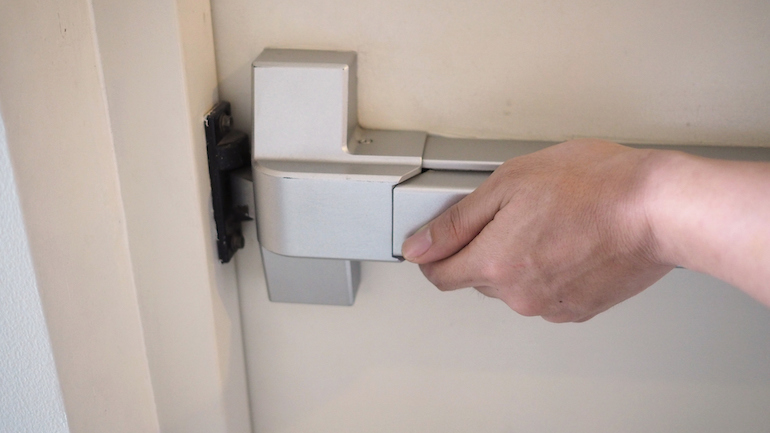
How to ensure fire door safety
Here is some guidance on ensuring fire door safety:
- Close fire doors at all times
Fire doors must always remain closed to stop fire and smoke from spreading across the building. It is also against the law to prop open a fire door as this could put employees’ lives at risk, meaning the organisation or person at fault could face fines for breaching health and safety laws. - Fire doors must remain unlocked
When you need to use fire doors in an emergency, the last thing anyone needs to worry about is trying to find the key to unlock them. Employees must be able to escape calmly and not have to panic about being stuck in the building. - Use appropriate seals for fire doors
According to health and safety laws, fire doors need to use intumescent seals surrounding the door frame. When they encounter heat, these seals expand, blocking the fire from moving between the cracks. It’s also important to frequently inspect that the seals around all fire doors are in working condition and haven’t been broken. - Shut fire doors tightly
Fire doors are required to shut tightly using a self-closing mechanism. If an employee uses a fire door during an emergency, the fire door should automatically close behind them, preventing the spread of the fire. - Assure fire door handles are secure
Fire door handles must be solid and secure. Inspect them for any loose screws that could result in a safety hazard. - Check the gaps around fire doors
The gaps surrounding the fire door when closed should be less than 4mm; however, the gap under the door can be slightly bigger. Reducing the gaps around the fire door can restrict fire or smoke from moving through the cracks. - Use three door hinges
According to legislation, fire doors must have at least three steel hinges, fixed, with all screws in perfect condition.
About the Author

This post was uploaded and edited by Derek Smith.
Derek is the Online Digital Editor for MDM Publishing Ltd.
- Derek Smith
- Derek Smith
- Derek Smith
- Derek Smith
- Derek Smith
- Derek Smith
- Derek Smith
- Derek Smith
- Derek Smith
- Derek Smith
- Derek Smith
- Derek Smith
- Derek Smith
- Derek Smith
- Derek Smith
- Derek Smith
- Derek Smith
- Derek Smith
- Derek Smith
- Derek Smith
- Derek Smith
- Derek Smith
- Derek Smith
- Derek Smith
- Derek Smith
- Derek Smith
- Derek Smith
- Derek Smith
- Derek Smith
- Derek Smith
- Derek Smith
- Derek Smith
- Derek Smith
- Derek Smith
- Derek Smith
- Derek Smith
- Derek Smith
- Derek Smith
- Derek Smith
- Derek Smith
- Derek Smith
- Derek Smith
- Derek Smith
- Derek Smith
- Derek Smith
- Derek Smith
- Derek Smith
- Derek Smith
- Derek Smith
- Derek Smith
- Derek Smith
- Derek Smith
- Derek Smith
- Derek Smith
- Derek Smith
- Derek Smith
- Derek Smith
- Derek Smith
- Derek Smith
- Derek Smith
- Derek Smith
- Derek Smith
- Derek Smith
- Derek Smith
- Derek Smith
- Derek Smith
- Derek Smith
- Derek Smith
- Derek Smith
- Derek Smith
- Derek Smith
- Derek Smith
- Derek Smith
- Derek Smith
- Derek Smith
- Derek Smith
- Derek Smith
- Derek Smith
- Derek Smith
- Derek Smith
- Derek Smith
- Derek Smith
- Derek Smith
- Derek Smith
- Derek Smith
- Derek Smith
- Derek Smith
- Derek Smith
- Derek Smith
- Derek Smith
- Derek Smith
- Derek Smith
- Derek Smith
- Derek Smith
- Derek Smith
- Derek Smith
- Derek Smith
- Derek Smith
- Derek Smith
- Derek Smith
- Derek Smith
- Derek Smith
- Derek Smith
- Derek Smith
- Derek Smith
- Derek Smith
- Derek Smith
- Derek Smith
- Derek Smith
- Derek Smith
- Derek Smith
- Derek Smith
- Derek Smith
- Derek Smith
- Derek Smith
- Derek Smith
- Derek Smith
- Derek Smith
- Derek Smith
- Derek Smith
- Derek Smith
- Derek Smith
- Derek Smith
- Derek Smith
- Derek Smith
- Derek Smith
- Derek Smith
- Derek Smith
- Derek Smith
- Derek Smith
- Derek Smith
- Derek Smith
- Derek Smith
- Derek Smith
- Derek Smith
- Derek Smith
- Derek Smith
- Derek Smith
- Derek Smith
- Derek Smith
- Derek Smith
- Derek Smith
- Derek Smith
- Derek Smith
- Derek Smith
- Derek Smith
- Derek Smith
- Derek Smith
- Derek Smith
- Derek Smith
- Derek Smith
- Derek Smith
- Derek Smith
